When It Stops Being a DIY Job
Swapping the bottom seal on your own is a reasonable Saturday project if the track is straight and the door still sits flush when closed. Most houses in this service area went up between 1959 and 2009, with the bulk of the stock dating to the 1980s and 90s, and that generation of door came with a vinyl bottom astragal that was never meant to last three decades. Pulling the old bead out of the aluminum retainer and feeding in a new one is simple work with a utility knife and some dish soap as lubricant.
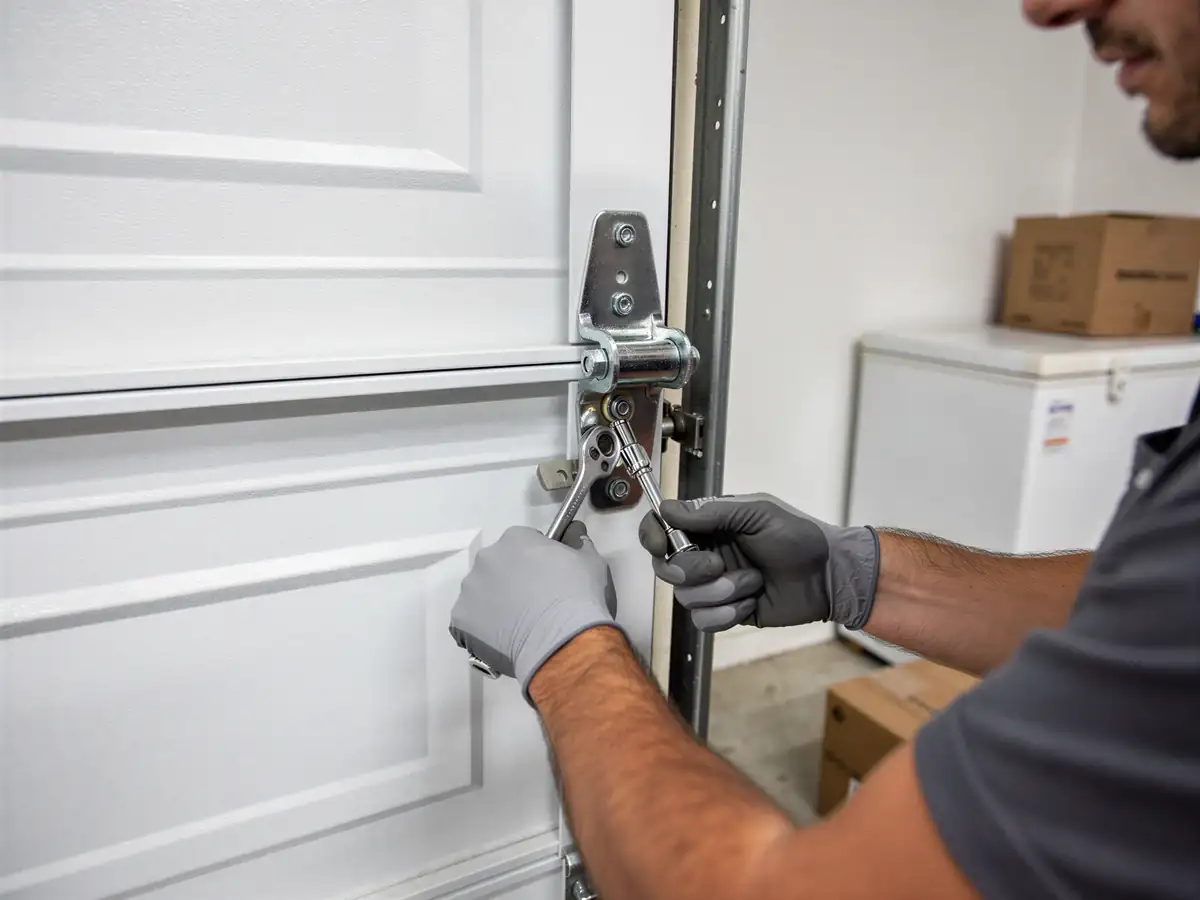
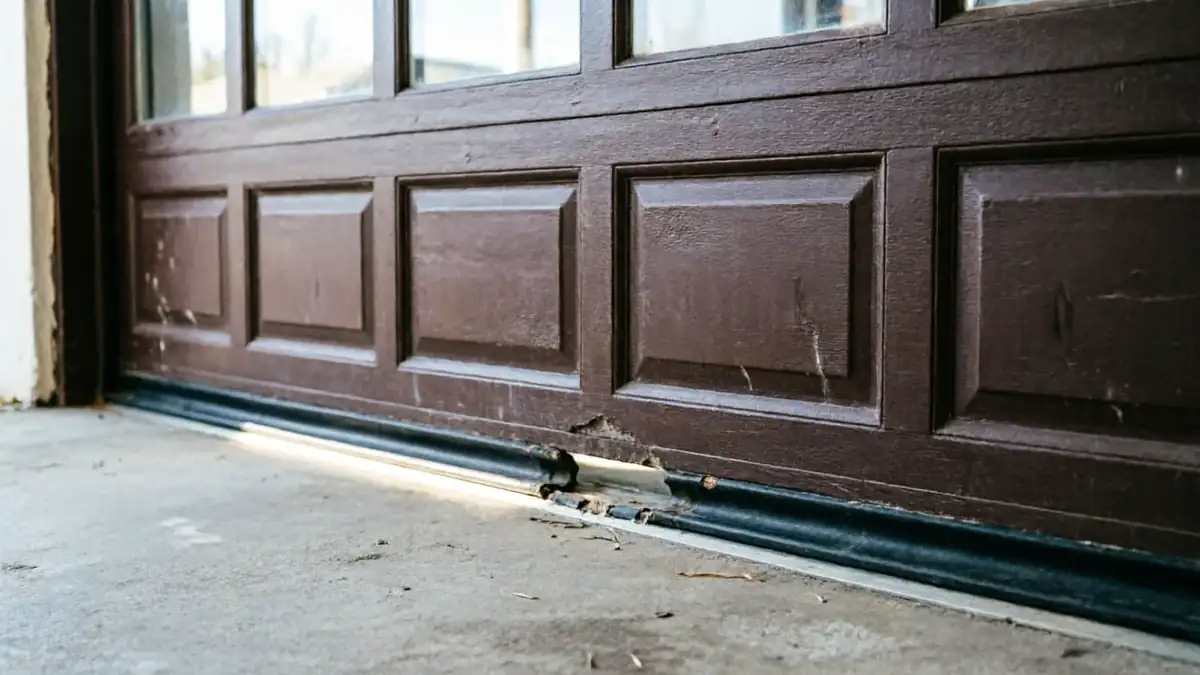
Where it stops being a DIY job is the retainer track itself. On doors from that 1980s-90s run, the aluminum channel corrodes or bends from years of being scraped by snowblowers and salt-crusted boots, and a bent retainer won't hold a new seal no matter how many times you reseat it. If you're fighting the seal to stay in the groove, the track is the actual problem, not the rubber. At that point you're buying and fitting a new retainer, which means drilling out old fasteners on a door that's 25 to 40 years old - and that's where we'd rather take a look before you commit a Saturday to it.
The Problem
Draughts under a garage door almost always start as a gap, not a torn seal
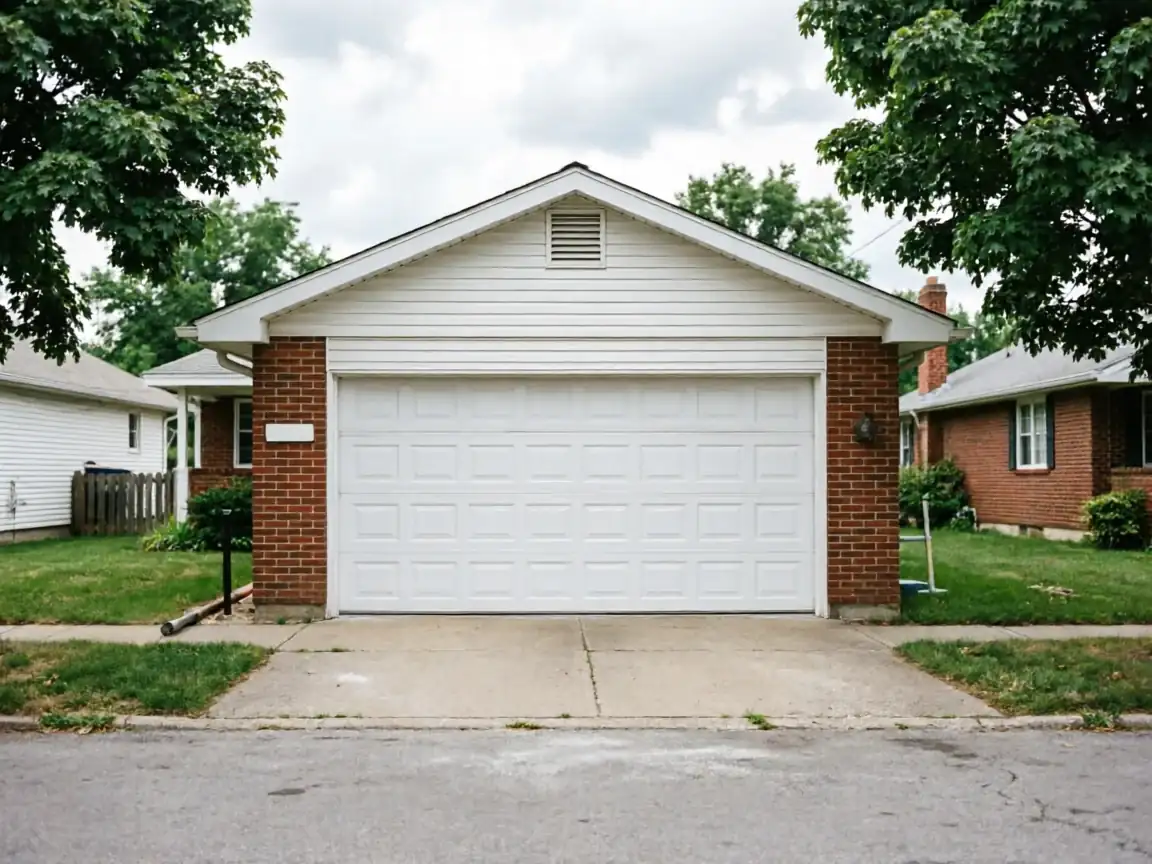
On the housing stock common here - built mostly in the 80s and 90s, with the broader range running 1959 to 2009 - slab settling over decades has left a lot of garage floors slightly out of level at the door opening. A seal that was cut to spec in 1995 is now trying to bridge a gap that's a half inch wider on one side than the other, and no amount of seal replacement fixes that by itself.
The second piece is the door panel rather than the seal
Steel panels from that same era were built with lighter-gauge steel and less insulation than what's sold today, so even a perfect seal on a thin panel still radiates cold into the garage. If your garage shares a wall with living space, that's often the actual complaint - not air moving under the door, but the door itself acting like a cold plate. A seal fix solves the draught. It doesn't solve the cold steel.
What the Weather Here Does to It
This area sits in a cold climate band with real seasonal swings, and that matters more for seals and gaskets than for almost any other part of the door. Vinyl bottom seals stiffen in sustained cold and lose the pliability that lets them hug an uneven slab. A seal that sealed fine in September can crack along its flex point by February once temperatures have cycled it through enough freeze-thaw swings.
That same cycling works on the steel. Panels expand and contract slightly with temperature, and over a few decades that movement loosens the fasteners holding weatherstrip retainers and threshold seals in place - which is part of why so many doors from the 1980s-90s stock here develop drafts at the corners first, not the center. Corners move the most and seal the worst.
Salt and road grime tracked in over a cold season also eats at the aluminum retainer tracks faster than plain moisture would, which shortens how long a new seal actually lasts before you're back to fighting the track problem described above. None of this is unique to one house - it's what this climate band does to any door built before insulation standards caught up.
When Waiting Is Fine
Not every draught needs a same-week fix. If you're feeling a thin line of cold air along the bottom edge in winter but the door still closes flush, latches properly, and the opener isn't straining, that's a seal worth replacing on your own schedule rather than an emergency. Minor drafts don't damage springs, openers, or tracks - they just waste a bit of heat.
We'll say plainly: if your garage isn't heated and doesn't share a wall with living space, a draughty seal is a comfort issue, not a structural one, and there's no urgency to it. Where we'd tell you not to wait is if the gap is letting in enough water to pool on the slab, or if the door is binding on the track hard enough that the opener is working harder than it should - that's a different problem wearing the same symptom. Otherwise, seal kits are inexpensive and the job takes an afternoon whenever you get to it.