Why This Fails Locally
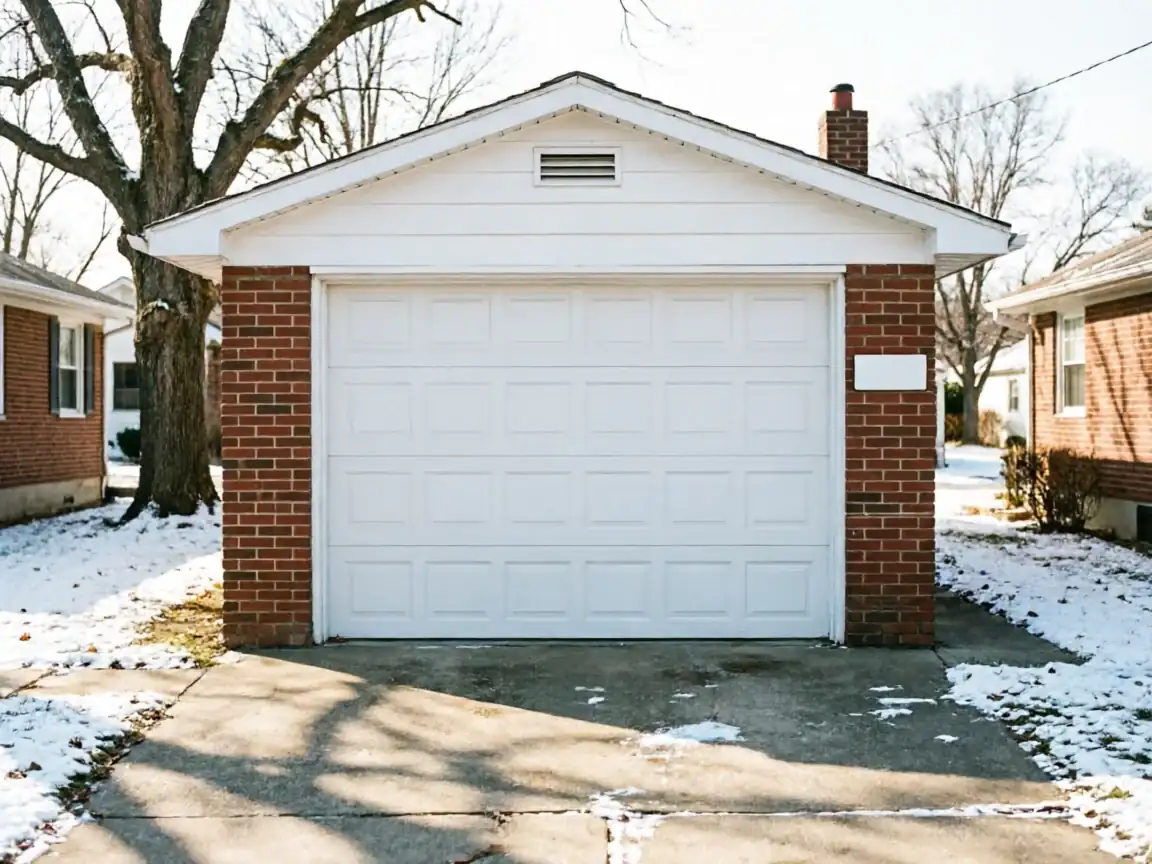
Most of the housing stock across this service area went up between 1959 and 2009, with the bulk of it dating to the 1980s and 90s across the 23 named neighborhoods and suburbs we work - from close in, out to Waukee and Grimes on the edge. That era of construction leaned hard on stamped steel rollers with plain bearings, not the sealed nylon rollers that show up in newer builds. Steel-on-steel rollers wear a groove into the track over fifteen or twenty years, and once that groove forms, the roller doesn't ride smooth anymore - it chatters.
Des Moines sits in a cold, moderate climate band, and that matters here because grease on an old steel roller stiffens up hard in a January cold snap. A roller that was already worn now has to fight dried-out lubricant and contracted metal, so it binds, skips, or seizes partway through a cycle. This isn't a flaw in any one door - it's what happens to thirty-plus-year-old steel rollers in a place that gets real winter. Newer builds in areas like Waukee or Grimes see less of this simply because the rollers are younger, not because the climate is any different.
The Symptom
The telltale sign is a rhythmic thump or grind as the door moves, usually worse on one side than the other
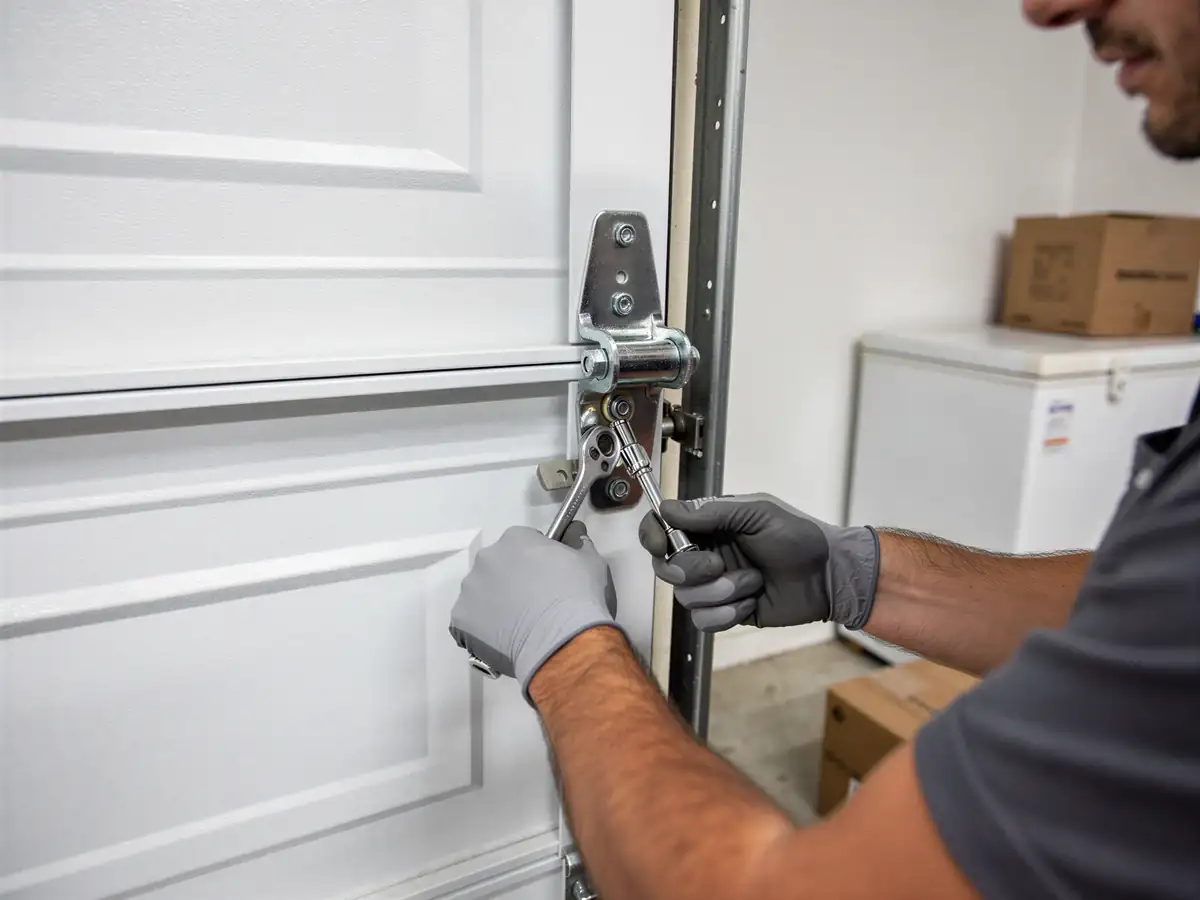
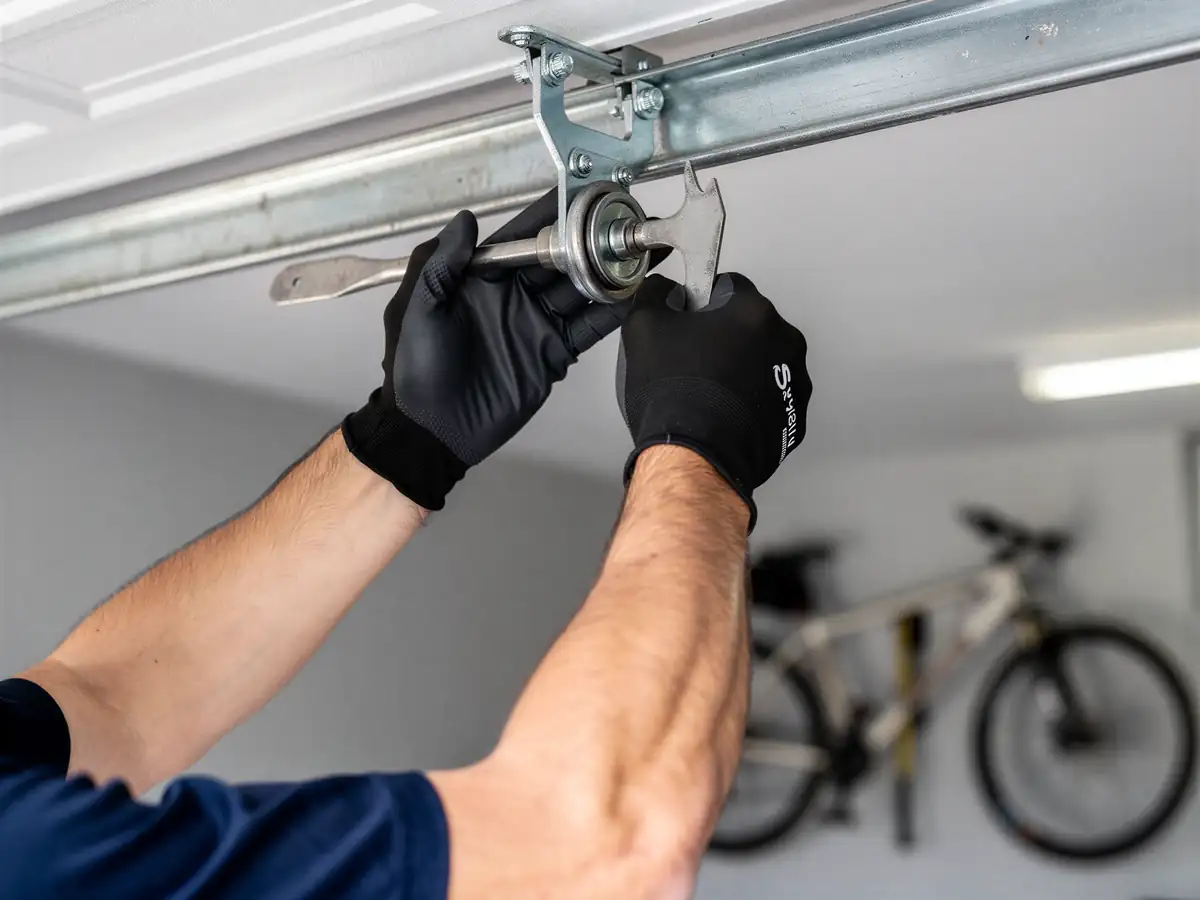
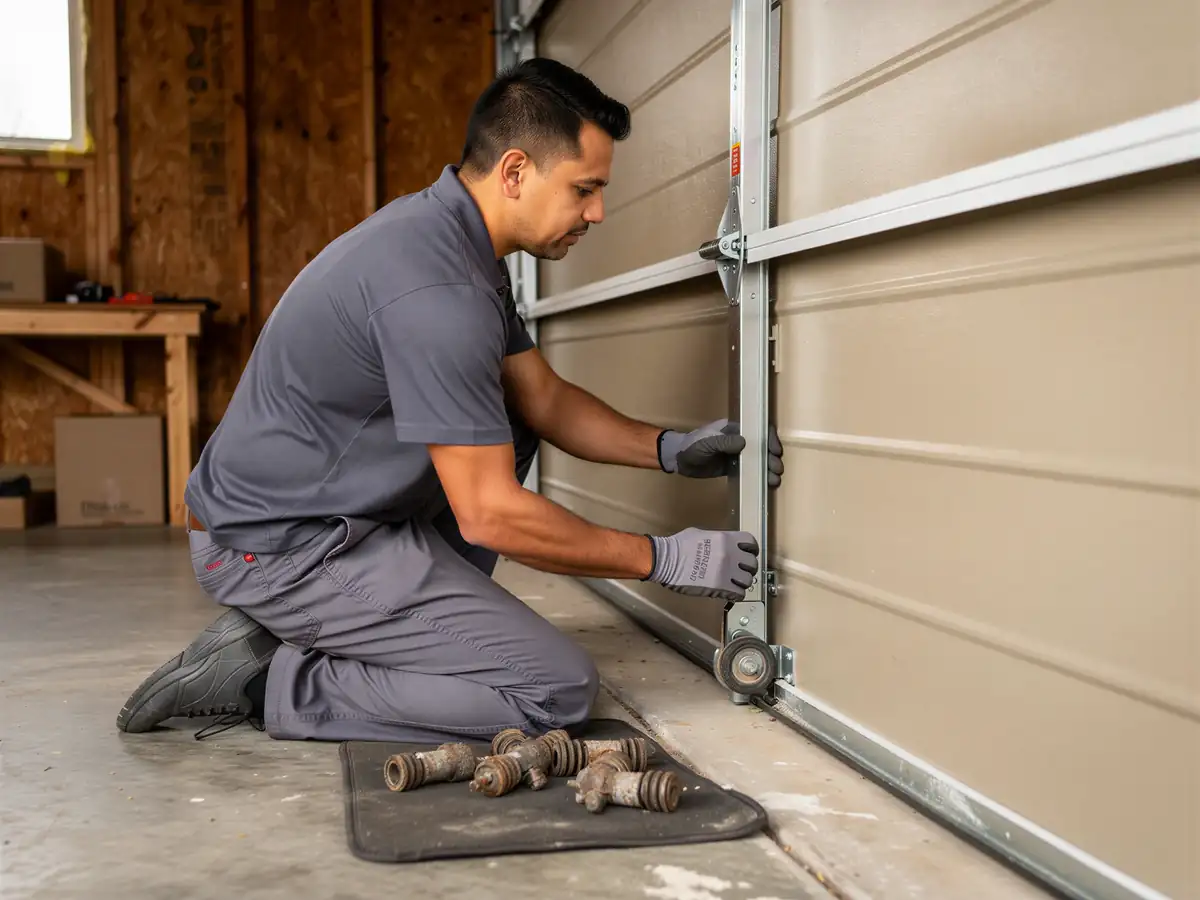
Because rollers rarely wear evenly. You'll also see the door hang up a few inches before fully opening, or the track show a shiny wear line where a bent or flat-spotted roller keeps catching. If you reach up and spin a roller by hand and it doesn't turn freely, or it wobbles side to side on its stem, that roller's bearing is shot.
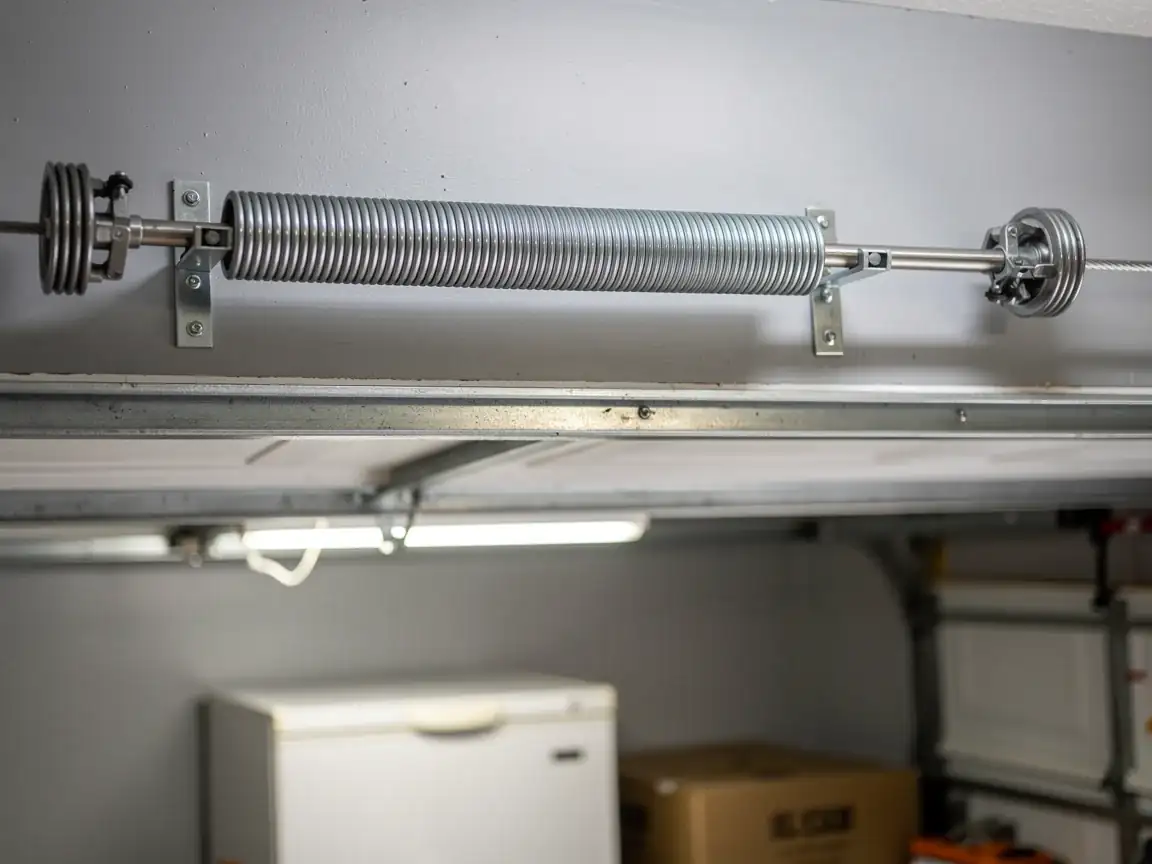
A lot of owners mistake this for a spring problem, since the noise can sound similar
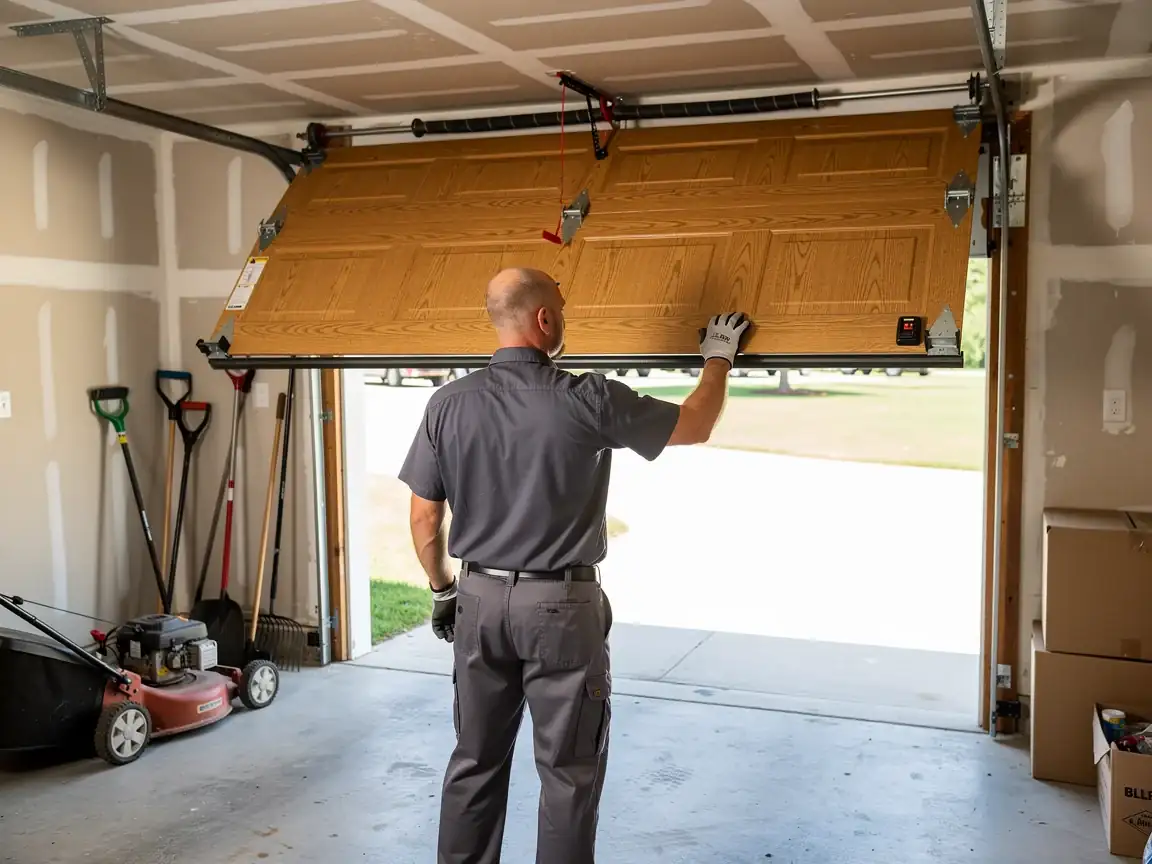
The giveaway is where the noise happens: springs make noise at the top of the travel as tension releases, roller noise happens continuously, all the way up and down the track, and gets louder as the door ages. If only one or two rollers are bad, you don't need to replace the whole set - we can swap individual rollers and leave the good ones in place. If the door is sagging in the frame or the track itself is bent, replacing rollers alone won't fix that, and we'll say so before we start.
What Is on the Truck
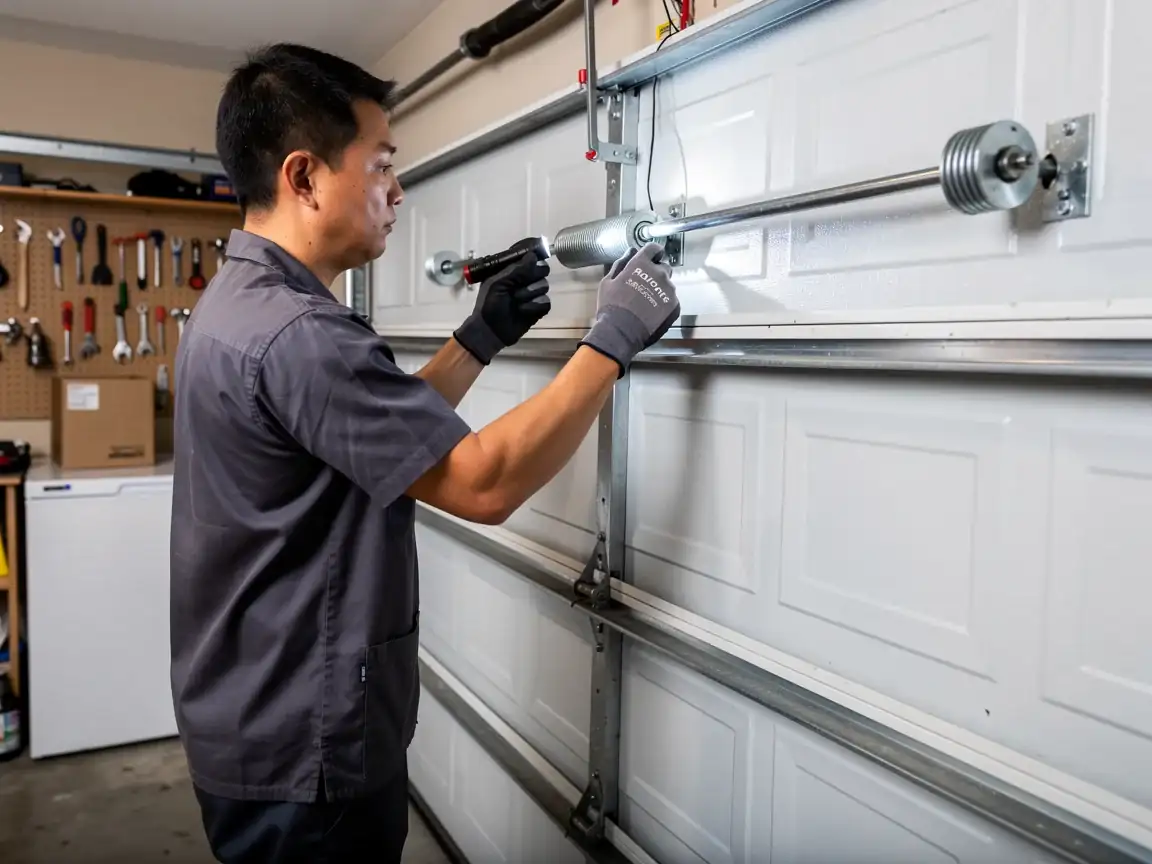
We carry both 10-ball and 13-ball nylon rollers in the stem lengths that fit the sectional doors common across this service area, along with sealed-bearing rollers for owners who want a quieter upgrade over the original steel. For homes still running original steel rollers from the 1980s and 90s builds we see most often, we stock replacement stems too, since the roller bracket itself sometimes needs attention when the old hardware has worn the mounting hole oblong.
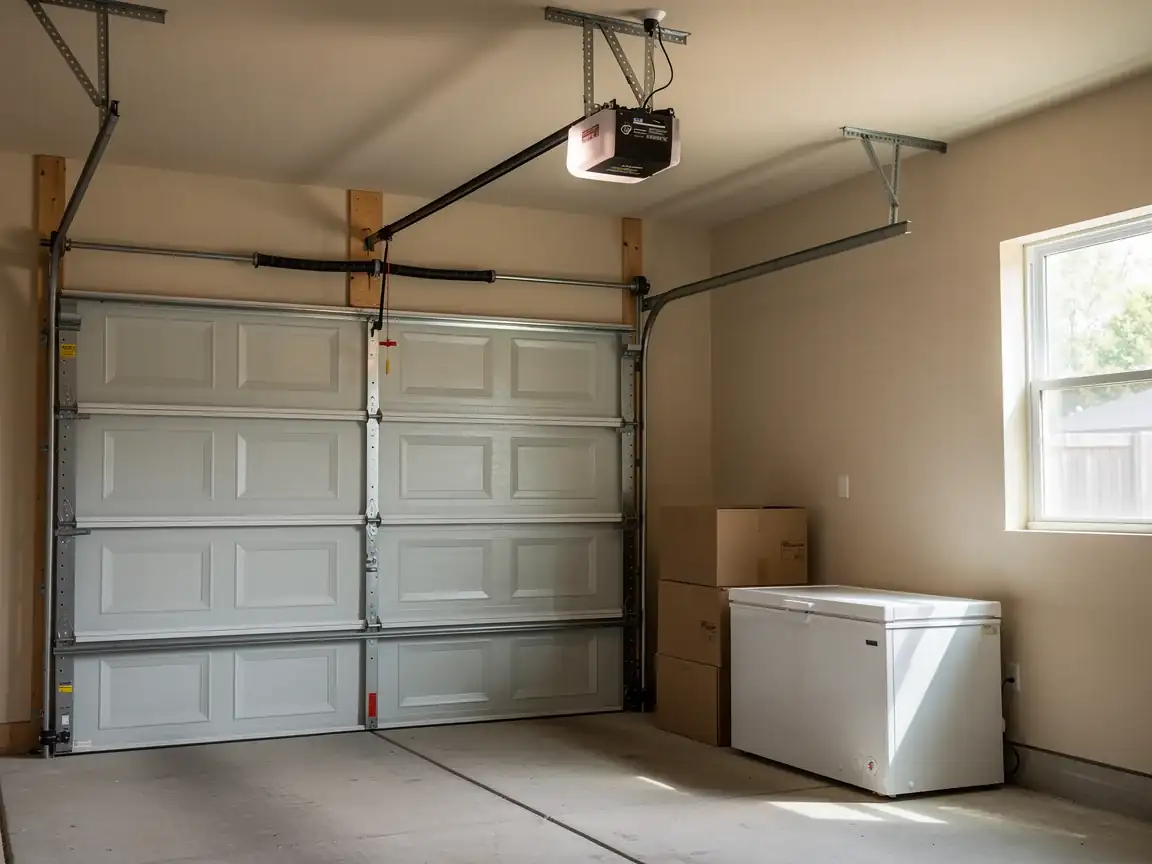
We also carry track sections, because a groove-worn track sometimes needs a short section swapped rather than just a new roller dropped in - putting a smooth nylon roller into a track that's been chewed up by steel will just transfer the wear pattern over time. What we don't carry on every truck is full replacement track for every door width and radius track configuration; those sometimes need to be ordered, which can add a day or two if your setup is less common.
What It Costs
Roller replacement pricing depends on how many rollers need swapping, whether the stems or brackets are damaged, and whether the track needs attention alongside the rollers. A single-roller swap is a short job; a full set on a double door with worn brackets takes longer and uses more parts. We price the job after a look at the door, not over the phone sight unseen, because guessing low and then finding bent brackets or a scored track helps nobody.
If you're deciding whether to fix rollers or replace the door outright, the honest answer is that rollers alone rarely justify a full door replacement - that's usually a spring, track, or panel conversation instead. Call and we'll tell you straight whether it's a roller job or something bigger.