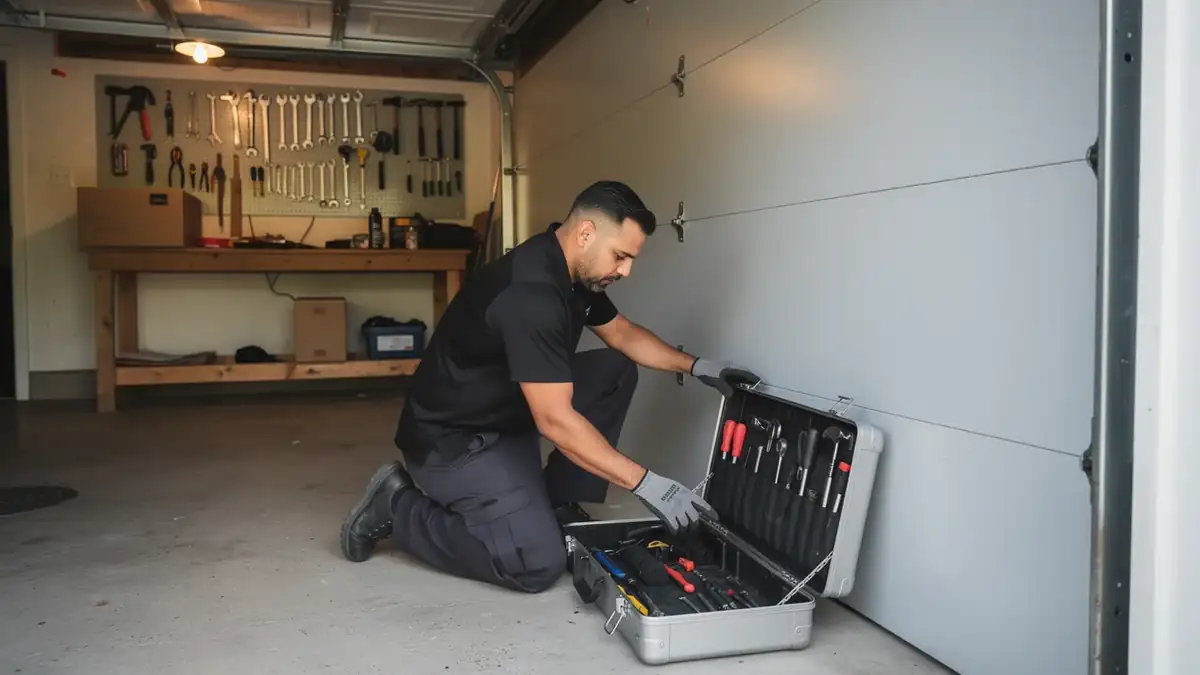
When It Stops Being a DIY Job
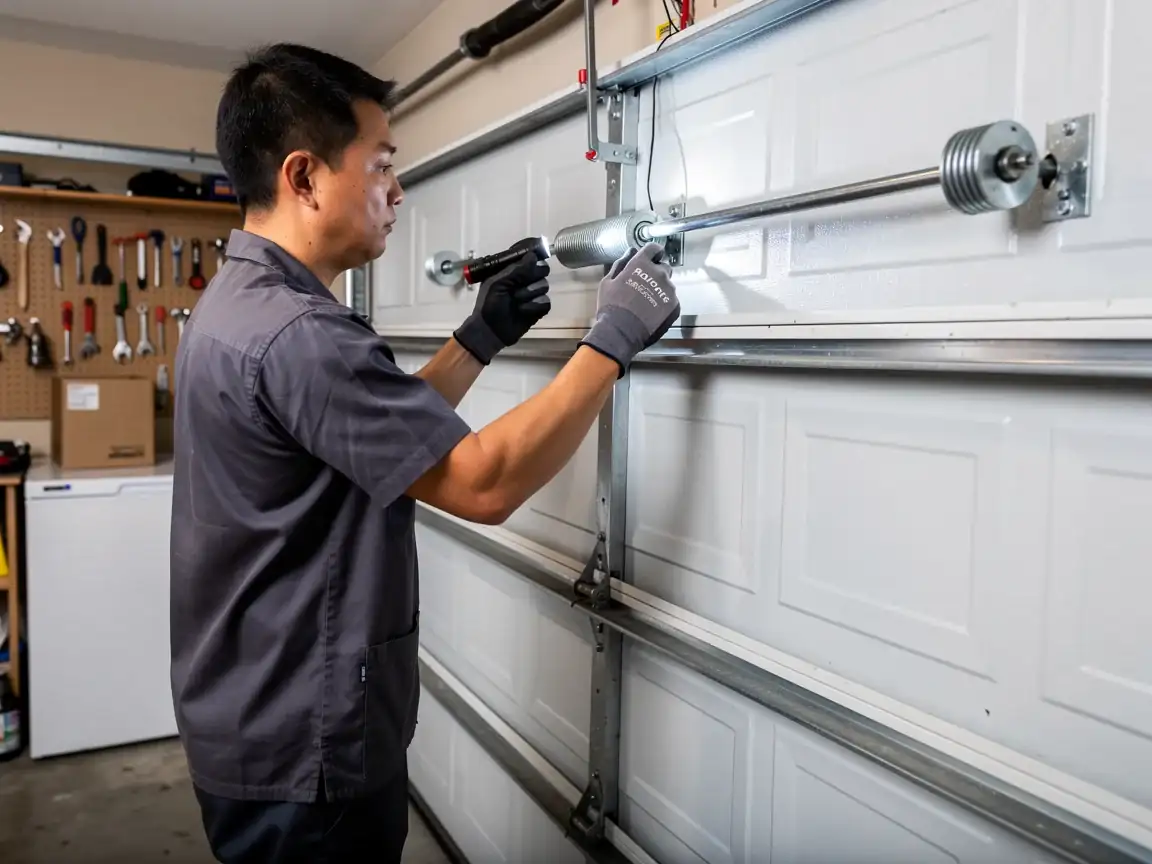
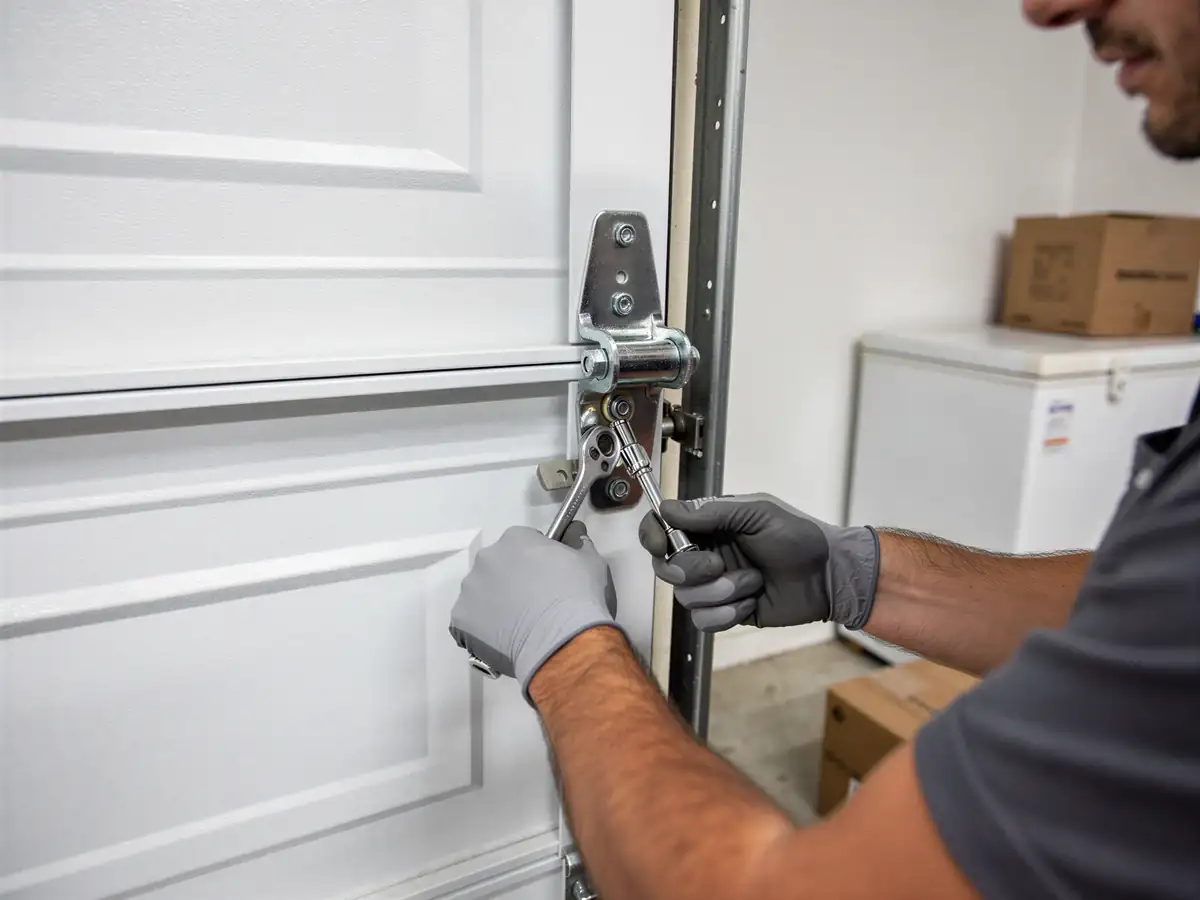
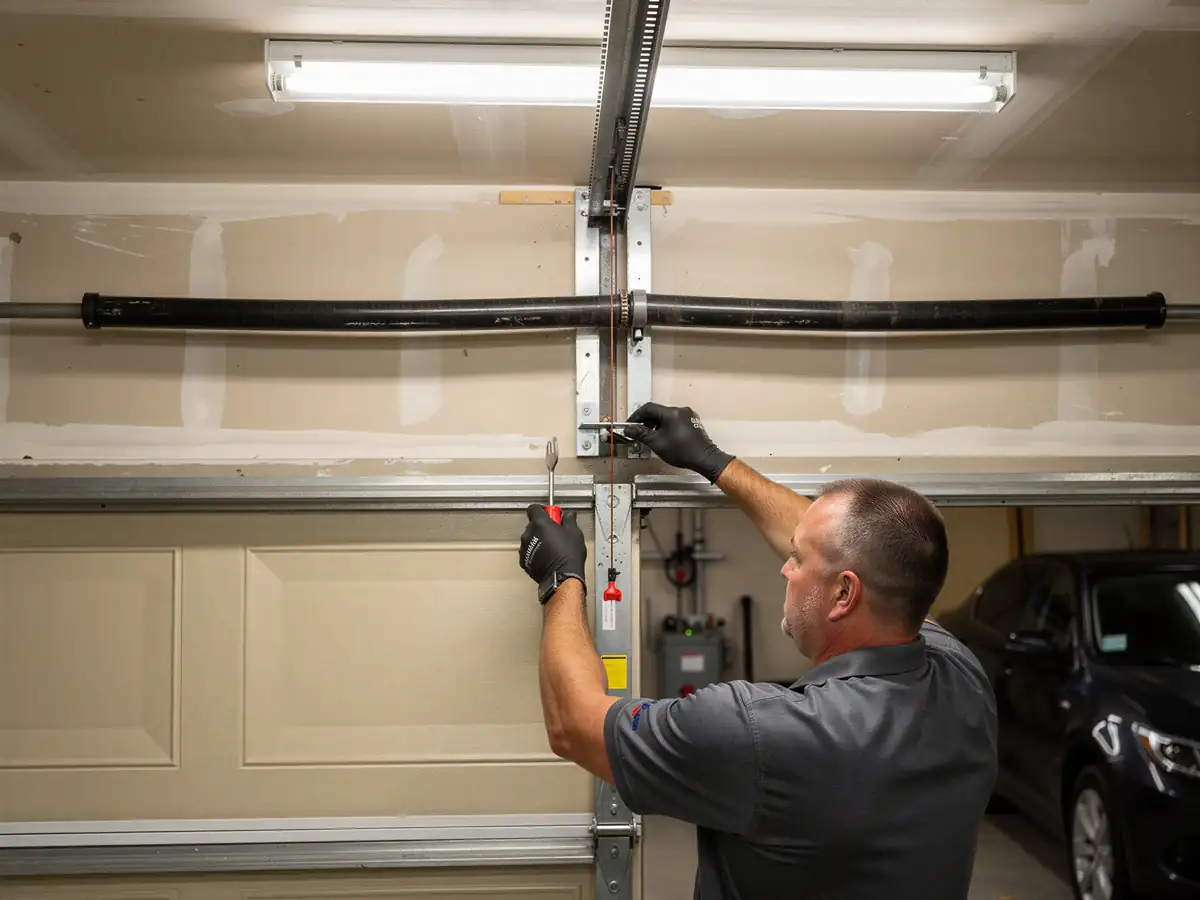
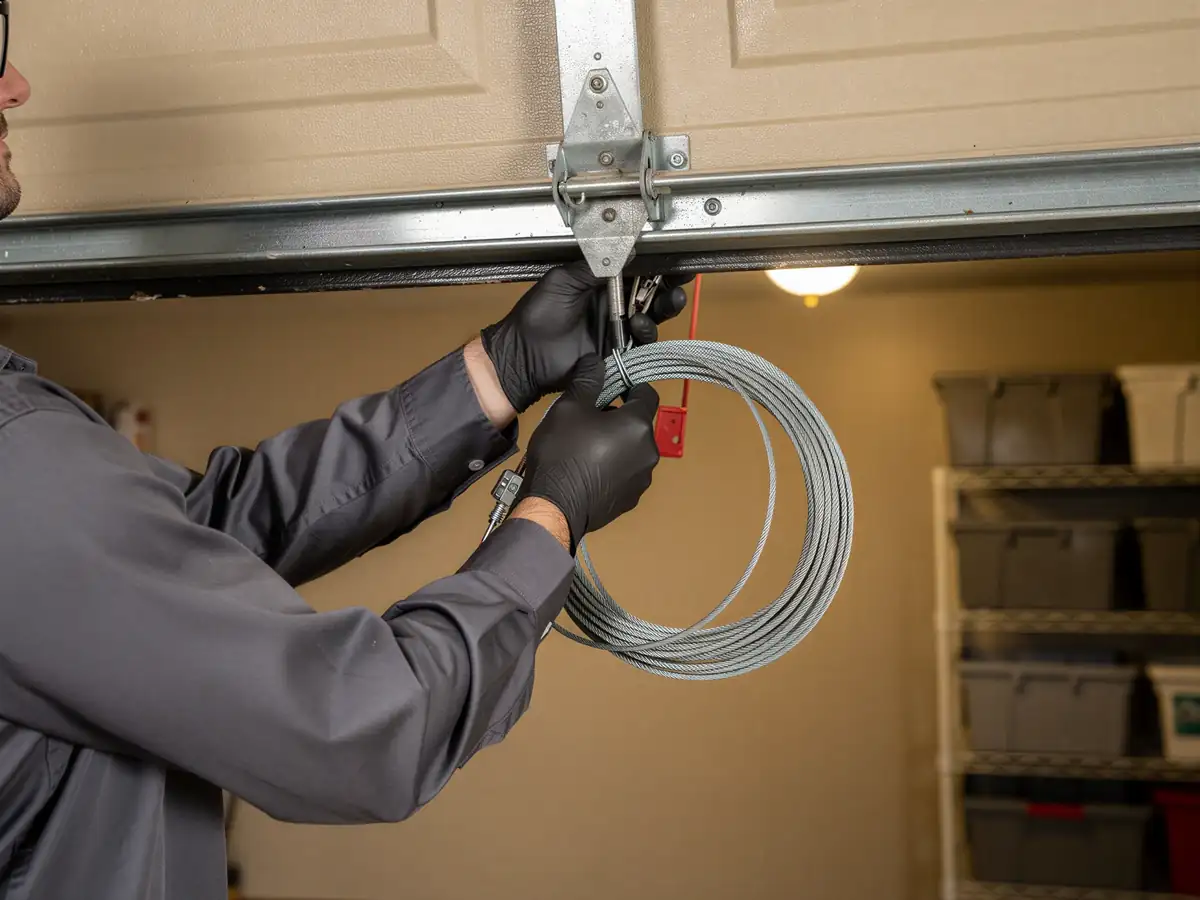
Most of the garage doors we get called on sit in houses built between 1959 and 2009, with the bulk of that stock going up in the 1980s and 90s across the 23 neighborhoods and nearby towns we work - places like and out toward Windsor Heights or Pleasant Hill. A door from that era usually runs on a torsion spring system, and that's the line where DIY needs to stop. A torsion spring is wound under enough tension to cause real injury, and on a double door from the 1990s that spring is sized for a heavier, wider panel than what you'd find on an older single door. If the spring's broken, the cable's off the drum, or the door won't stay up on its own, that's a call, not a weekend project. If a roller's loose or a sensor's dusty, that's something you can usually handle yourself first.
A service call starts with us checking the whole system, not just the symptom you called about - spring tension, cable condition, track alignment, opener force settings, and the weatherstripping, since houses from this build era often still have their original bottom seal.
The Problem
The housing stock here splits into two practical categories
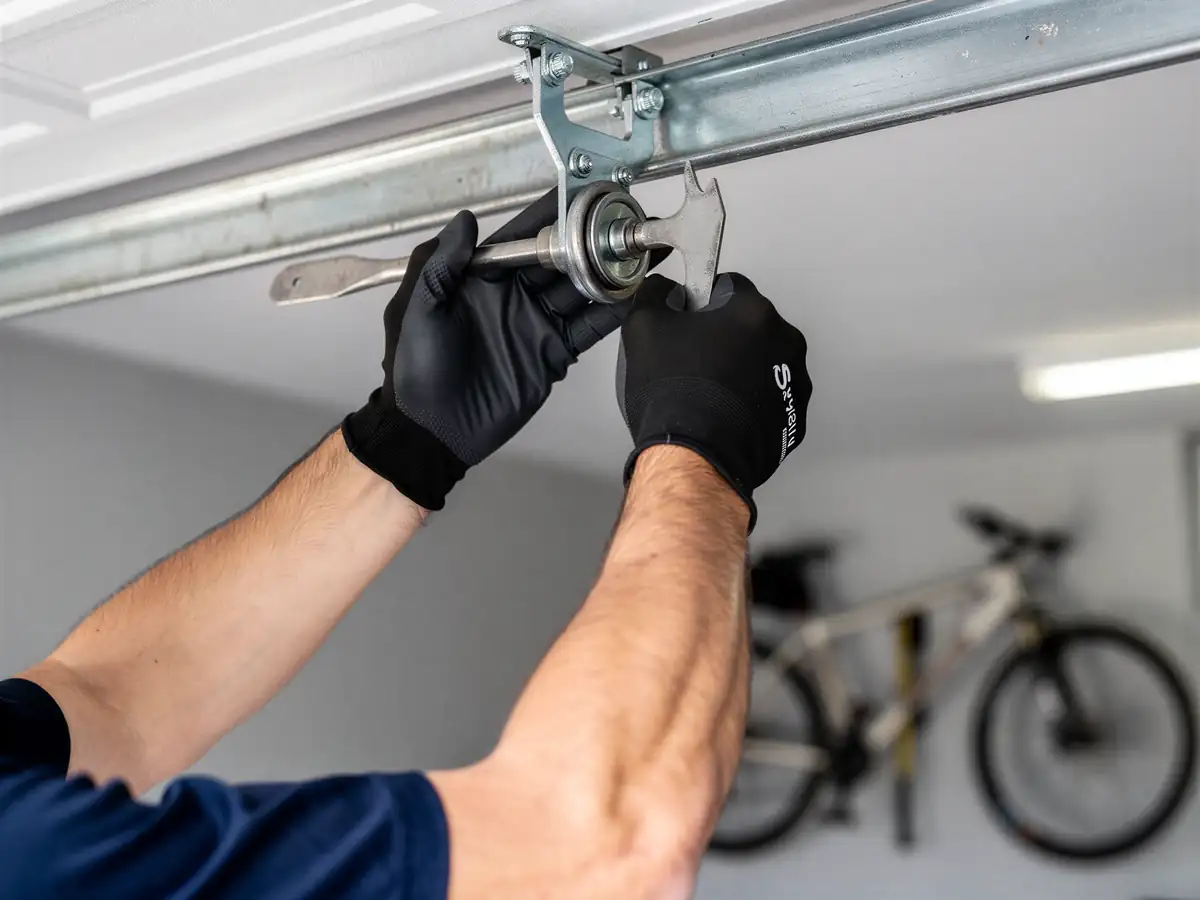
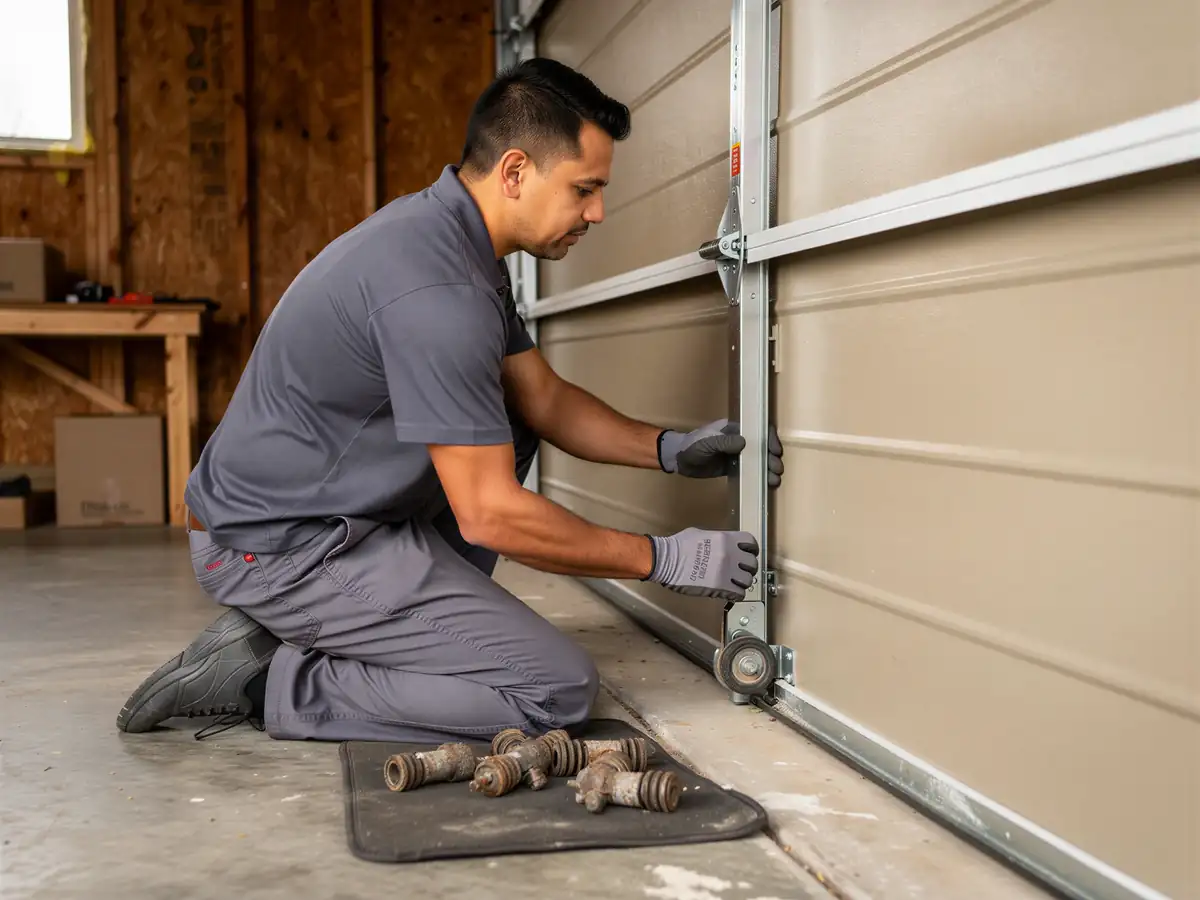
Doors original to a 1980s or 90s build, and doors that have already been replaced once. Original hardware from that median 1995 build year is now 25 to 45 years old, which puts a lot of torsion springs, rollers, and center bearings well past their expected cycle count. The common failure we see isn't a dramatic one - it's a spring that's been quietly losing tension for years until the door finally won't lift, or a cable that frays from drum wear nobody noticed because the door still looked fine going up and down.
- 45 years
On a service call, we're looking for the specific failure
Not just replacing parts that seem old. A spring that's still within its cycle life gets left alone even if it's original to the house. We won't sell a full torsion conversion to someone who needs a $30 roller.
What the Weather Here Does to It
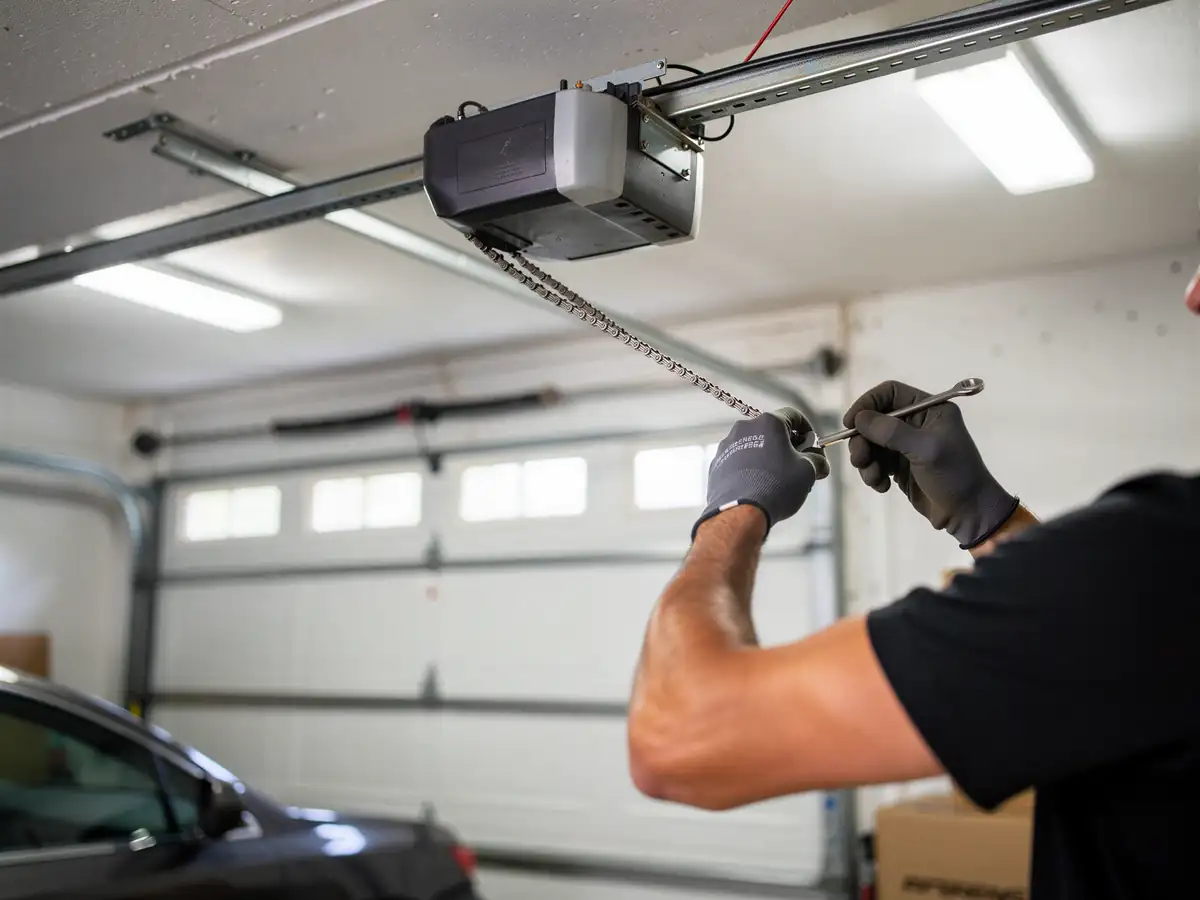
This is a cold, moderate climate, and that matters more for garage doors than people expect. Steel contracts in cold weather, and on a door built in the 80s or 90s - before some of the sealing and insulation standards common today - that contraction shows up as gaps at the bottom seal and stiffness in the opener's force setting. Cold also thickens grease on rollers and hinges, which is why a door that worked fine in October can start grinding or binding once temperatures drop. We check and reset opener force and travel limits as part of a cold-season call, because a door fighting stiff hardware will trip the opener's safety reversal more often, which reads to most owners as 'the opener is broken' when it's really the door.
When Waiting Is Fine
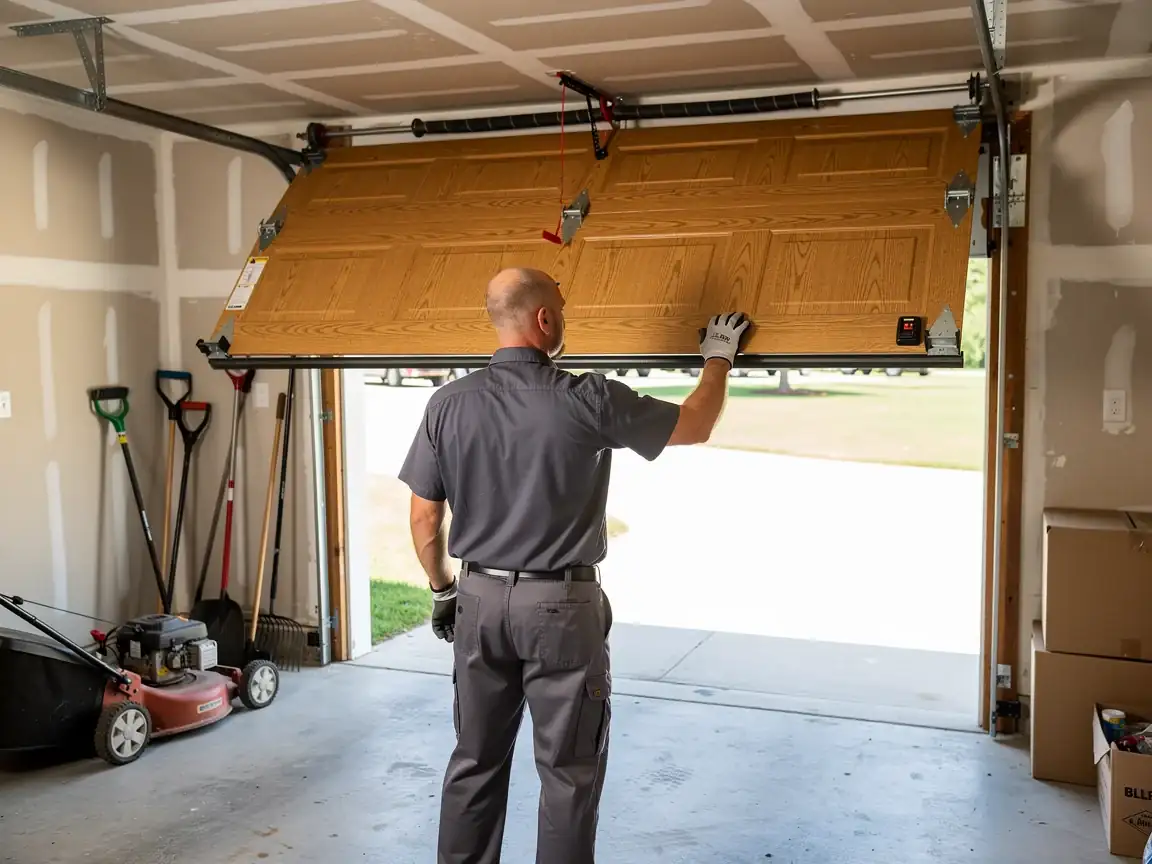
Not everything on a service call needs same-day attention. A door that's noisy but still opens and closes smoothly, a bottom seal that's cracked but not letting in daylight, or an opener light that's burned out - none of that is urgent, and we'll say so if that's what we find. Given the age spread of doors in this area, from houses built in 1959 up through 2009, we'd rather tell an owner their spring has a few years of cycle life left than replace it early. The one thing we won't wait on is a cable off the drum or a spring that's already broken, since the door can drop without warning at that point.