The Symptom
Most of what we see out of Altoona starts the same way: the door hesitates, reverses halfway, or the opener just hums without moving anything. That's not random. Altoona's housing stock centers on a median build year of 1998, which puts a lot of doors and openers right at the age where original parts start failing in clusters rather than one at a time.
A door installed in 1997 or 1998 has likely had its opener replaced once already, sometimes with a unit that doesn't match the original drum or spring setup. That mismatch shows up as grinding, uneven travel, or a door that slams the last six inches instead of settling. Iowa's cold stretches don't help - stiffened lubricant and shrunk weatherstripping put extra strain on rollers and cables that were already near the end of their service life. If your door is acting up and the house went up in the late 90s or early 2000s, the opener and the torsion spring are the first two things worth checking, in that order.
What the Fix Involves
We start with the spring
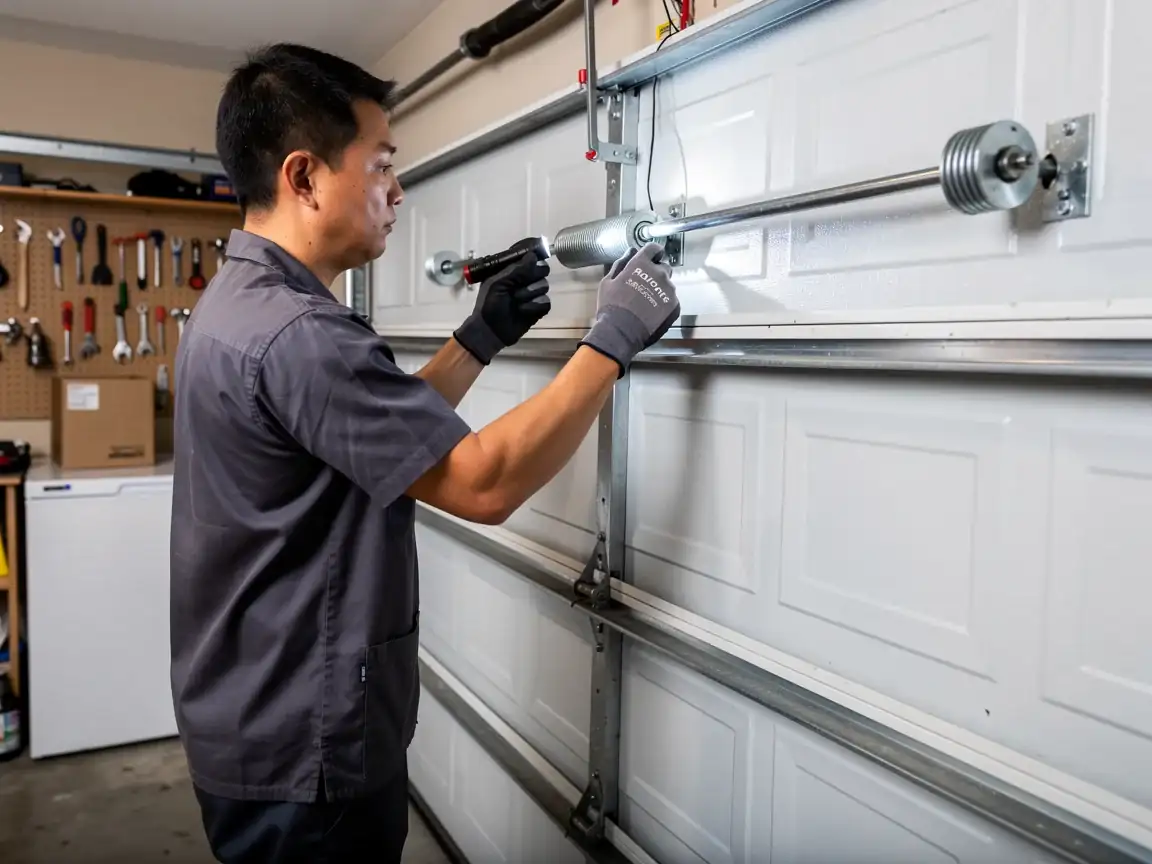
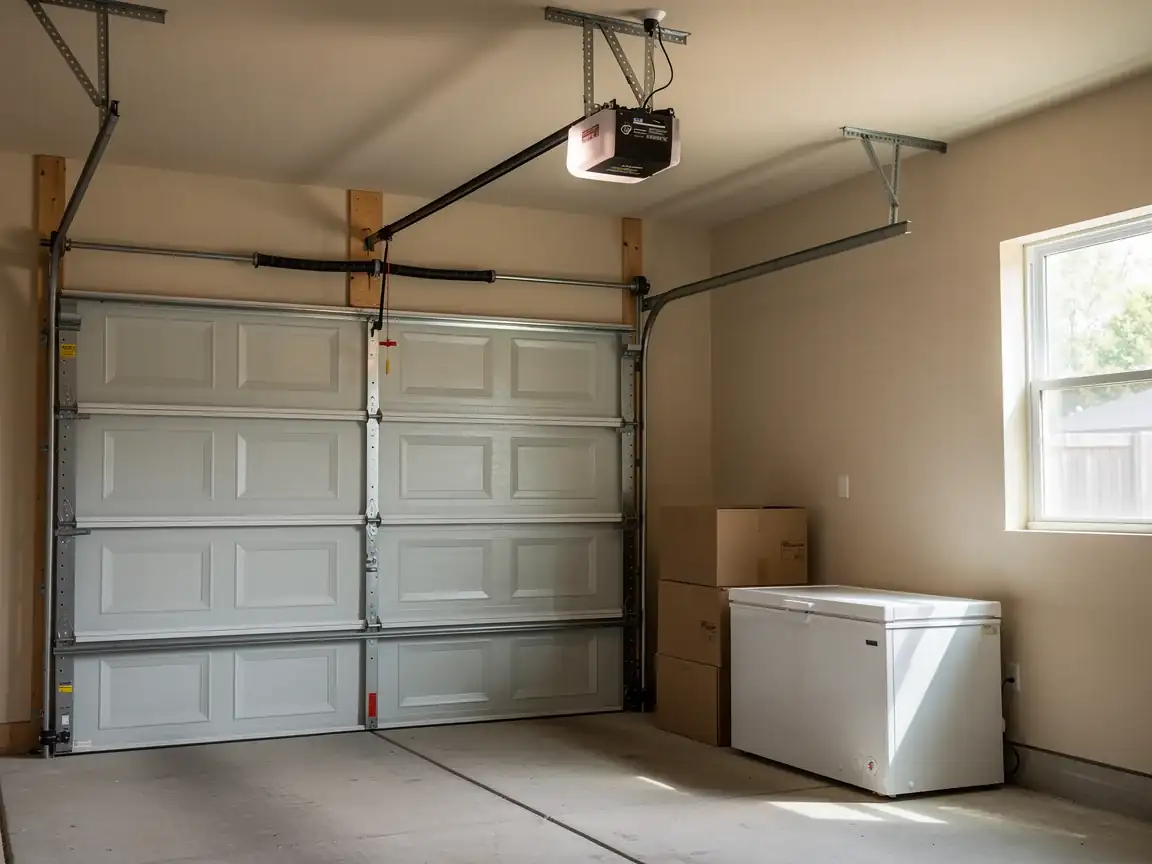
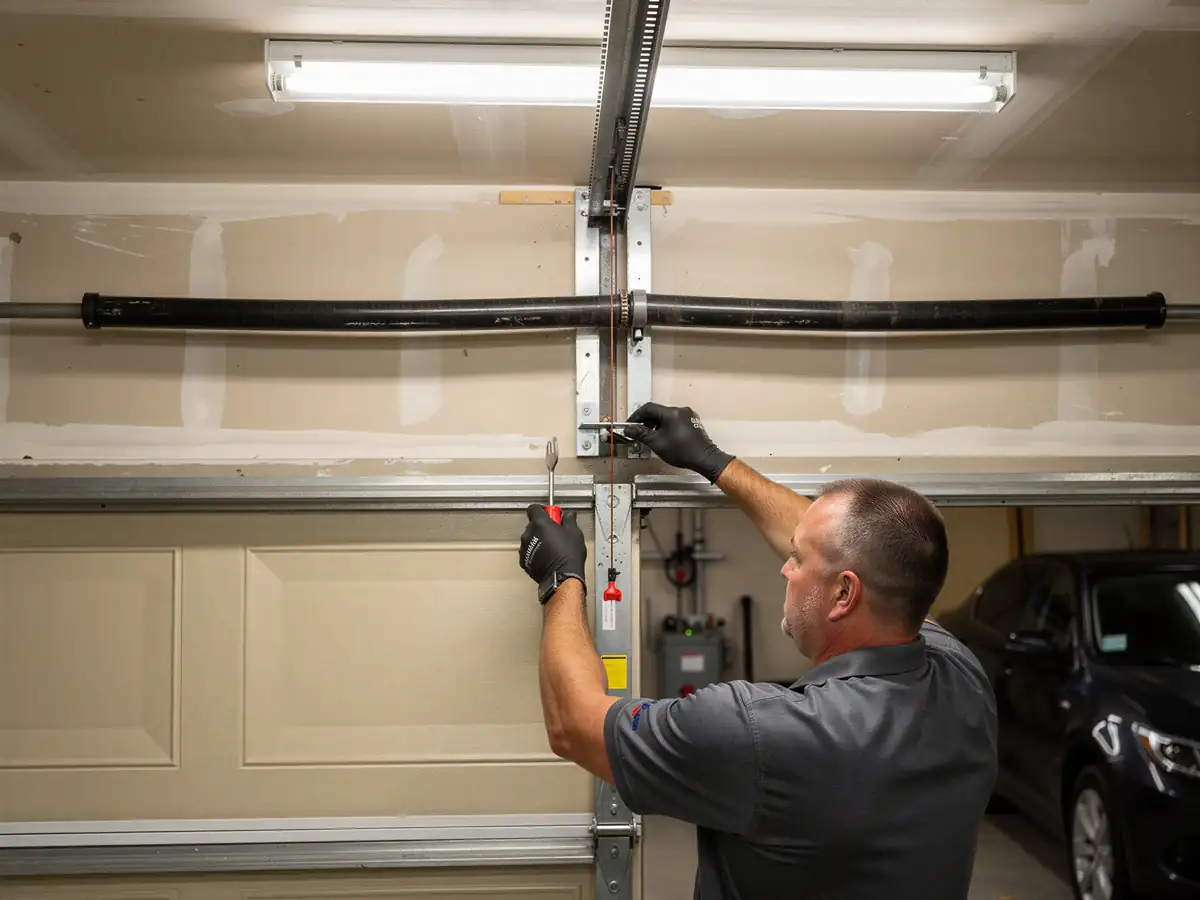
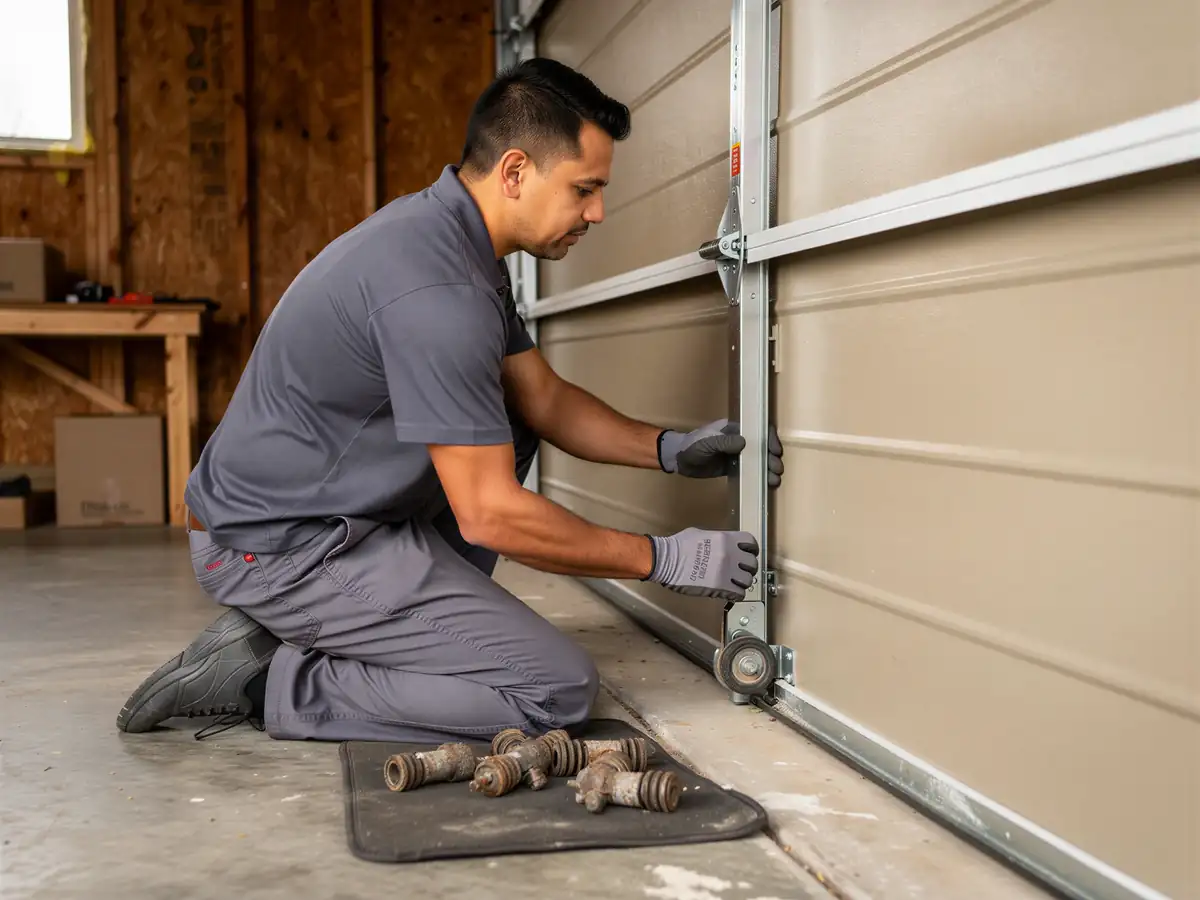
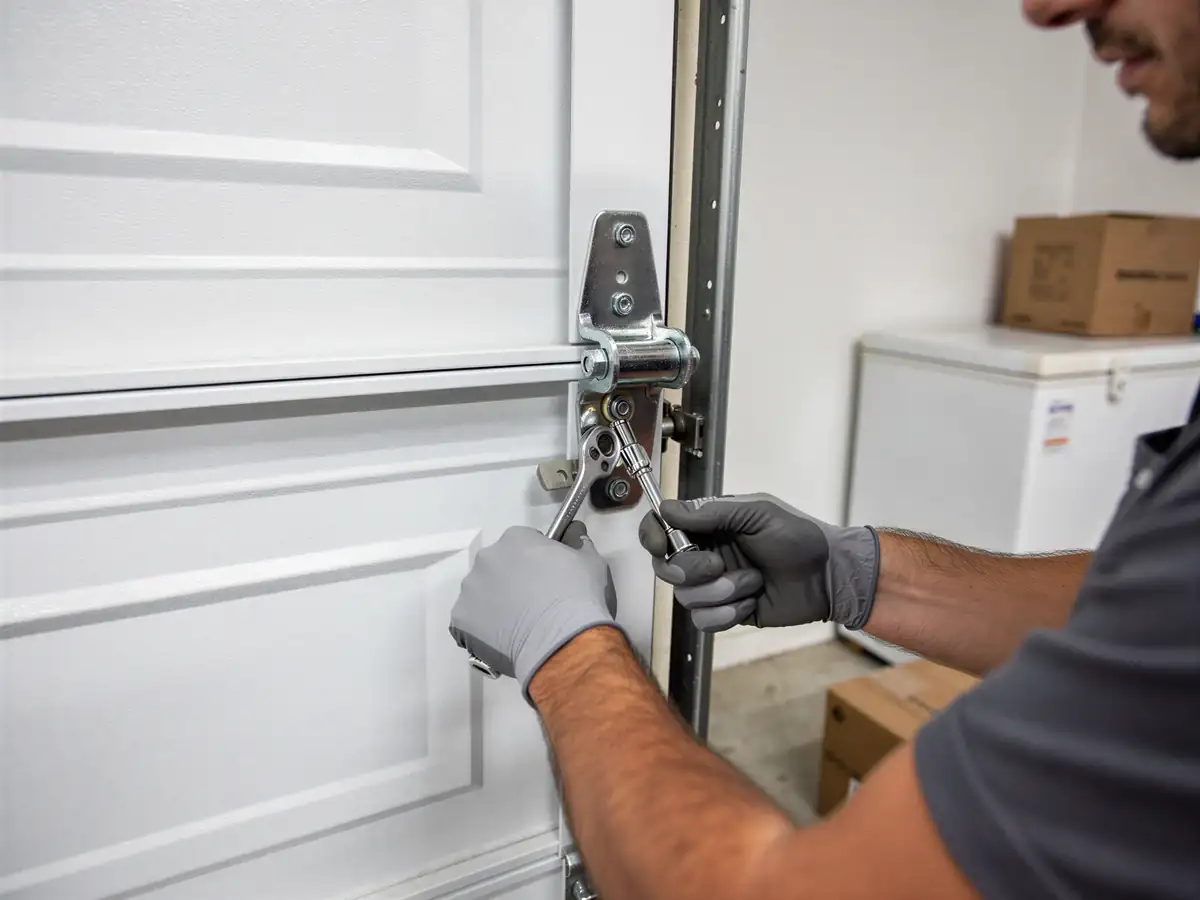
Since a worn torsion spring is behind most of the dead-weight doors and silent openers we get called out for. On a late-90s build, that usually means a standard torsion spring on a steel header bracket - straightforward to replace once we've got the right wire size and wind.
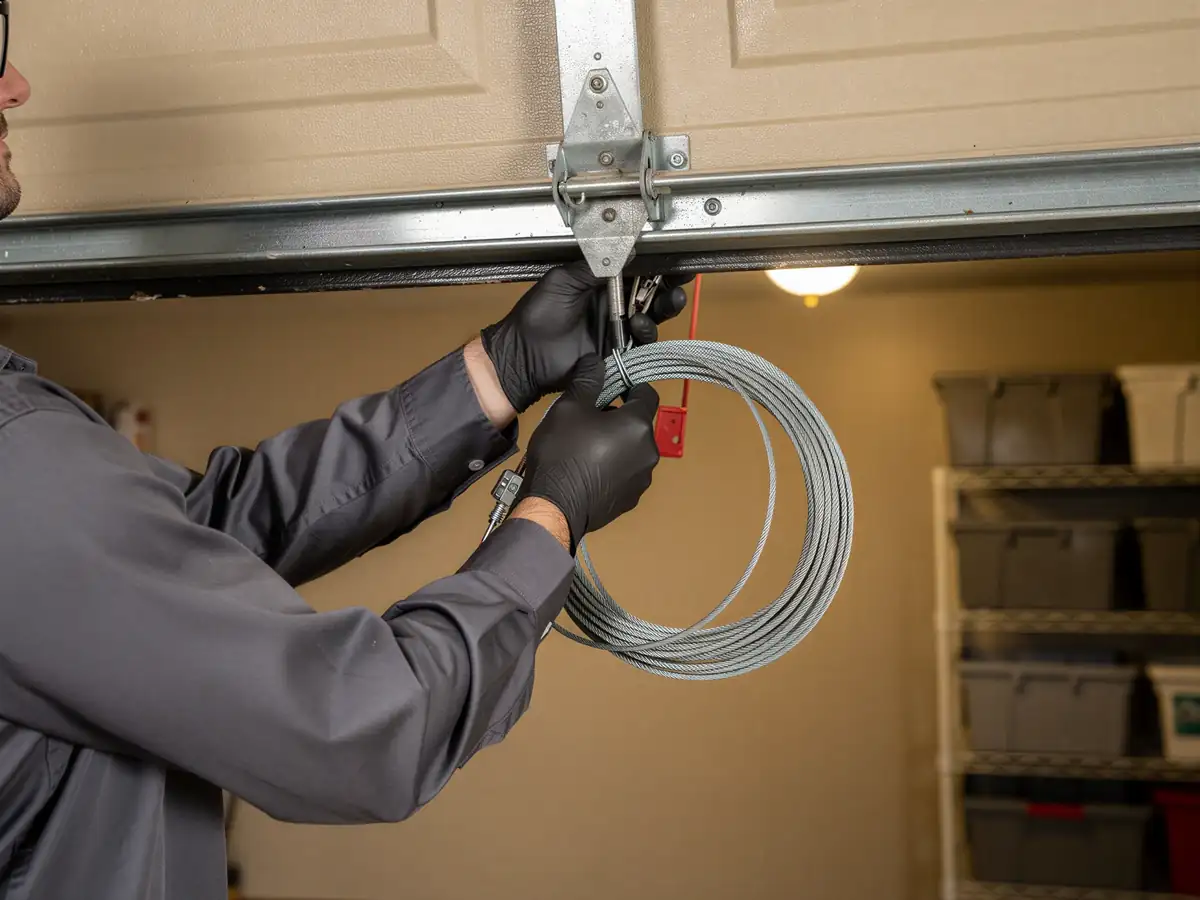
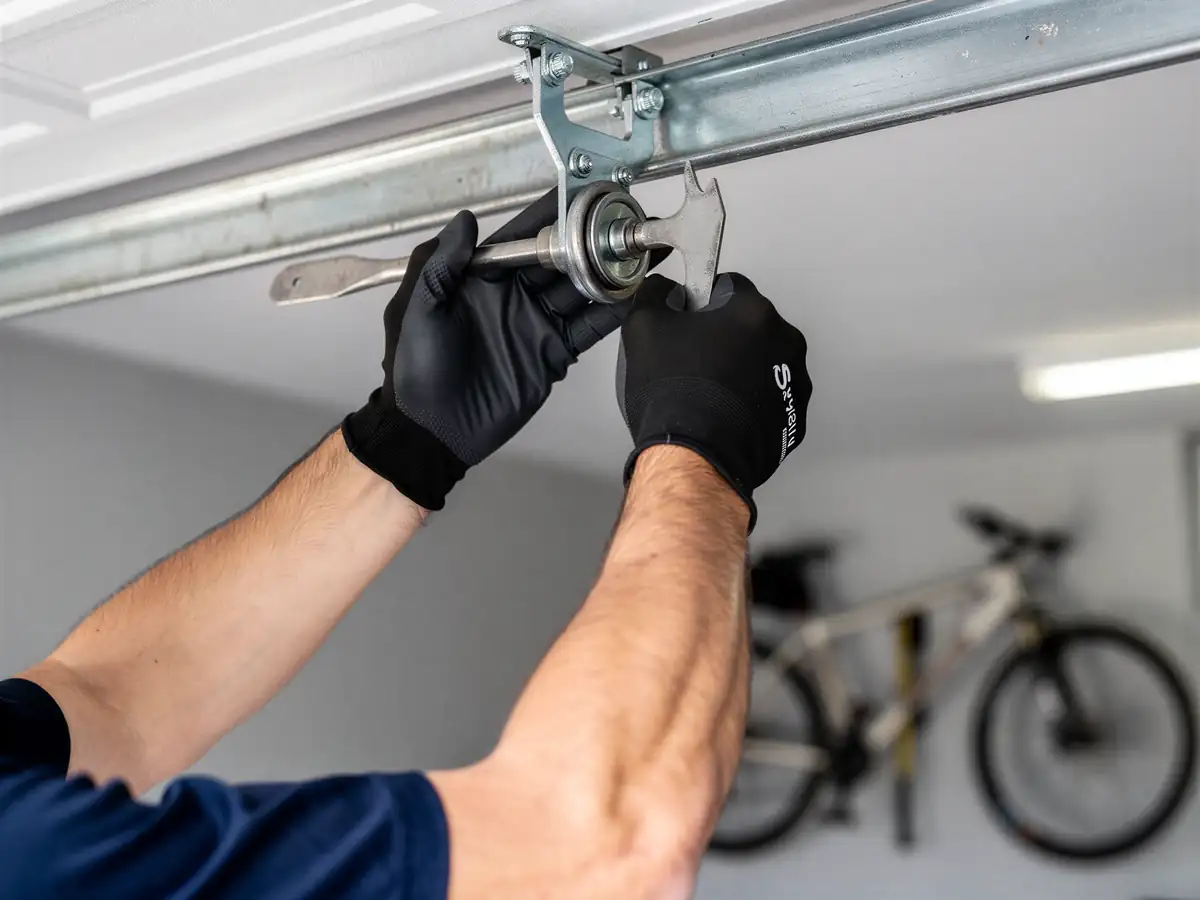
After the spring, we check the cable drums and rollers, since those wear on the same clock
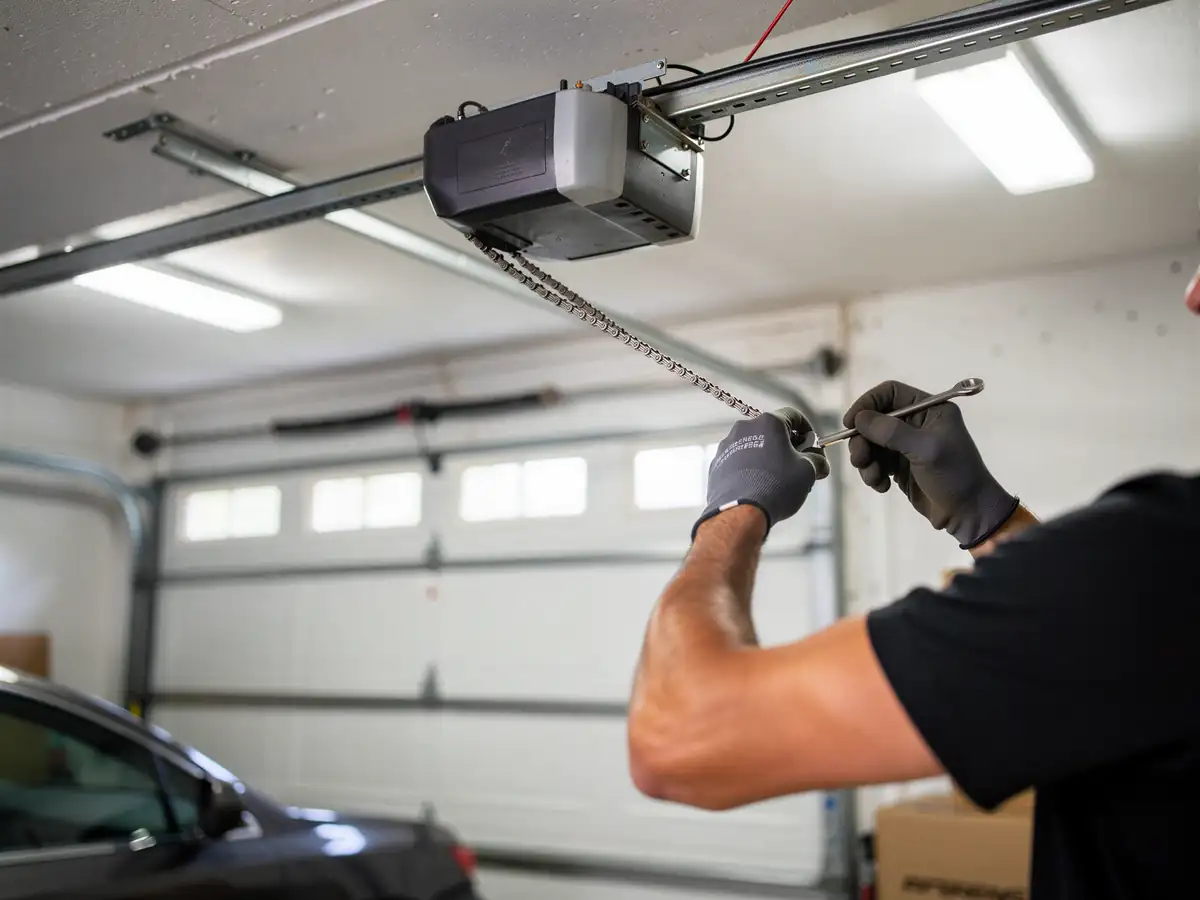
Nylon rollers from that era tend to crack rather than wear smooth, and a cracked roller binds in the track long before it fails outright. If the opener's the problem, we test the circuit board and the safety sensors before replacing anything - a lot of 'dead' openers just need a sensor realigned or cleaned, not a new unit. We don't replace parts that are still doing their job; if the fix is a ten-minute sensor adjustment, that's what you pay for.
What It Costs
We don't have a flat number to quote here, since spring size, drum type, and opener model all move the price, and that varies house to house even within Altoona's fairly tight build window. What we can tell you is how we think about it: Altoona's median household income runs around $87,123, noticeably below the broader service area's $98,333, and we take that into account when a repair is borderline against a replacement. If a 25-year-old opener needs a board and a sensor both, we'll say so plainly rather than nickel-and-diming you toward the same total as a new unit. The honest answer is sometimes 'replace it,' and we'd rather tell you that up front than run up a repair bill on a door that's going to need the next thing in six months.
The Complications
The complication we run into most in a neighborhood built out around 1998 is parts matching. Openers and spring hardware from that era were made by manufacturers that have since changed drum sizes, mounting brackets, or discontinued the exact spring wire gauge. We carry common sizes on the truck, but an odd one means a short order delay - we'll tell you that on the spot rather than let you find out later.
The other complication is multiple openers on one block with the same original brand, installed within a year or two of each other. When one fails, it's common for a neighbor's to go within the same season - not because of anything we did, just because the parts aged out together. If your opener just failed and a neighbor's did too, that's not a coincidence worth chasing, it's just the age of the subdivision catching up at once.
How Long You Are Without the Door
A straightforward spring or roller job is usually done the same visit
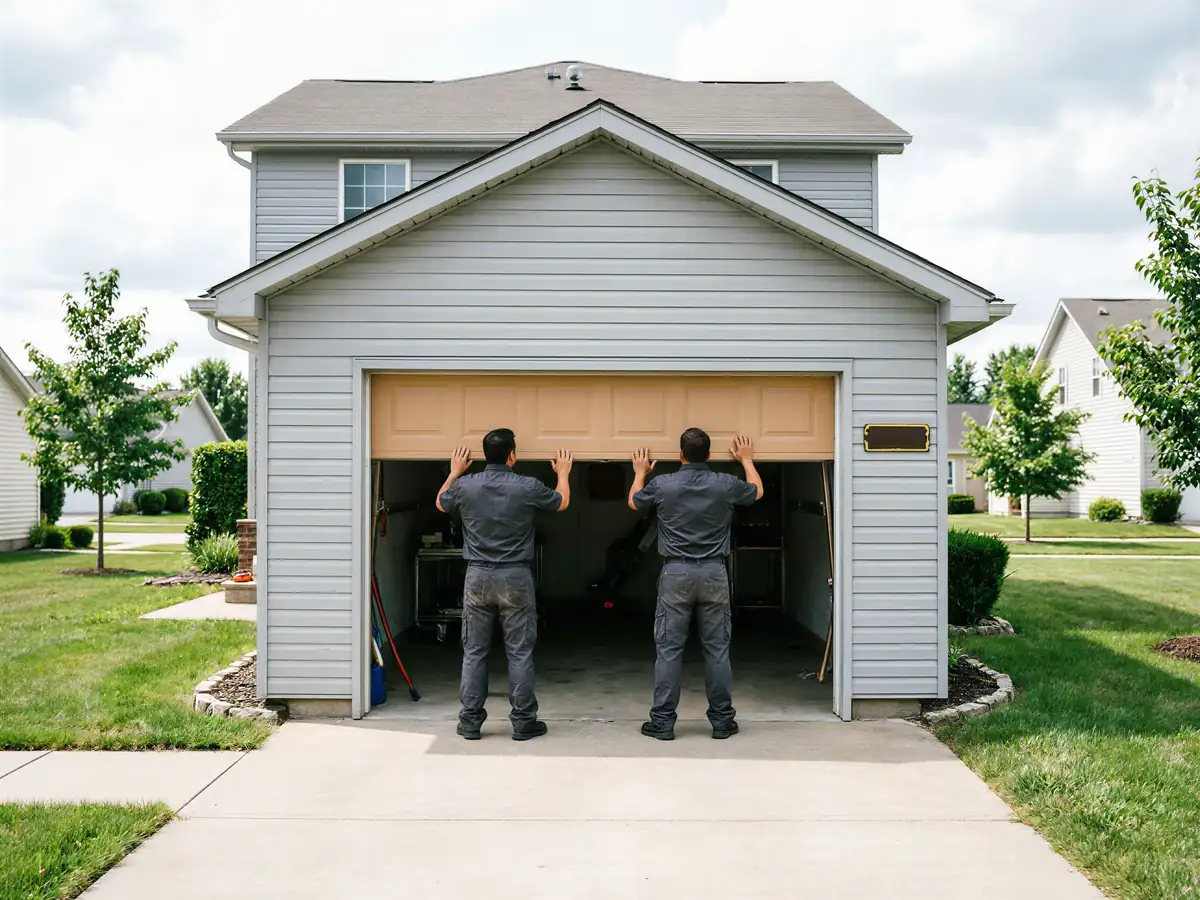
Once we're on site with the right spring, the door's back in motion inside an hour. Opener board or sensor issues sometimes take the same visit too, but if the opener model is old enough to need an ordered part, the door may sit closed (we'll secure it manually) for a few days while we wait on it.
Altoona sits about 8 miles from our Des Moines base
Which doesn't add meaningfully to the job itself - once a technician's loaded with the part, getting to Altoona isn't the holdup. The holdup, when there is one, is almost always the part itself, not the drive.
- 8 miles