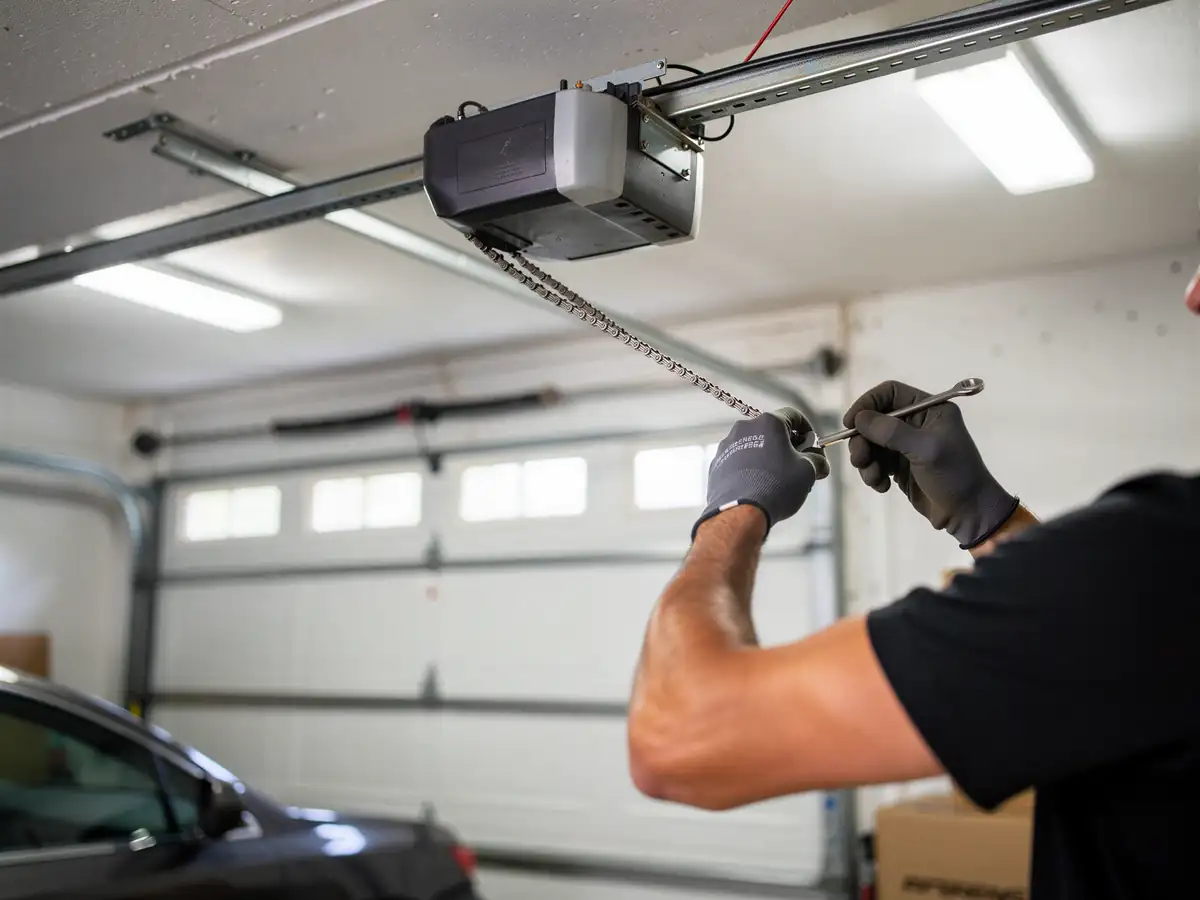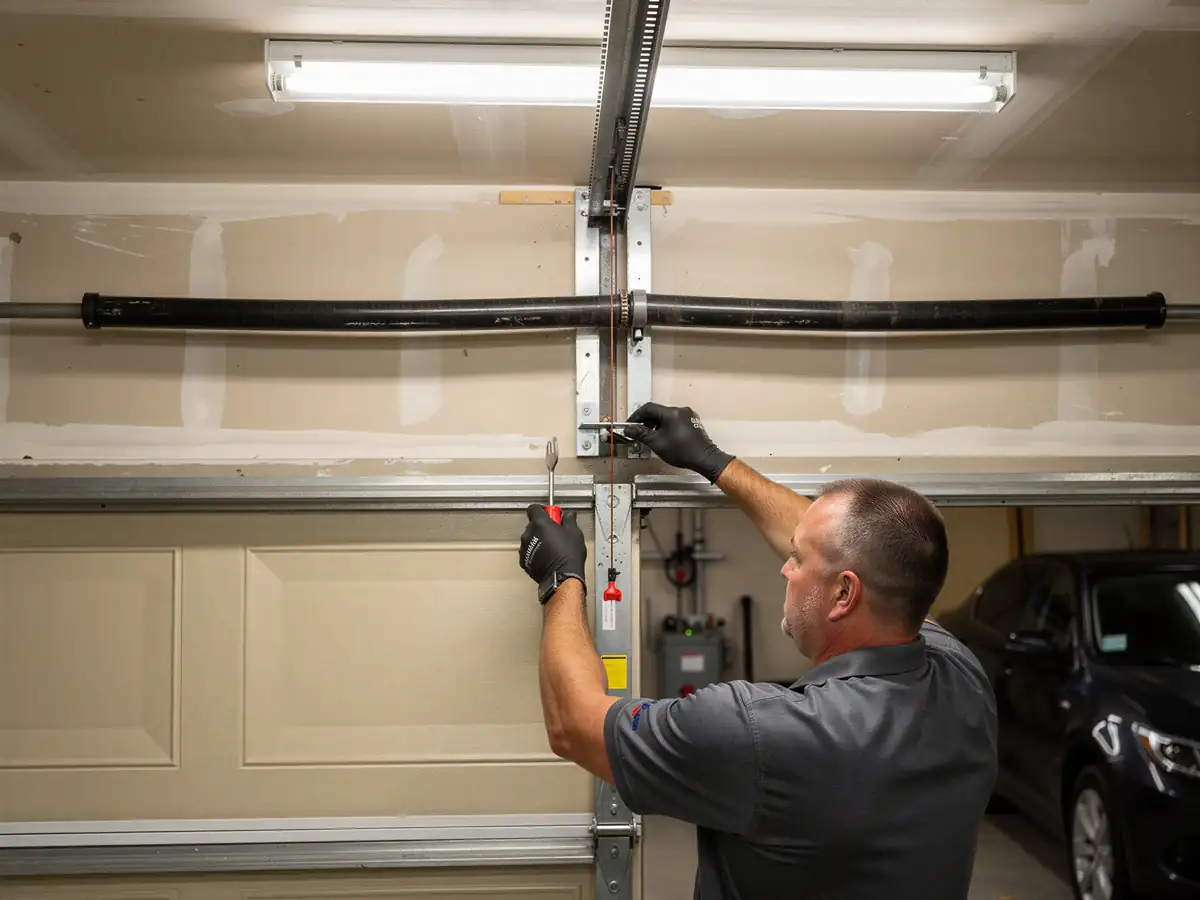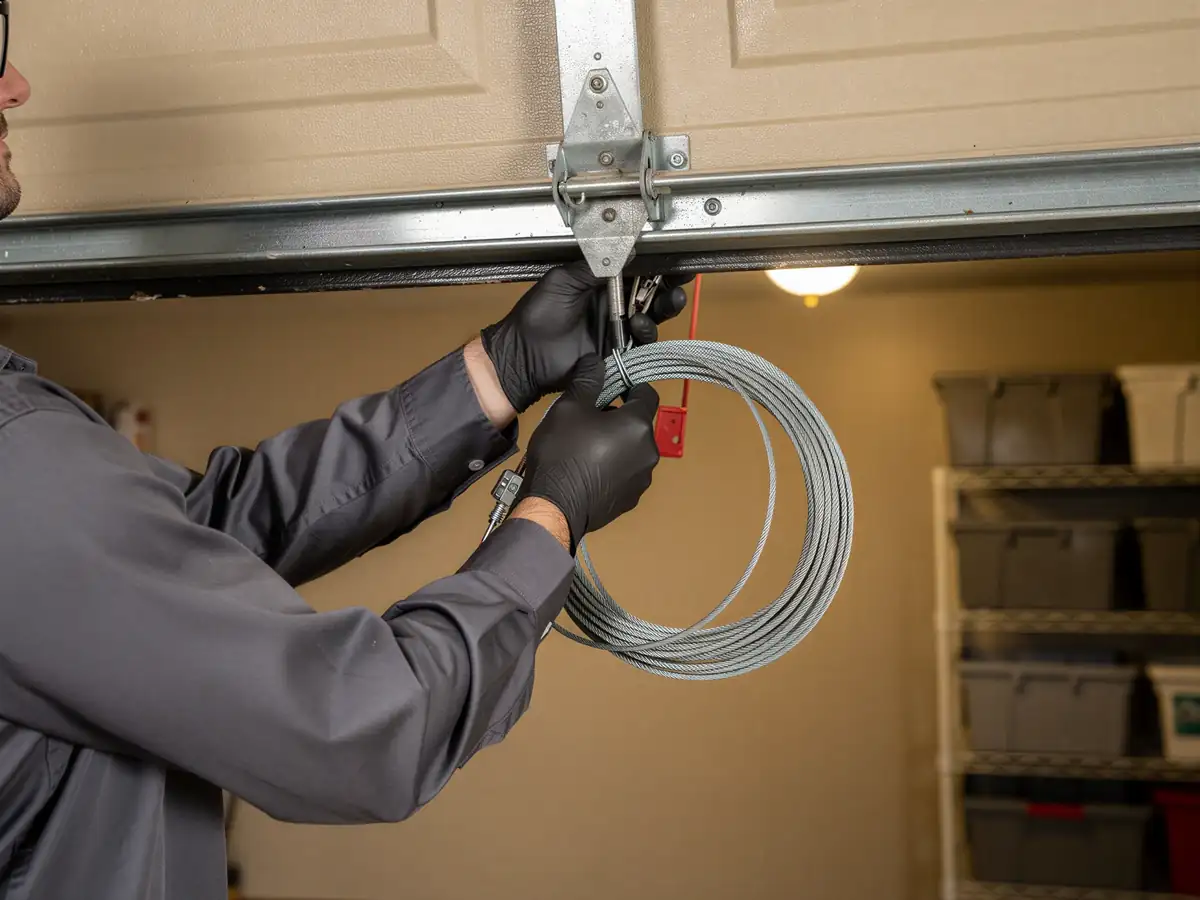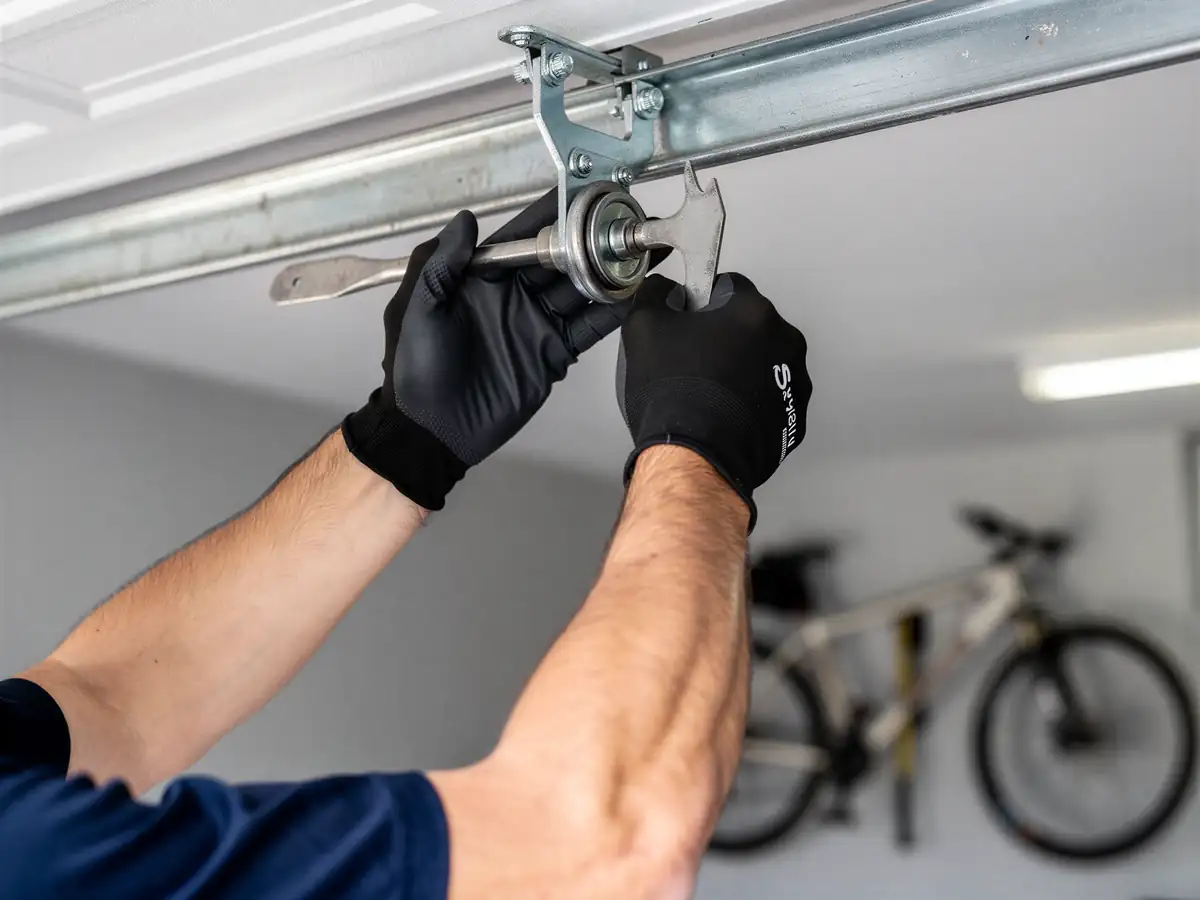
What the Fix Involves
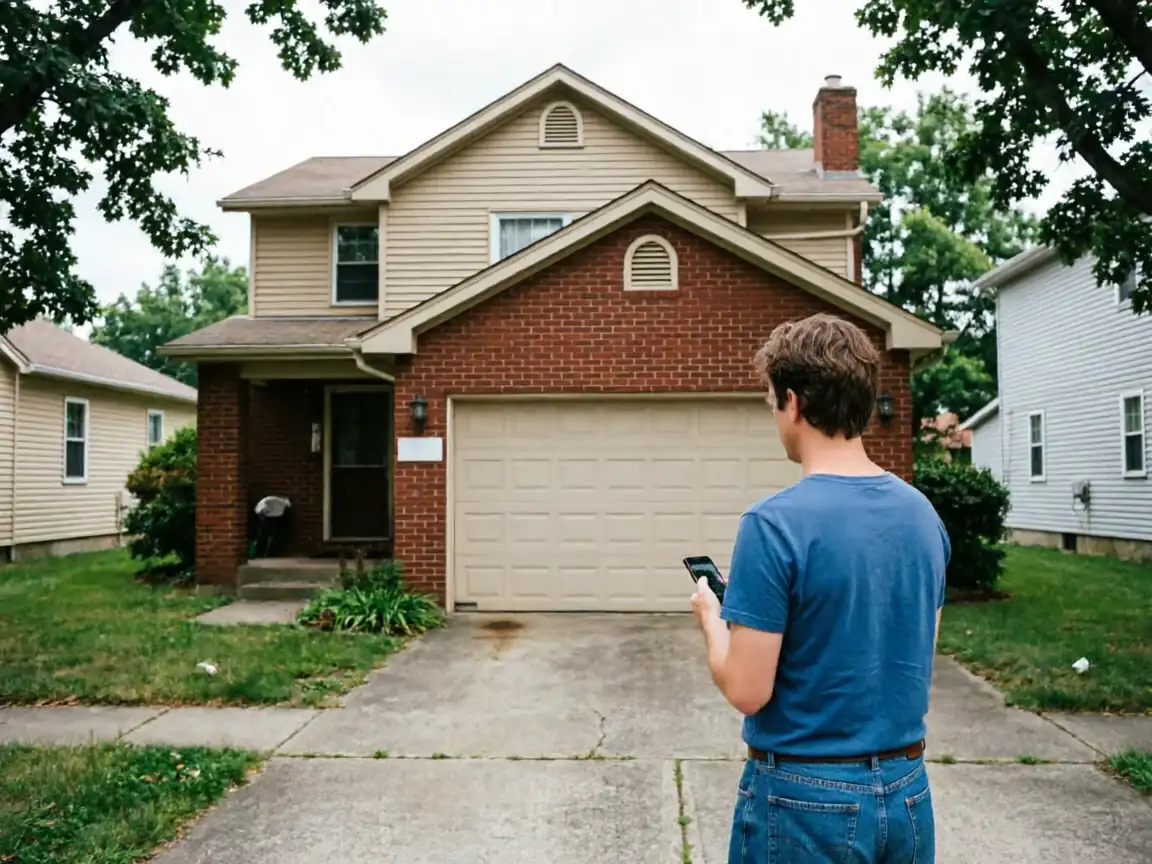
Carlisle sits seven miles out from Des Moines, and that distance shapes how a repair call here actually works. We don't keep a truck sitting idle in Carlisle waiting for the phone to ring - with 1,564 households in town, there isn't enough daily call volume to justify it. A technician comes out from the Des Moines side, which means the job gets scheduled around the drive rather than squeezed in on a whim. If we're already working a job near out toward Norwalk, a Carlisle call can sometimes slot in on the same run.
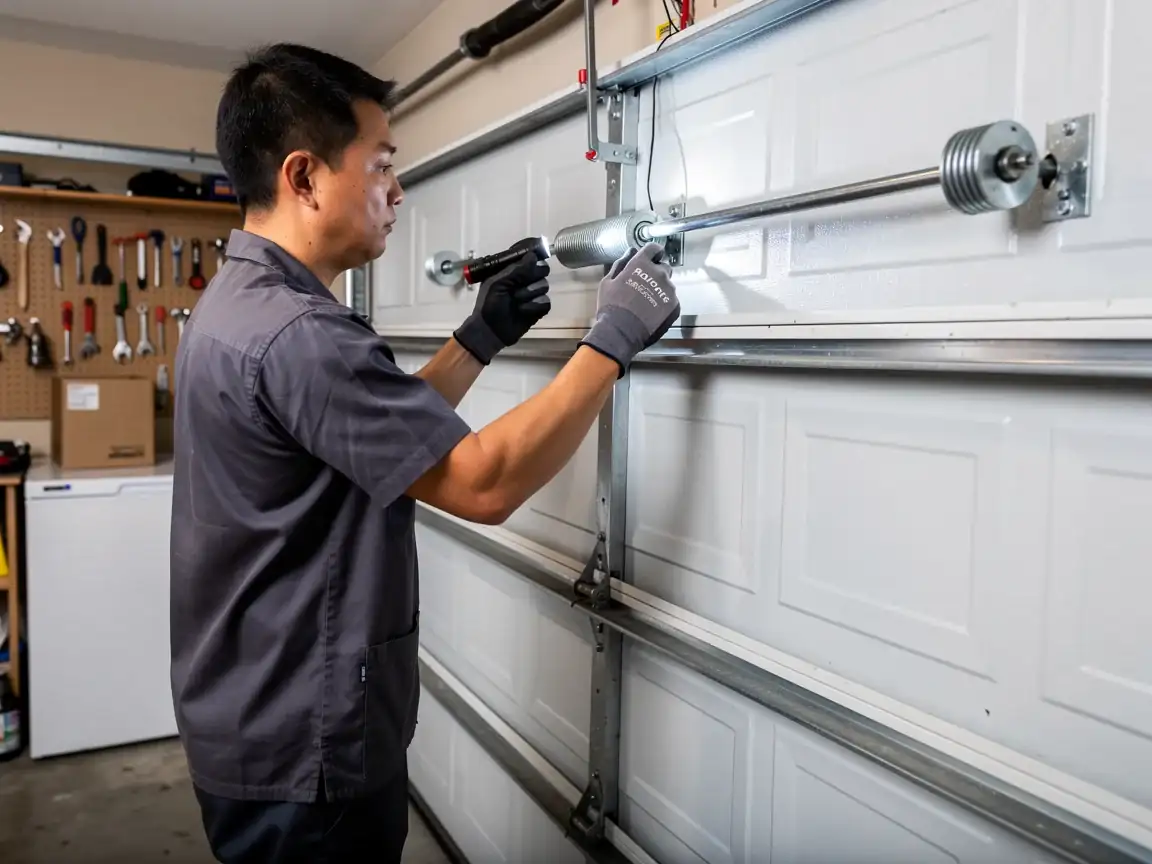
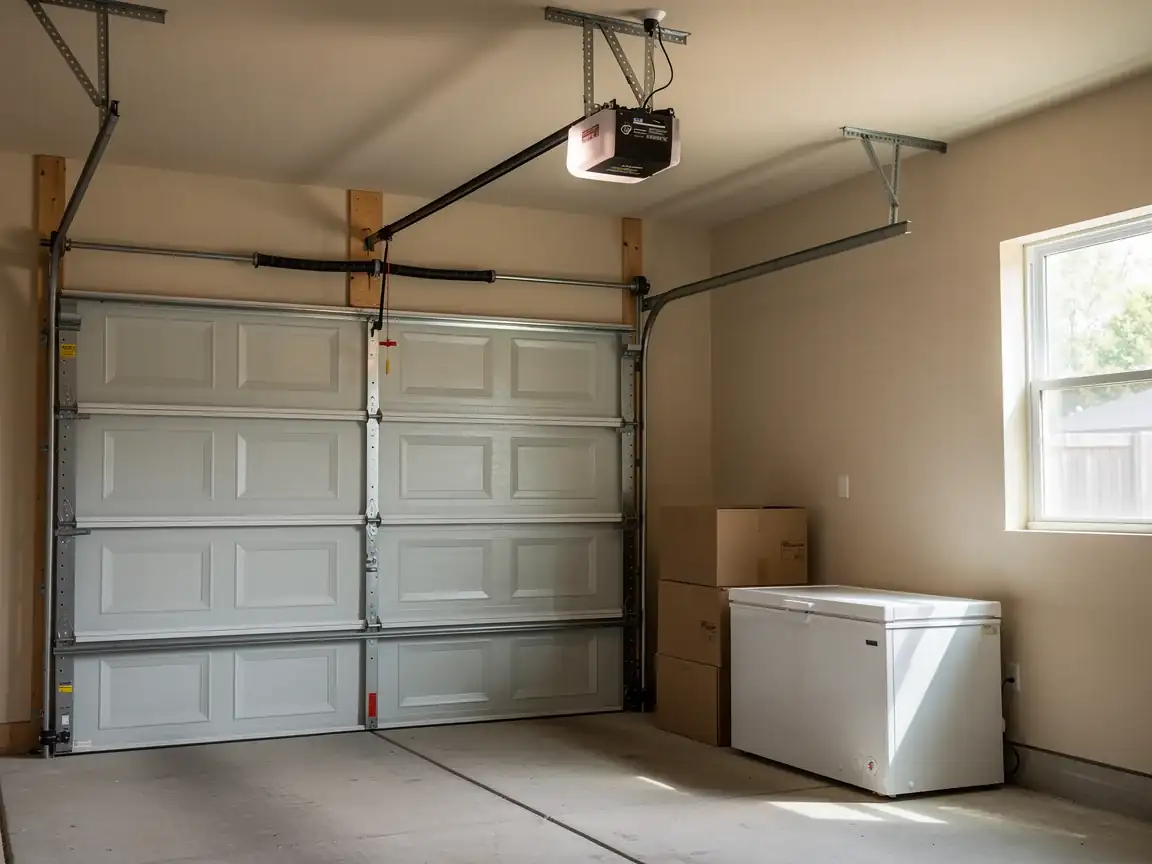
Once the truck is on-site, the fix itself depends on what's actually on the door. Carlisle's housing stock runs older than a lot of the newer subdivisions closer to Des Moines - most houses here went up around 1973, well before the area-wide median build year of 1995. That matters because a 1973-era garage almost always has an extension-spring system riding a horizontal track above the door, not the torsion spring wound on a shaft that's standard in newer construction. Diagnosing and fixing extension-spring doors is a different job: different tension, different failure points, different parts on the truck.
The Complications
The main complication in Carlisle is age-matched hardware
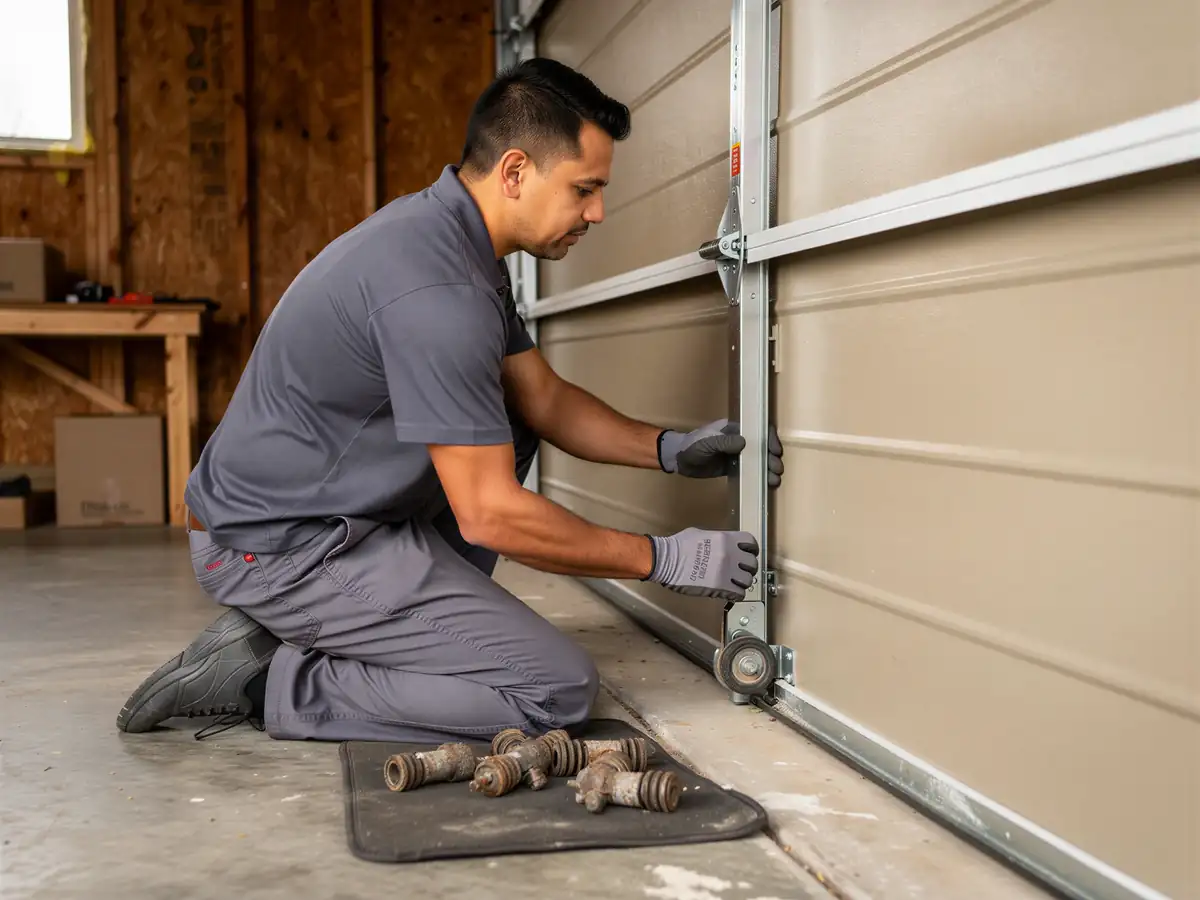
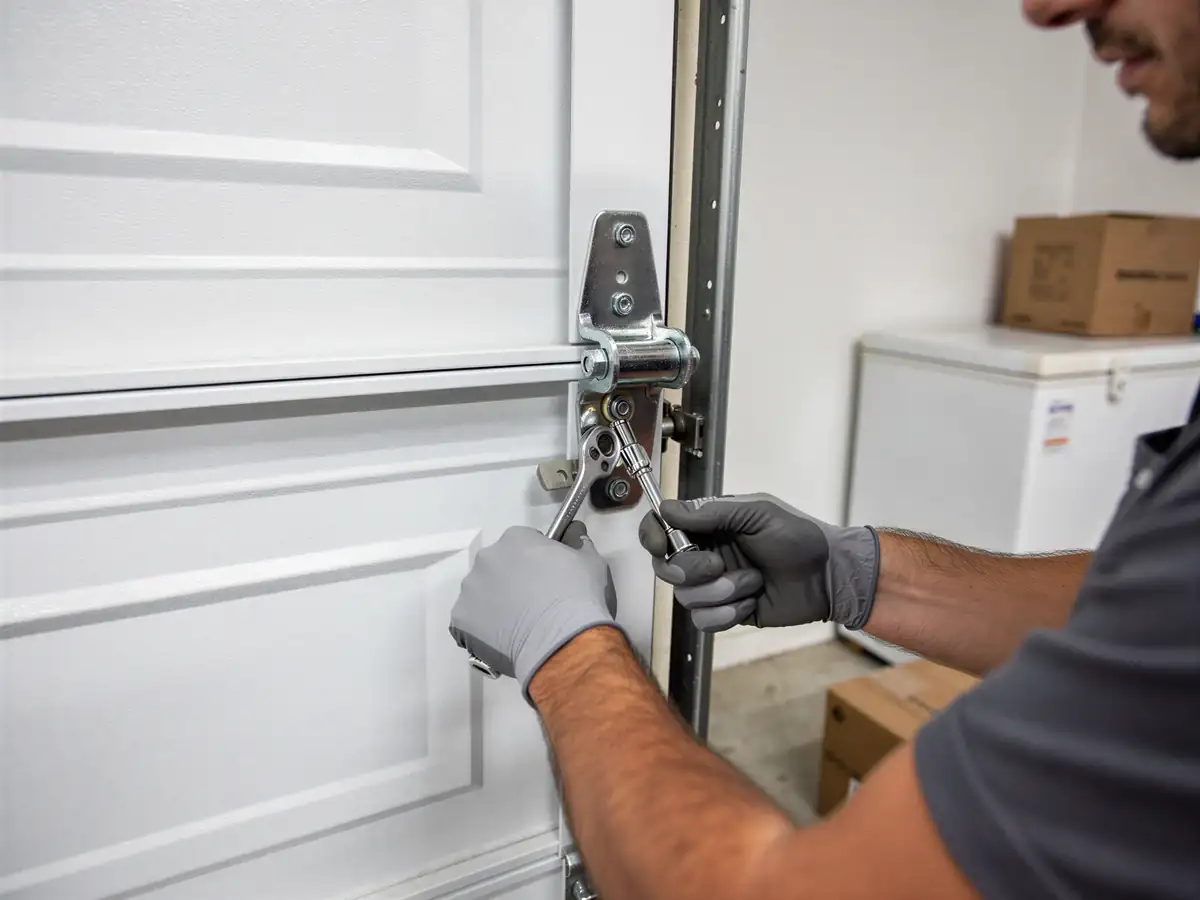
A door built in the early 1970s often still has its original track brackets and roller stems, even if the springs or cables have been swapped out once or twice over fifty years. Original brackets can be bent, rusted at the mounting bolts, or simply undersized for a heavier replacement panel, which means a spring repair sometimes turns into a track repair once we're actually looking at it.
Extension-spring systems from this era were also built before safety cables through the spring coil were standard
A snapped extension spring on an older, uncabled setup doesn't just go slack - the coil can whip loose instead of staying contained along the rail. That's not a Carlisle-specific defect, it's just what a door built to 1973-era expectations looks like fifty years on, and it's worth knowing before a spring lets go on its own.
One honest limitation
If the track brackets or the header above the door have rusted or pulled loose from the framing, that's a carpentry problem before it's a garage door problem, and we'll tell you that rather than bolt new hardware to wood that won't hold it.
How Long You Are Without the Door
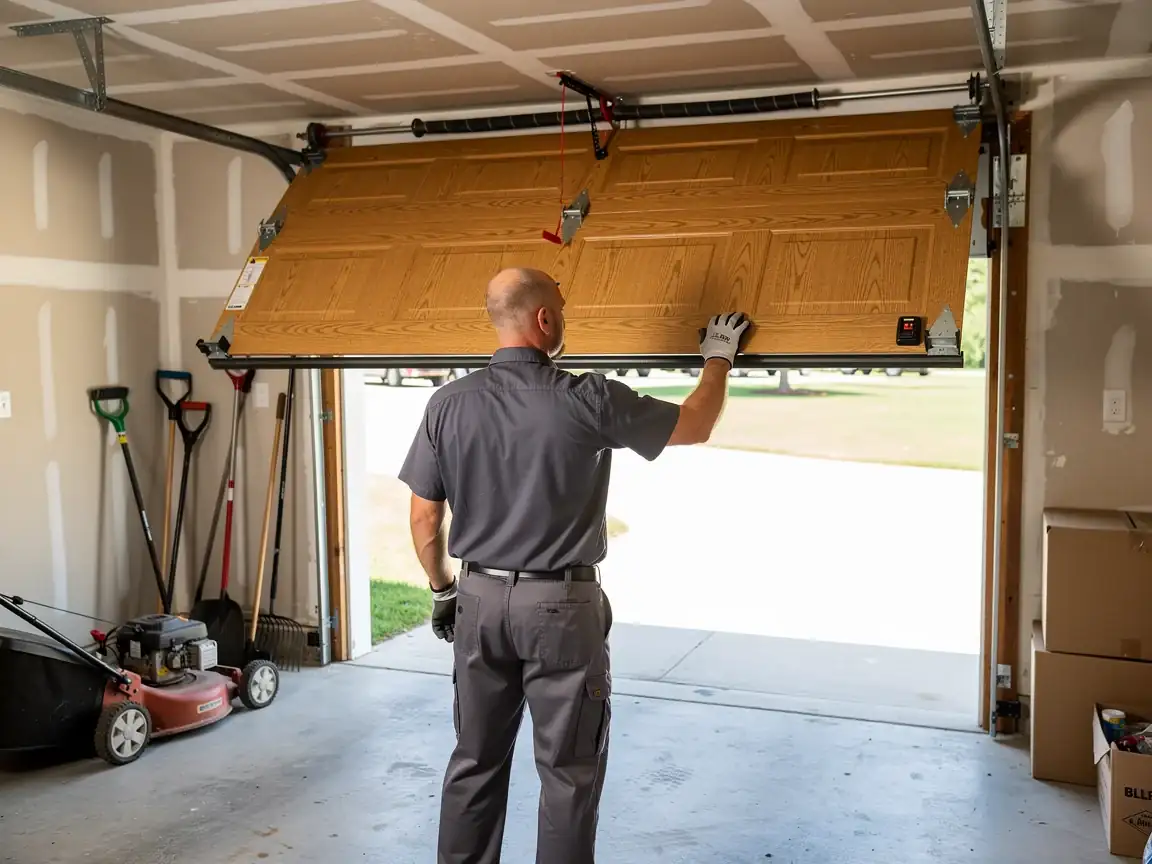
Because every Carlisle call routes from Des Moines, the time you spend without a working door has two parts: the drive, and the repair itself. The drive is fixed - seven miles each way doesn't change based on the job. What varies is the repair once the technician is there. A broken extension spring on an older horizontal-track system is usually a same-visit fix once parts are on the truck, since it's a common enough part that it rides along on most runs out this way.
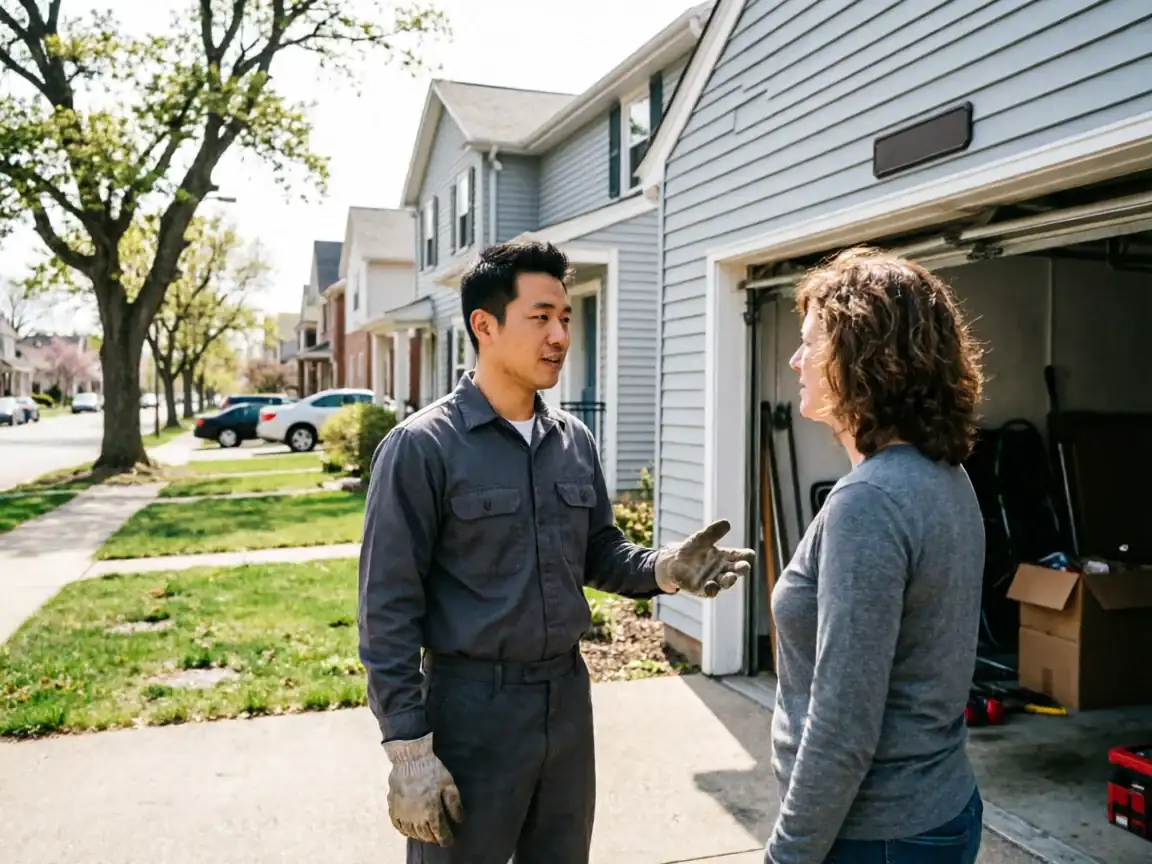
Where it stretches out is when the original hardware won't take a standard replacement part cleanly - bent track, a mounting bracket that's rusted through, or a door panel that's been replaced once already with something that doesn't match the original spec. In those cases we may need to come back with a part ordered specifically for that door, which means a second trip from Des Moines rather than a second trip across town. We'll tell you up front if that's where your job is headed, because a return trip on a seven-mile drive is worth planning around rather than discovering.
Why This Fails Locally
Central Iowa's cold winters put real stress on garage door springs regardless of age, but the way that stress shows up in Carlisle is tied to the hardware itself. Extension springs stretched along a horizontal rail lose tension at a different rate than torsion springs wound on a shaft, and cold contracts steel differently depending on how it's loaded. A torsion spring under steady torque behaves more predictably through a cold snap than an extension spring cycling open and shut on a rail that's picked up rust over five decades of winters.
That combination - 1973-era extension-spring hardware plus a cold climate - is why doors in Carlisle tend to fail at the spring and the track roller rather than at the opener or the panel itself. It's also why a repair here often means replacing more than just the broken part: a spring under new tension pulling against a rusted roller or a bent bracket just shifts the failure point down the line. None of that is unique to any one house, but it's the pattern this town's housing stock and this region's winters produce together.