What the Fix Involves
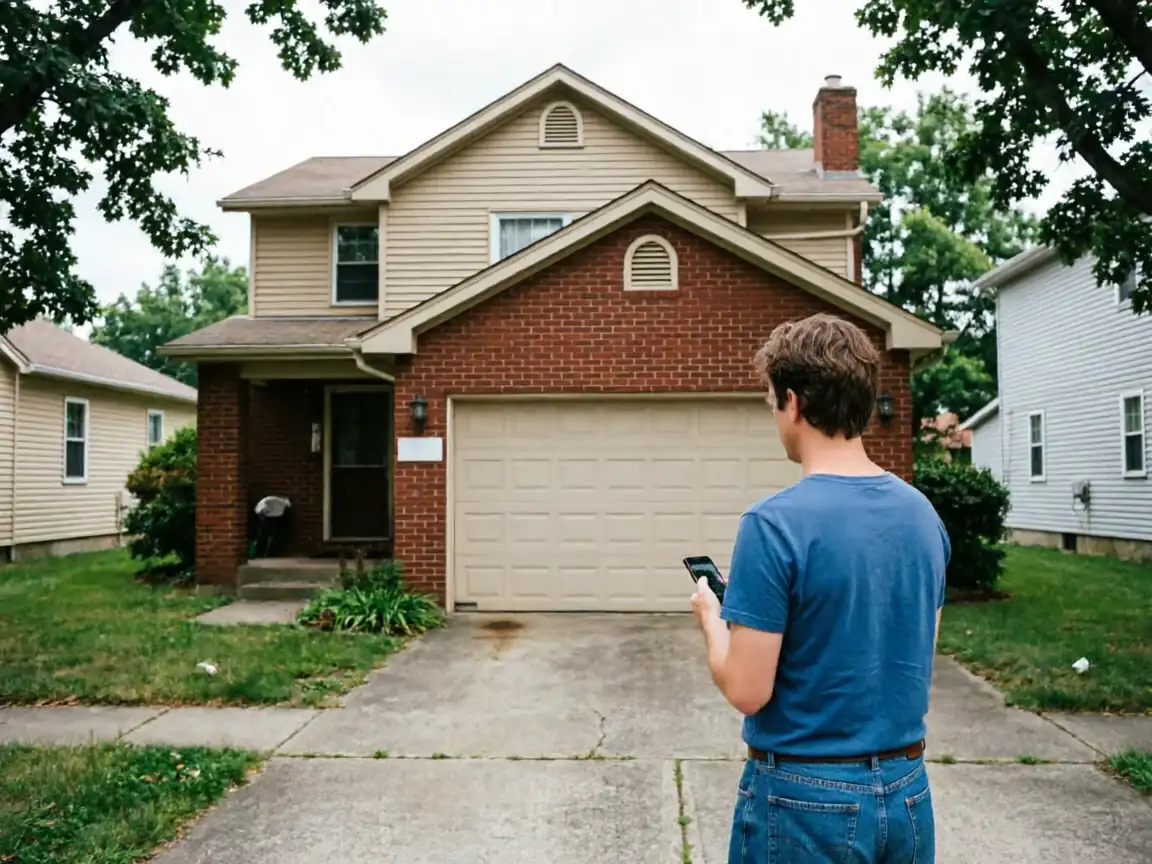
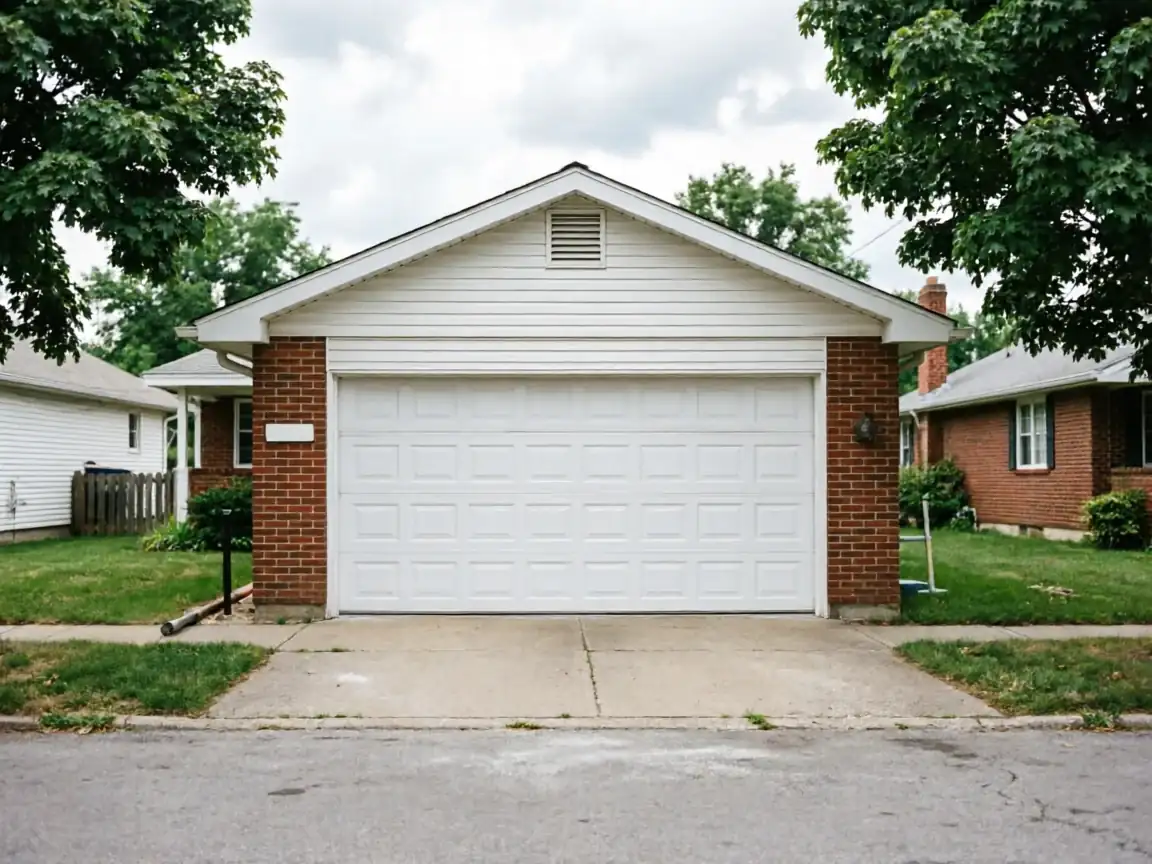
Carlisle's housing stock centers on 1973, which puts most garages here a full generation ahead of the newer subdivisions you'll find closer to Des Moines. Doors from that era were almost always hung on steel 7-ball rollers riding in galvanized tracks that were narrower than what's sold today. Fifty-some years of temperature swings and salt off winter roads turn those steel rollers into the thing you hear before you see - a grinding or popping sound as the door travels, usually worst at the bend where the vertical track curves into horizontal.
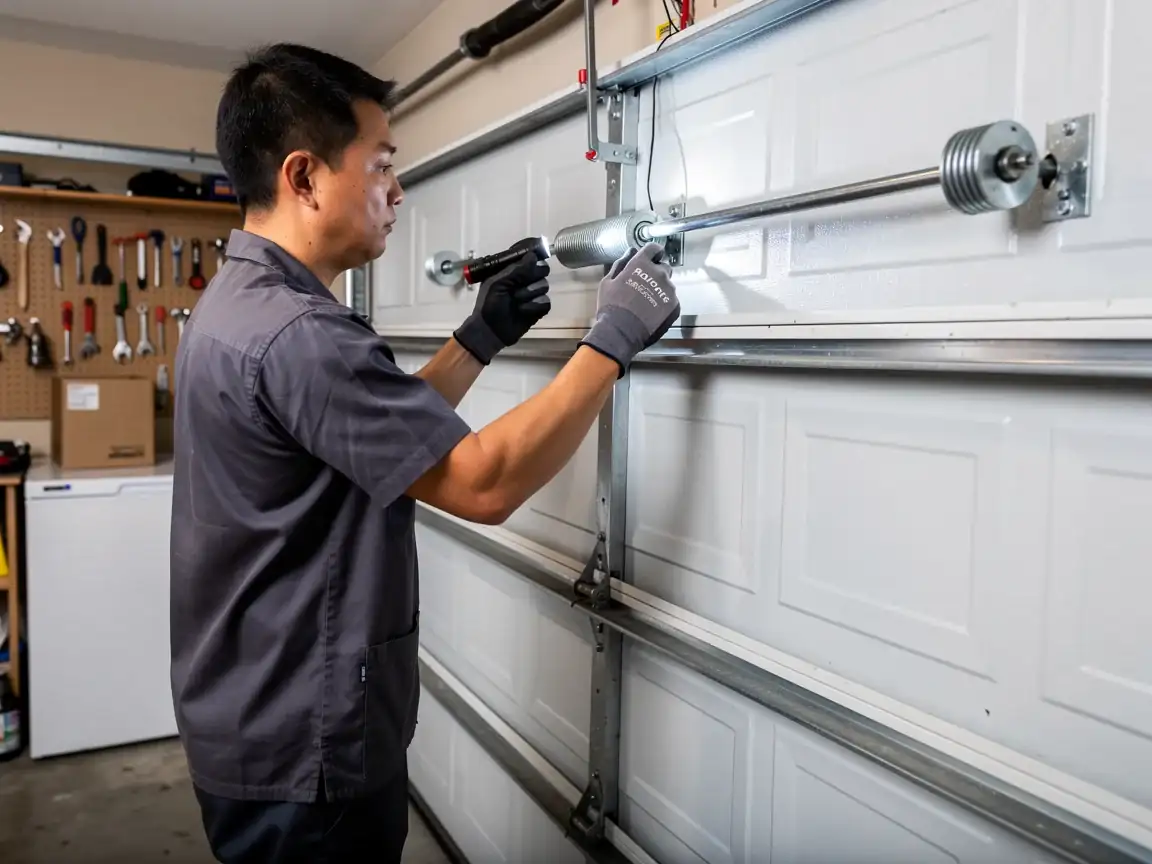
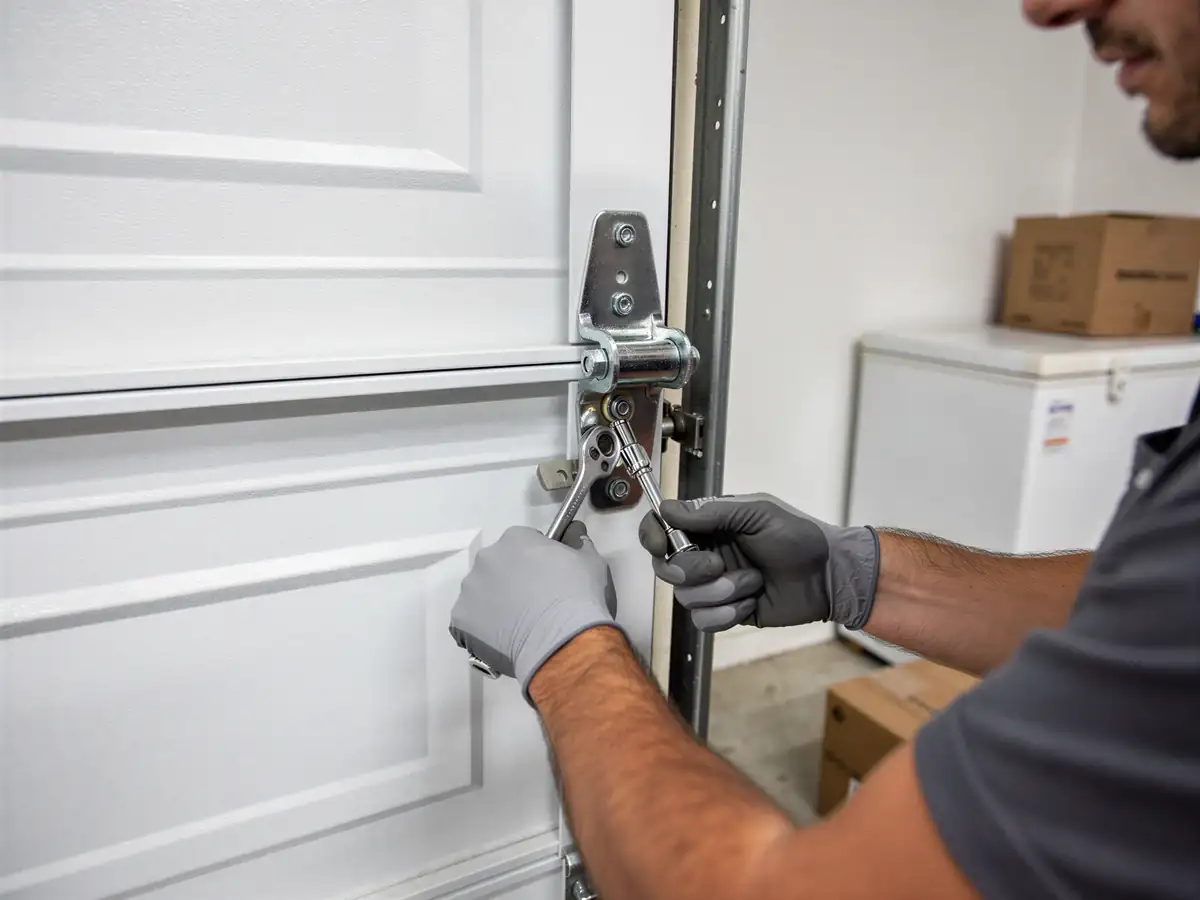
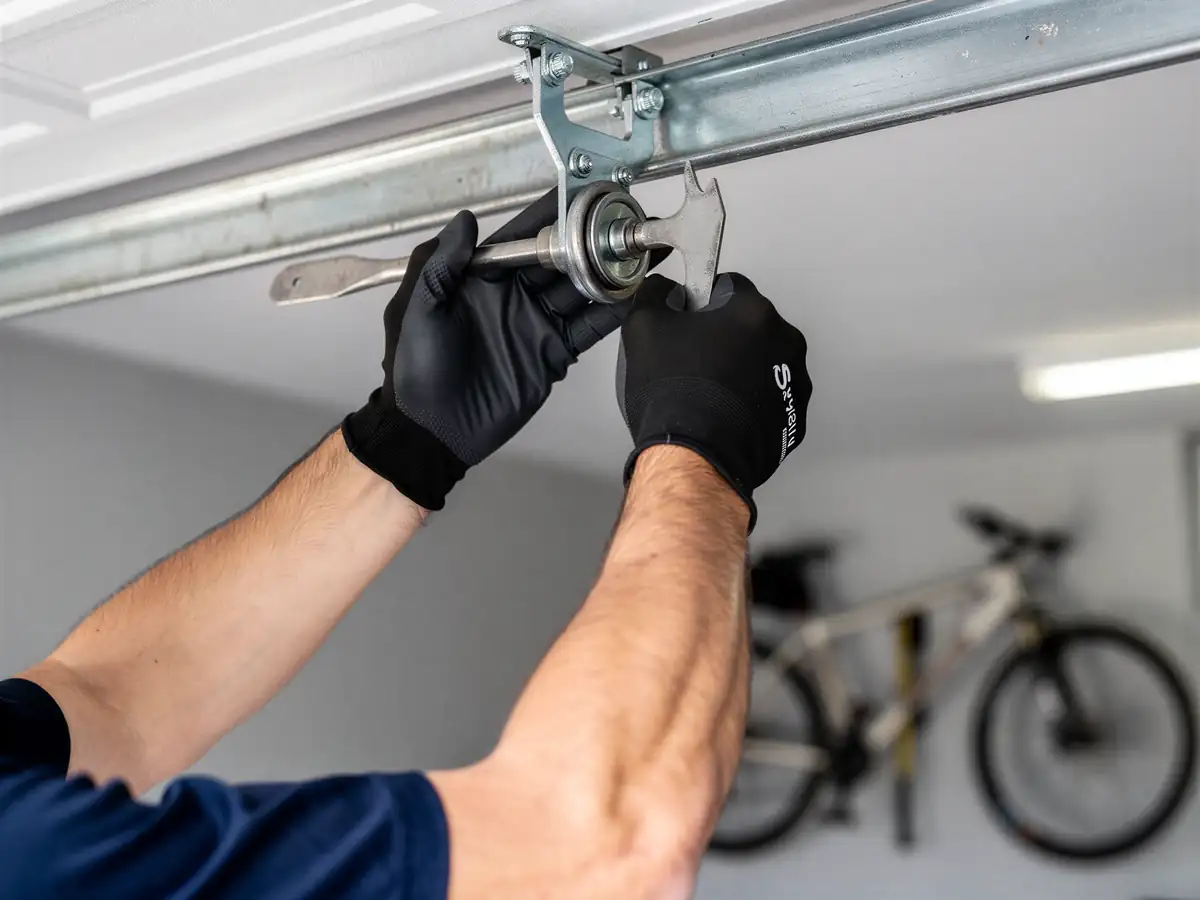
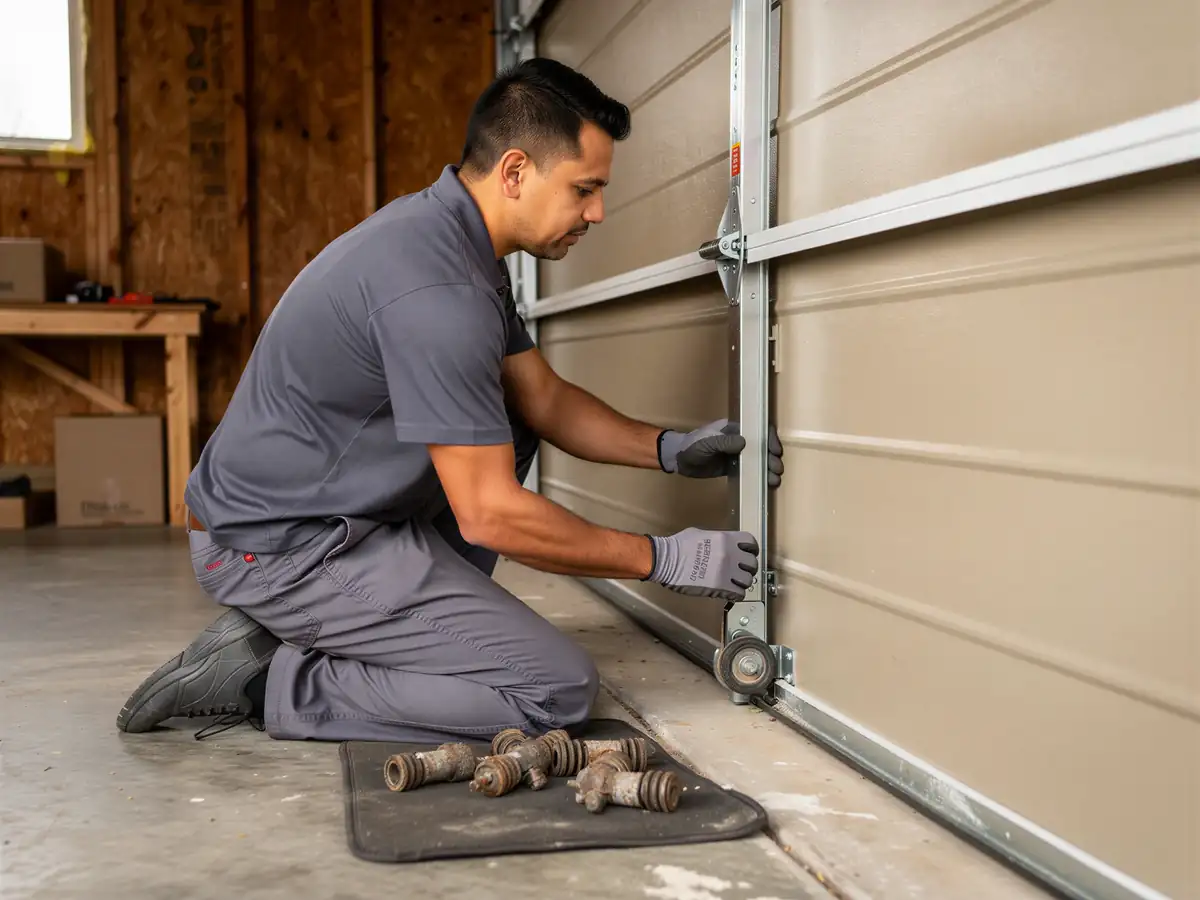
The fix itself is straightforward: we pull the old rollers off the hinges, check the hinges and stems for wear grooves (steel rollers chew these up over decades), and set new rollers - usually nylon with sealed bearings - into place one section at a time so the door never comes fully off its track. On a door this age, we also check whether the track itself has stretched or has rust pitting in the rail, since rollers wear faster in a track that's not true anymore. Swapping rollers into a warped or undersized 1970s track is a short-term fix at best; we tell you this upfront rather than sell you rollers that will wear again in a year.
The Complications
The complication specific to a house built around 1973 is hinge and stem wear that masks itself as a roller problem
The rollers are the part you hear, but if the hinge holes have stretched into ovals from decades of steel-on-steel contact, a new roller still rattles in a loose hinge and the noise comes right back. We check this before we quote roller-only work.
The other complication is track width
Original 1970s track is often a slightly different gauge than what ships today, so we carry stock sized to fit older openings rather than assuming one roller size fits every garage in the area. If a track has rusted through at the bottom bracket - common where the slab meets the frame in a garage this old - roller replacement alone won't quiet the door, and we'll say so rather than charge for a fix that doesn't hold.
Cold is also a factor here
In this climate band, grease inside an old roller bearing stiffens in winter, and a roller that was marginal in October can seize by January. That's often when the call comes in.
How Long You Are Without the Door
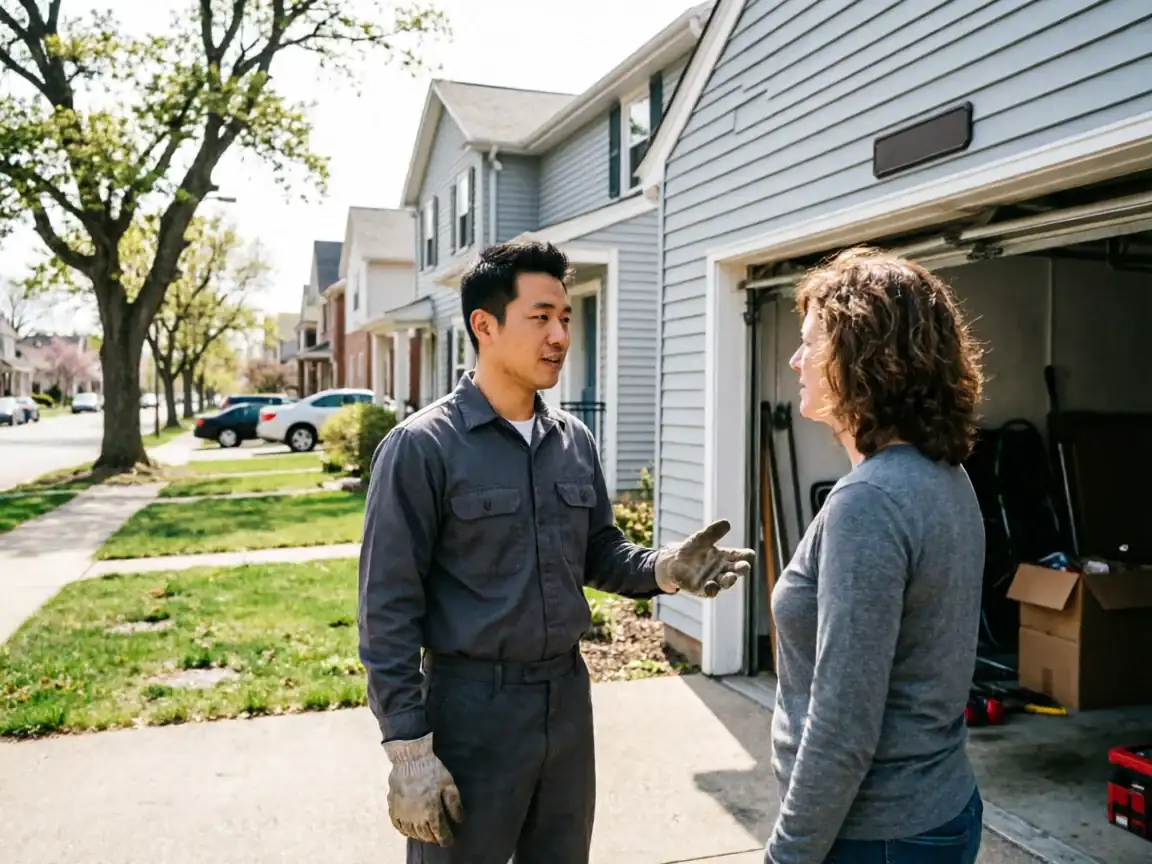
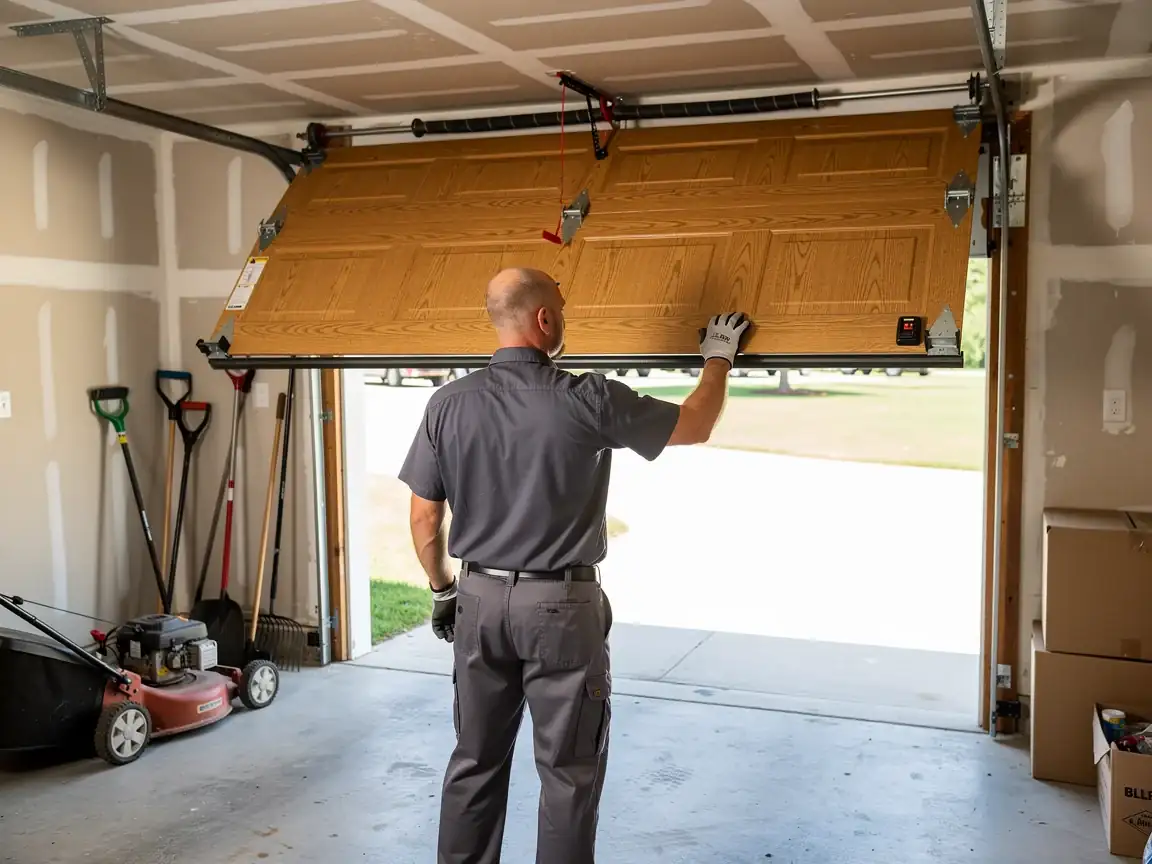
Roller replacement on a standard double or single door is a same-visit job once we're on site - the door comes down in sections, not all at once, so you're not standing in an open garage for an extended stretch. The time that adds up is the travel: we run this job out of Des Moines, about 7 miles from Carlisle, so factor that into when we can get there rather than how long the repair itself takes once a truck arrives.
If the track also needs replacing because of rust-through or stretching, plan on more time on site, since that work means resetting brackets and re-leveling the rail, not just swapping rollers in place. We won't know which job you've got until we look at the hinges and the track, not just listen to the noise.
Why This Fails Locally
With roughly 1,564 households in Carlisle and a housing stock centered on the early 1970s, a large share of the garage doors here are old enough that their original steel rollers have simply outlasted their expected life - steel 7-ball rollers are rated for a fraction of the cycles a sealed nylon roller handles, and most of these doors have never had the rollers swapped once. That's a different failure pattern than you'd see in a subdivision built in the 1990s or 2000s, where the rollers are often newer but the opener or the spring is the weak point instead.
Income levels in the area ($98,333 median household) mean most owners here replace rather than patch repeatedly, but that's a call worth making with the track condition in hand, not before. A worn roller on a sound track is a cheap, quick fix. A worn roller on a rusted or stretched track is a different job, and telling the two apart is the first thing we do, not the last.