Can You Do This Yourself
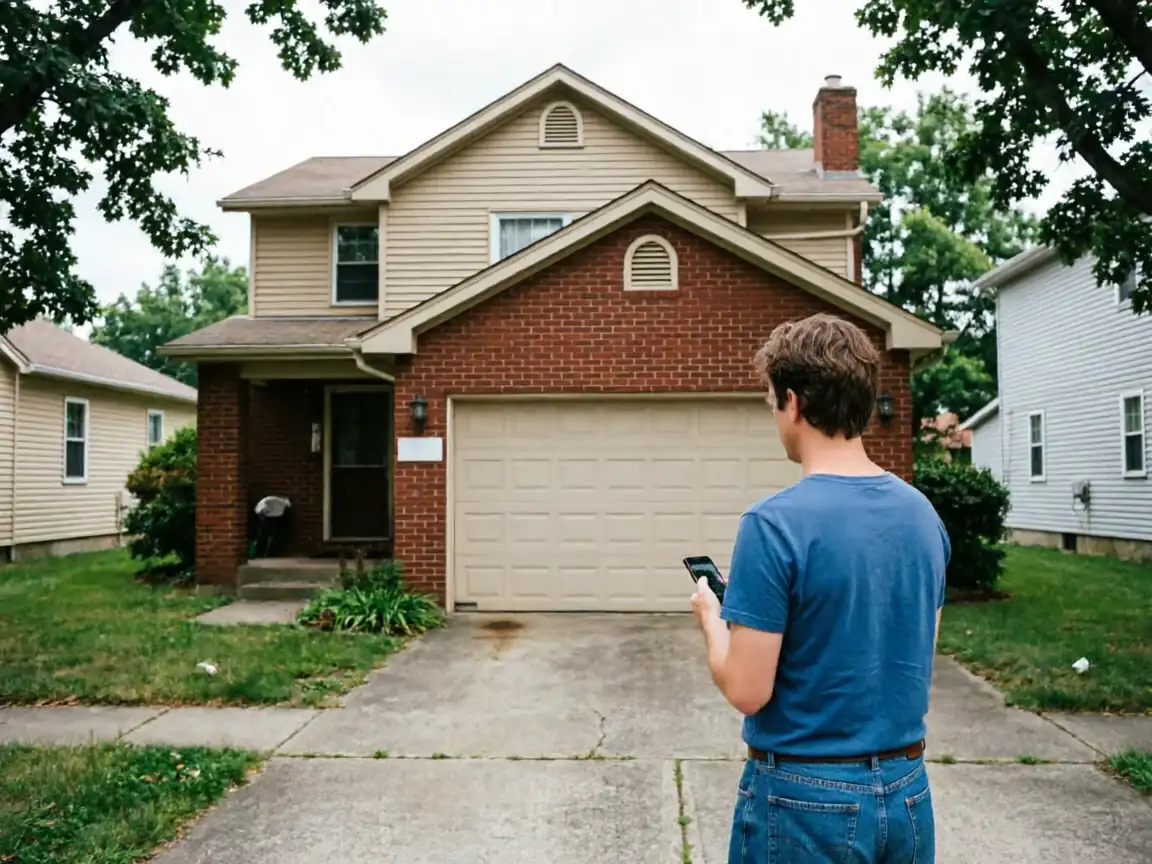
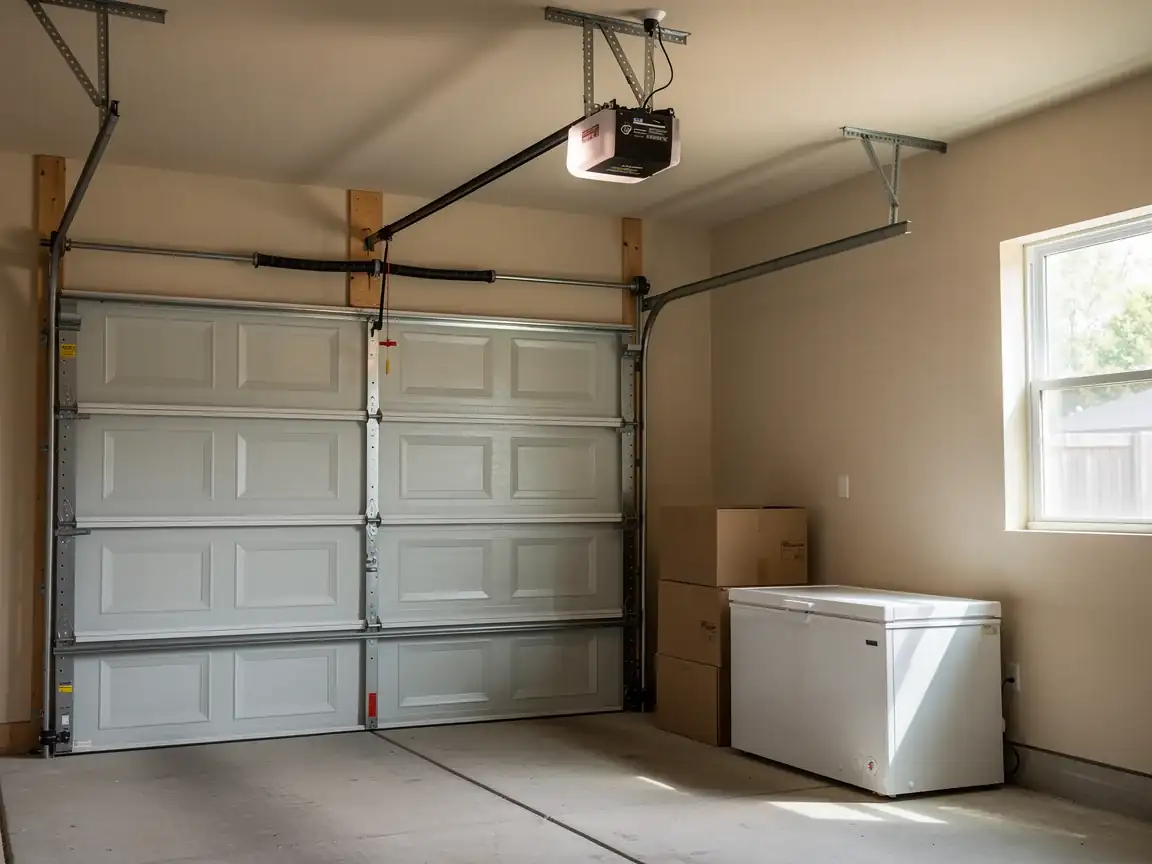
Most of Clive went up around 1995, and a lot of that original hardware is still hanging in the garage - the same torsion spring, the same steel track, sometimes the same chain-drive opener that came with the house. That's the first thing to know before you touch anything: a torsion spring that's close to 30 years old isn't a DIY job. It's wound under enough tension to break a hand or worse, and the tools to wind it safely aren't something most homeowners own.
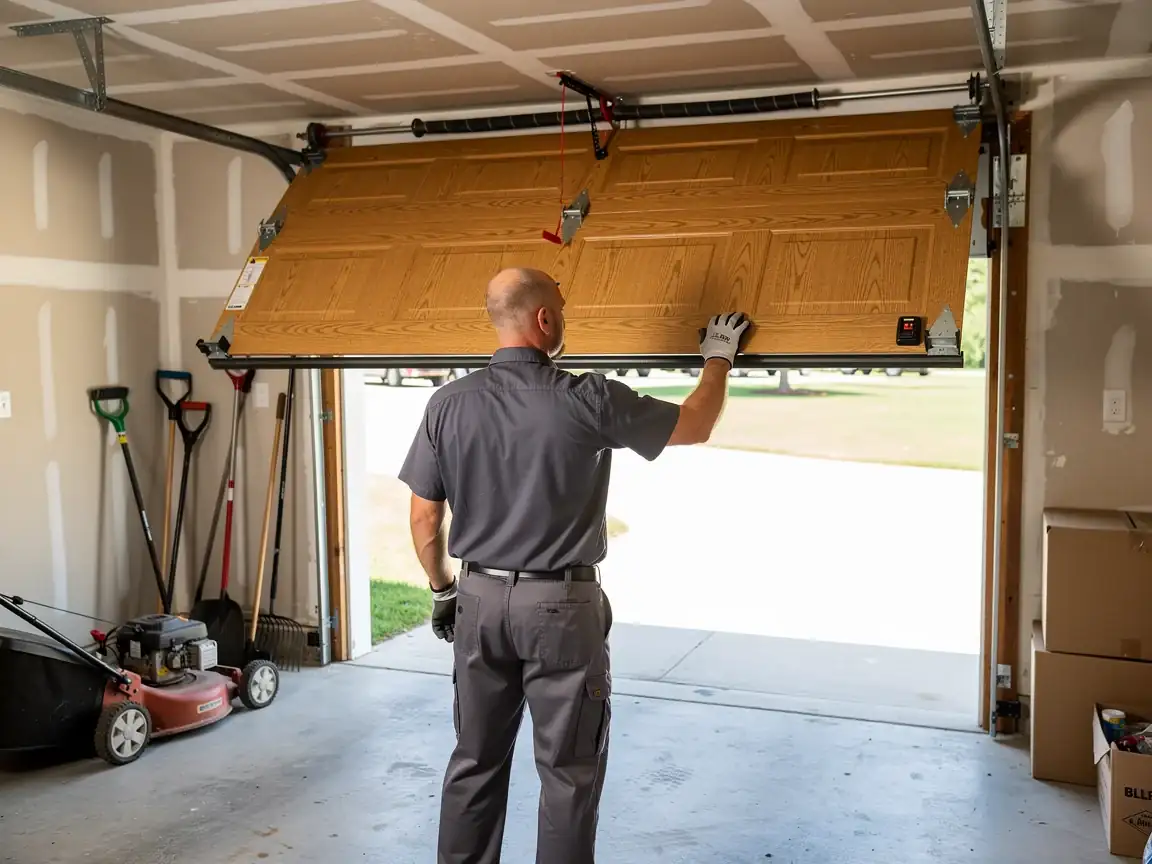
What you can safely check yourself: the photo-eye sensors near the floor (wipe them clean, make sure nothing's blocking the beam), the tightness of visible bolts on the track brackets, and whether the door reverses when it meets resistance. If the opener motor runs but the door doesn't move, or if you hear a loud bang followed by the door refusing to open, that's almost always a broken spring or snapped cable - stop there and call it in. Climbing a ladder to mess with a wound spring on a house this age is the one move that turns a repair bill into an ER visit. We'd rather you wait for us than get this one wrong.
Why This Fails Locally
Clive's housing stock clusters tightly around 1995
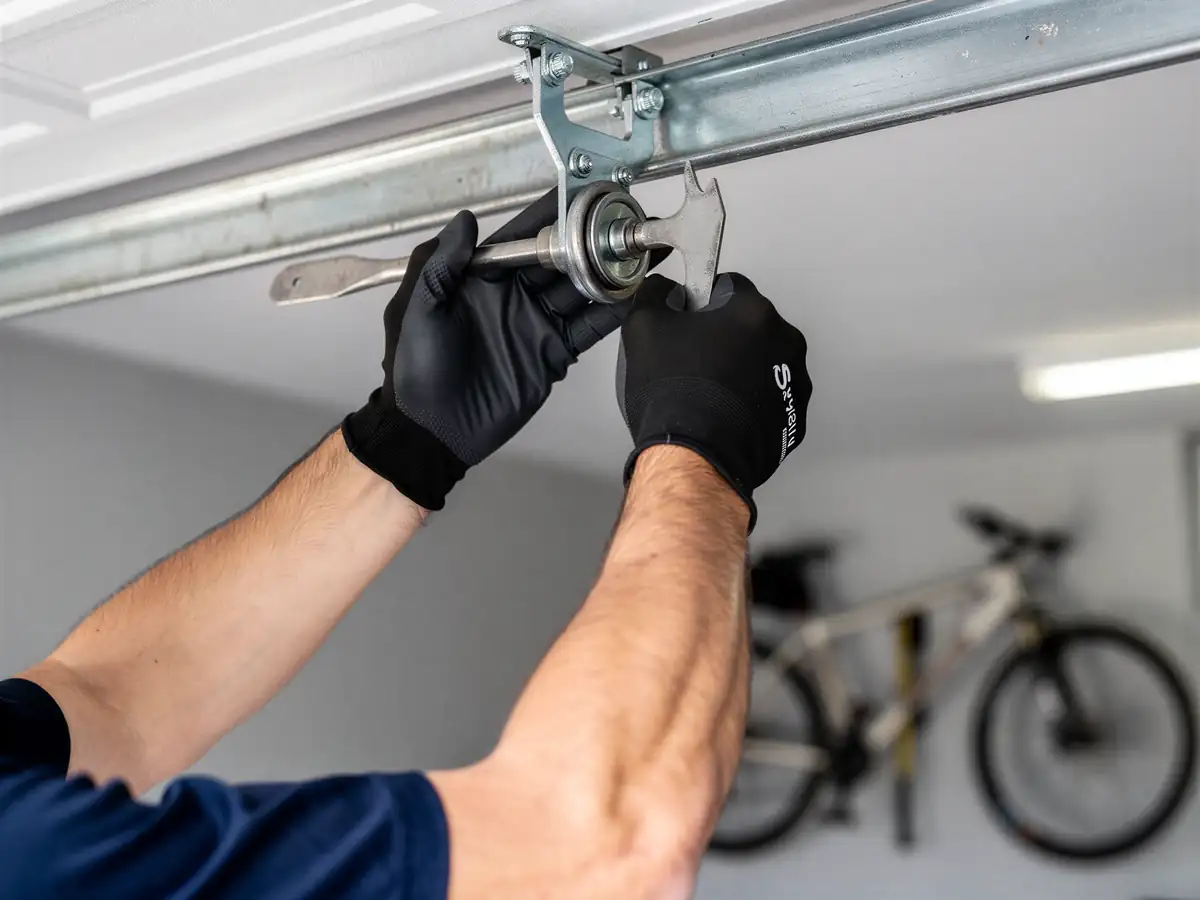
Which means a huge share of garages here are running original torsion springs rated for somewhere around 10,000 cycles. Do the math on three decades of daily use and most of those springs are well past due, even if they haven't snapped yet. Across the wider Des Moines service area the build years run 1959 to 2009, with most of that stock dating to the 1980s and 90s - Clive sits right in the middle of that window, so the failure pattern here is consistent: aging torsion springs, original steel rollers that have worn their tracks oval, and openers from an era before modern force-sensing safety standards.
The cold-moderate climate doesn't help
Winter temperature swings stiffen old lubricant and make brittle springs more likely to let go exactly when you need the door most - cold mornings, loaded car, no time to spare. None of this is unique drama; it's just what happens to hardware from a single, narrow construction era when it all ages out at once.
What It Costs
We don't publish a flat number here because what drives the bill in Clive isn't the town, it's the age of what's already on the door. A broken torsion spring on a door that's otherwise original is a straightforward swap. The cost climbs when the spring failure has already taken out a cable, bent a track, or stressed an opener gear that was never built to force-sensing standards in the first place - and on houses built in the mid-90s, that stacking of worn parts is common, not rare.
One honest limitation: if your opener is original to a 1995 build and the logic board or gear set has failed, we may tell you replacement beats repair. Parts for openers that old aren't always stocked anymore, and chasing down a 30-year-old circuit board can cost more in time than a new unit costs outright. We'll give you that call straight, not a quote padded with parts you don't need.
What the Fix Involves
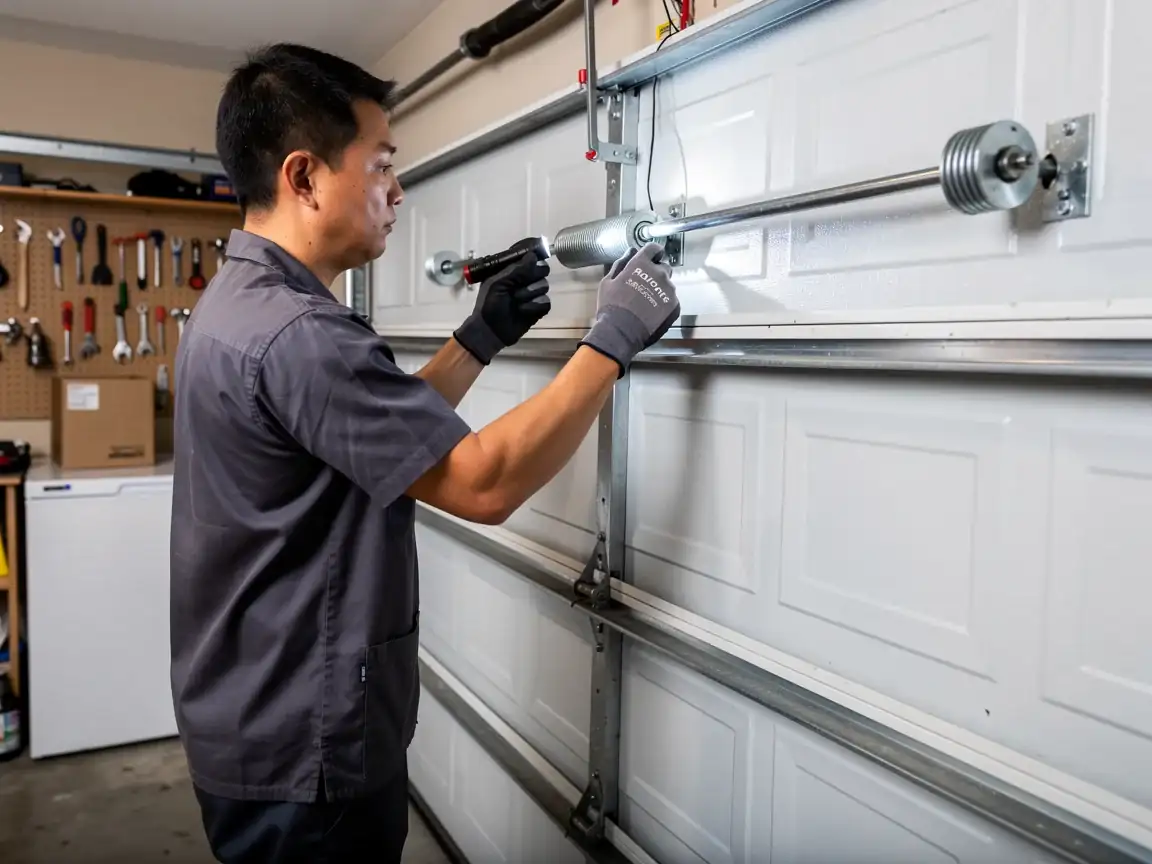
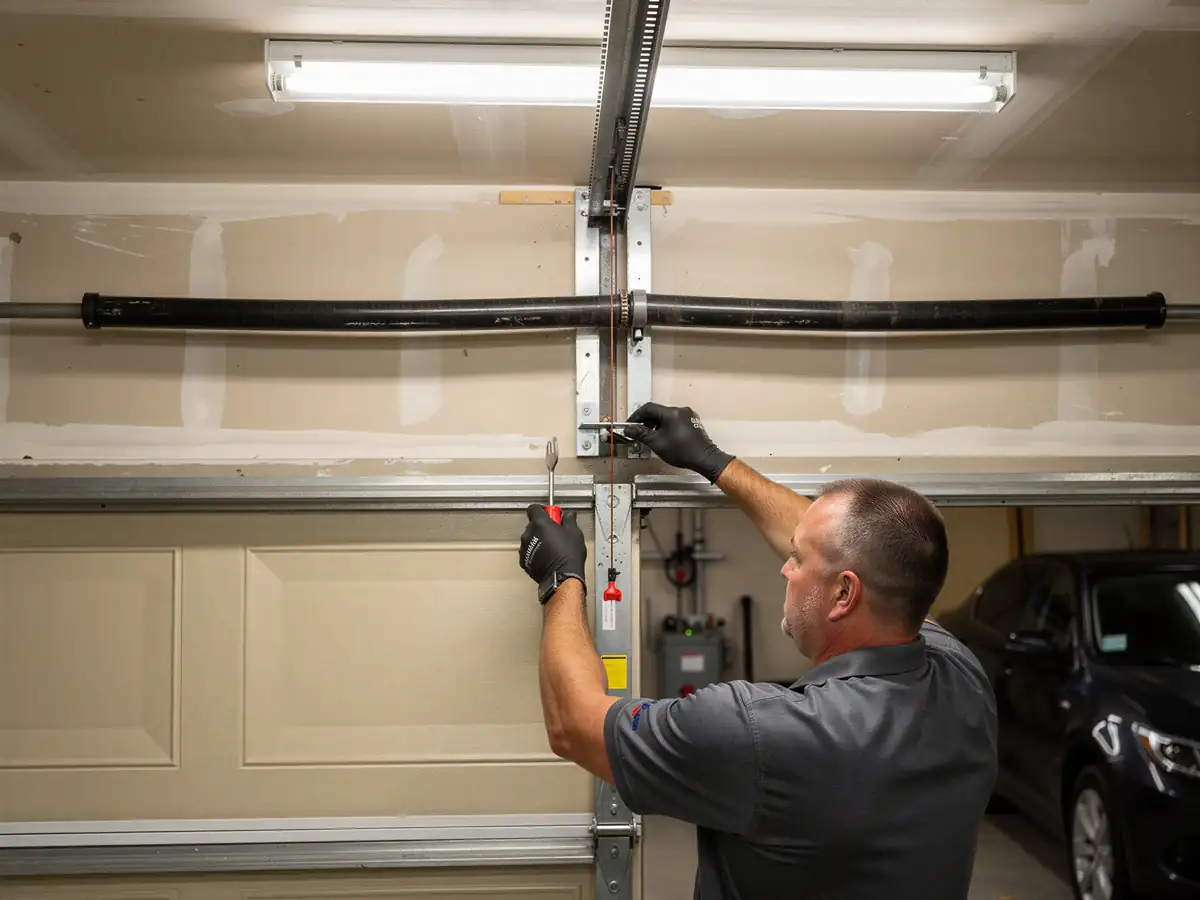
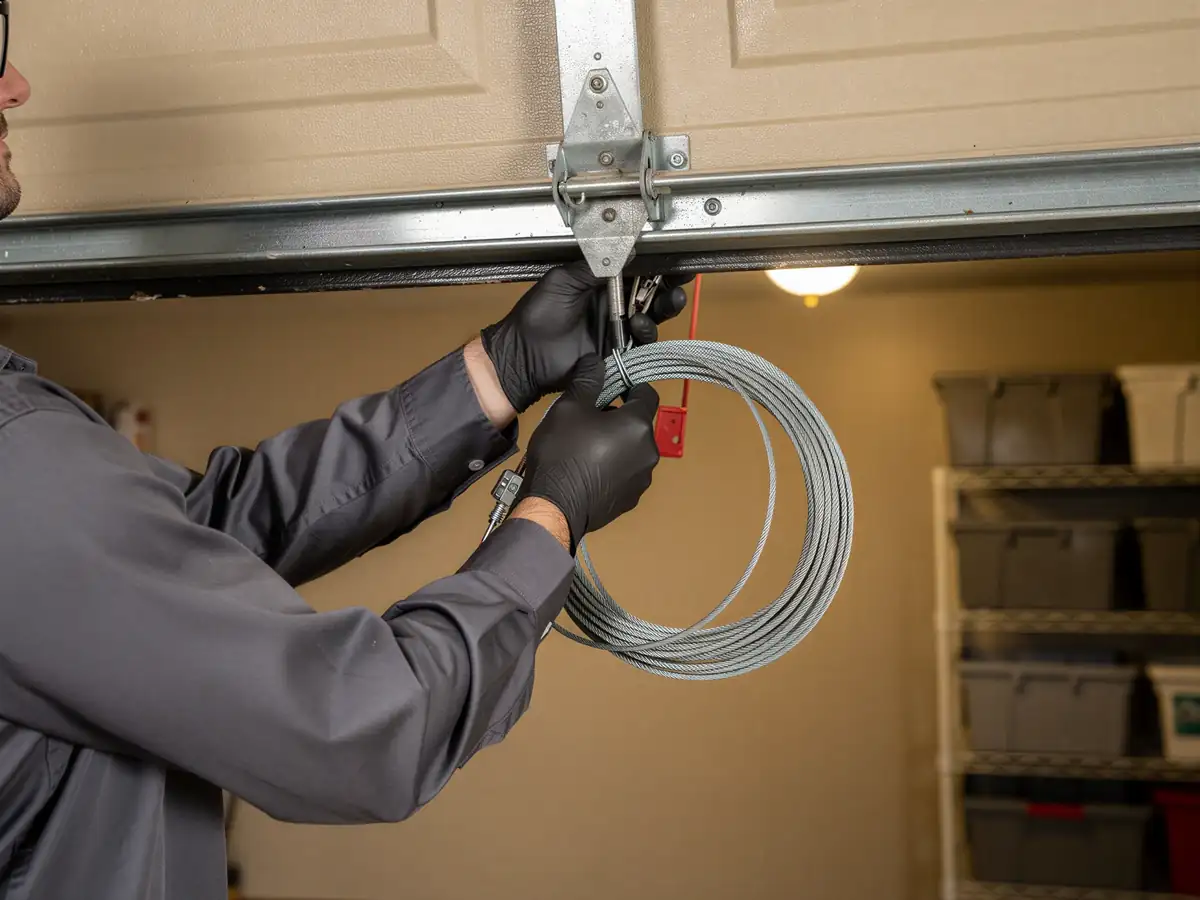
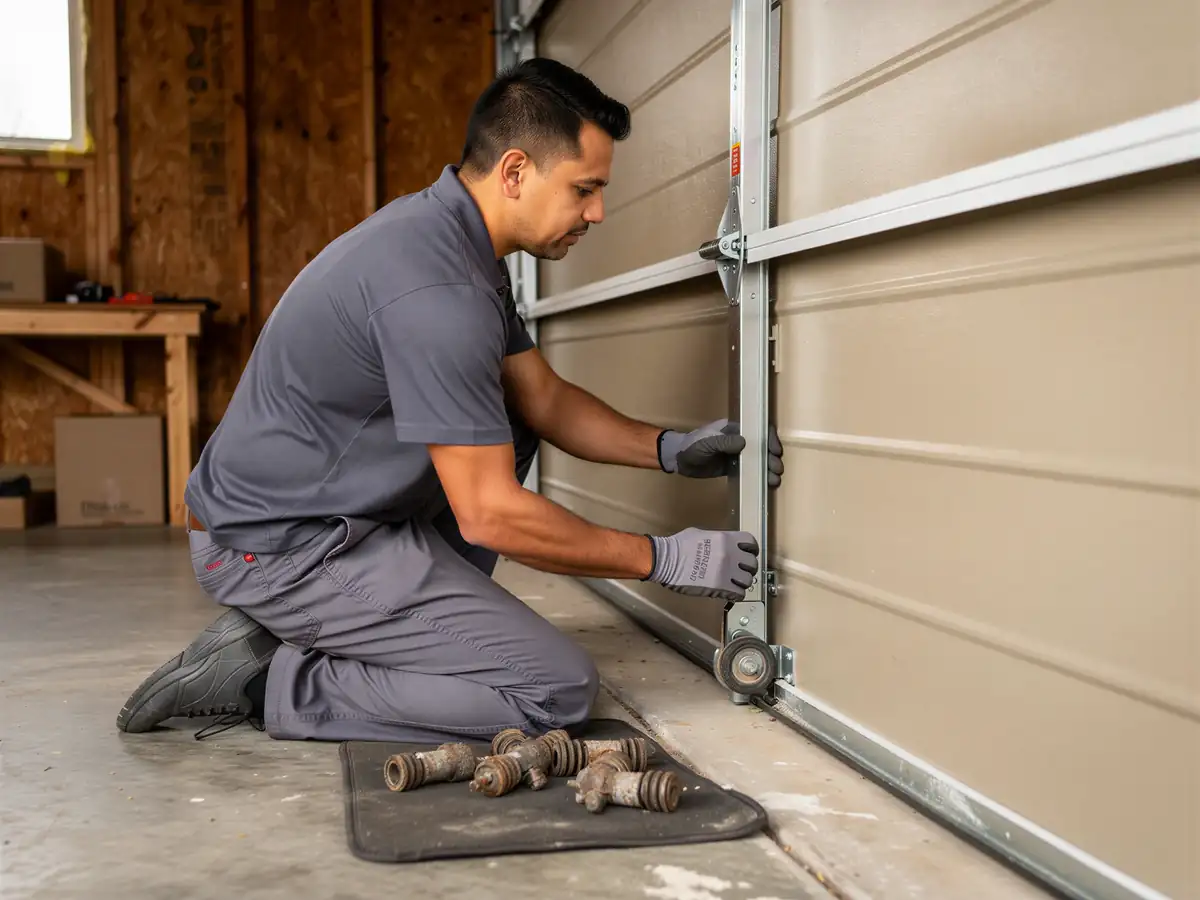
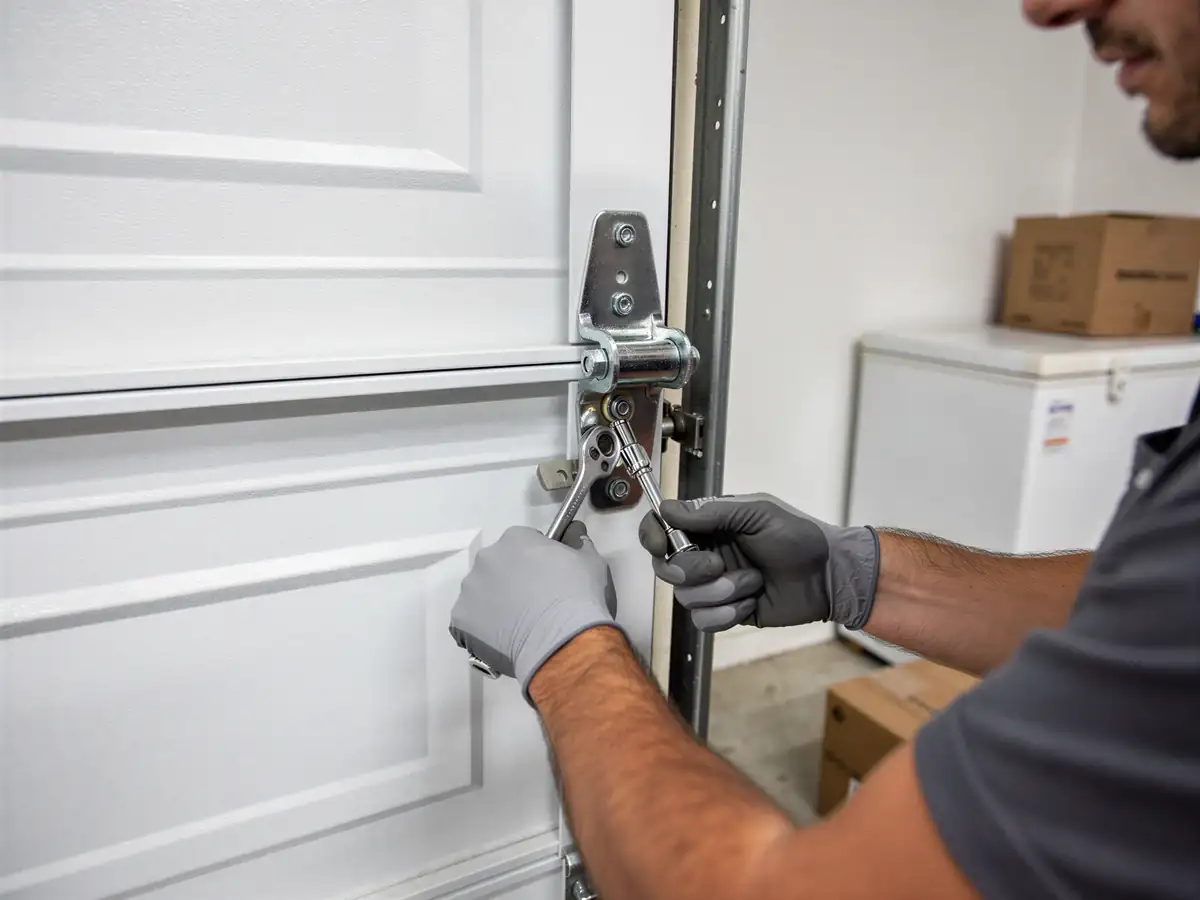
For a broken torsion spring, the job is: secure the door, unwind and remove the old spring, measure the replacement against the original wire gauge and wind, set it to match the door's weight, and test the balance by hand before the opener ever touches it again. On a house from Clive's build era, we're also checking the drum, the cable condition, and whether the track brackets have loosened from decades of vibration - all common on original hardware that's never been serviced.
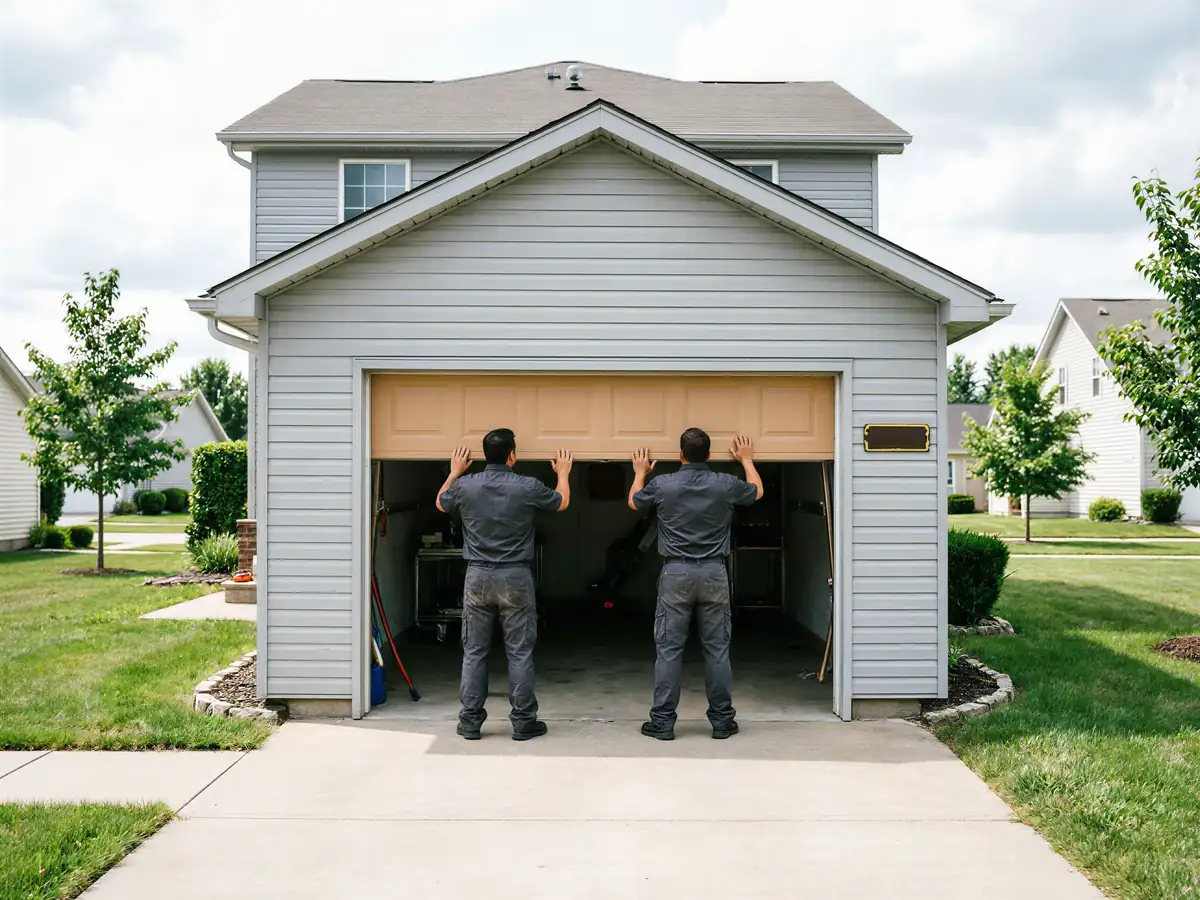
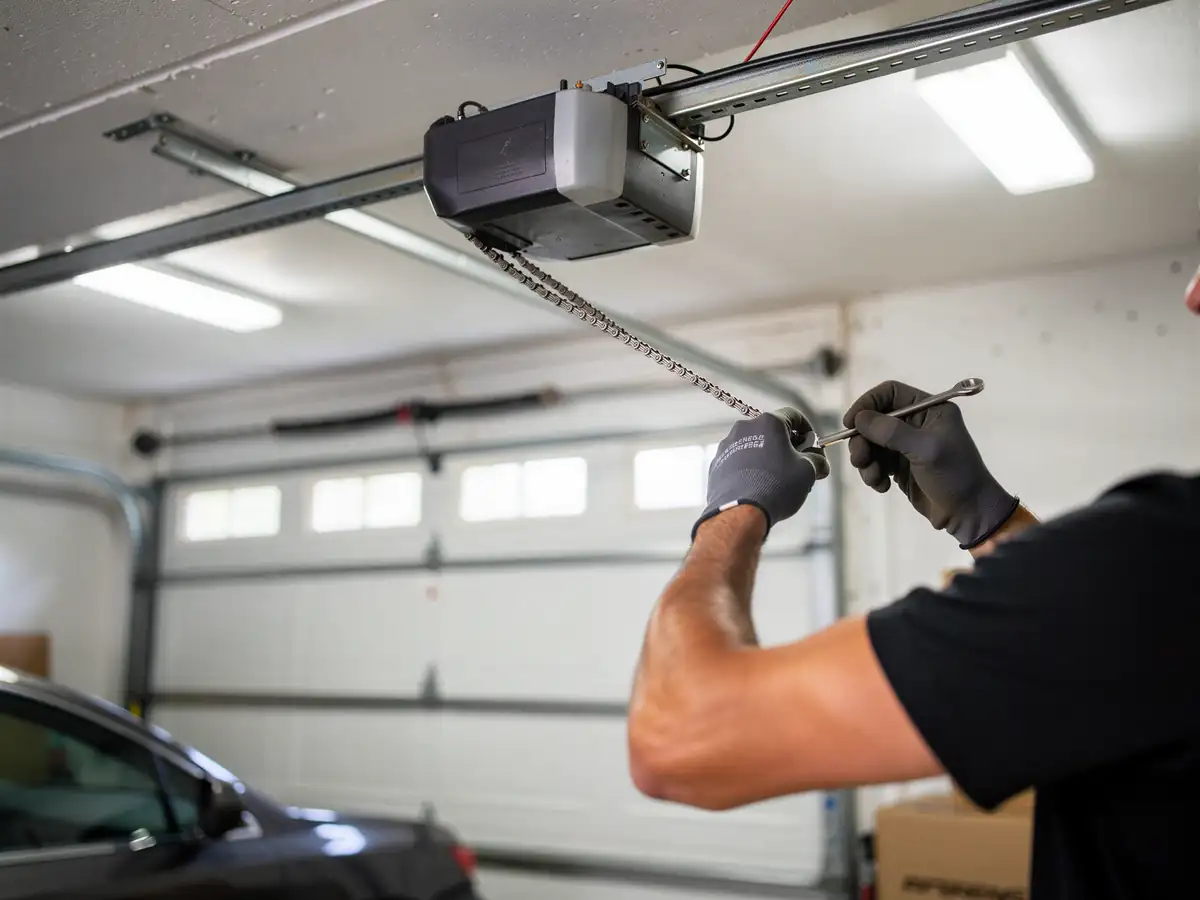
If the opener itself is the problem, we test the logic board, the force settings, and the safety sensors before replacing anything. Given how many Clive garages are still running their original motor unit, a lot of these calls end with a straight opener swap rather than a repair, simply because the parts to fix the old one aren't worth sourcing. Either way, we drive out from Des Moines, about 10 miles, and the work gets done in one visit.