The Symptom
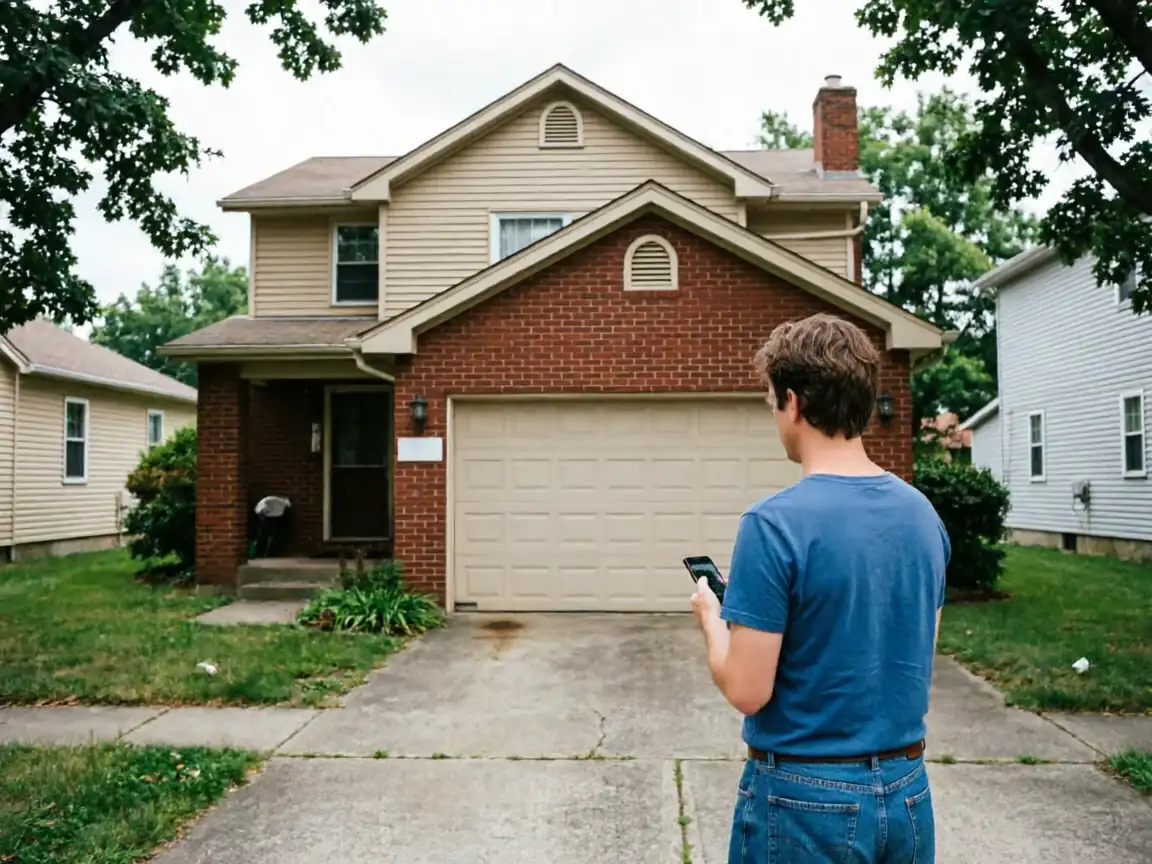
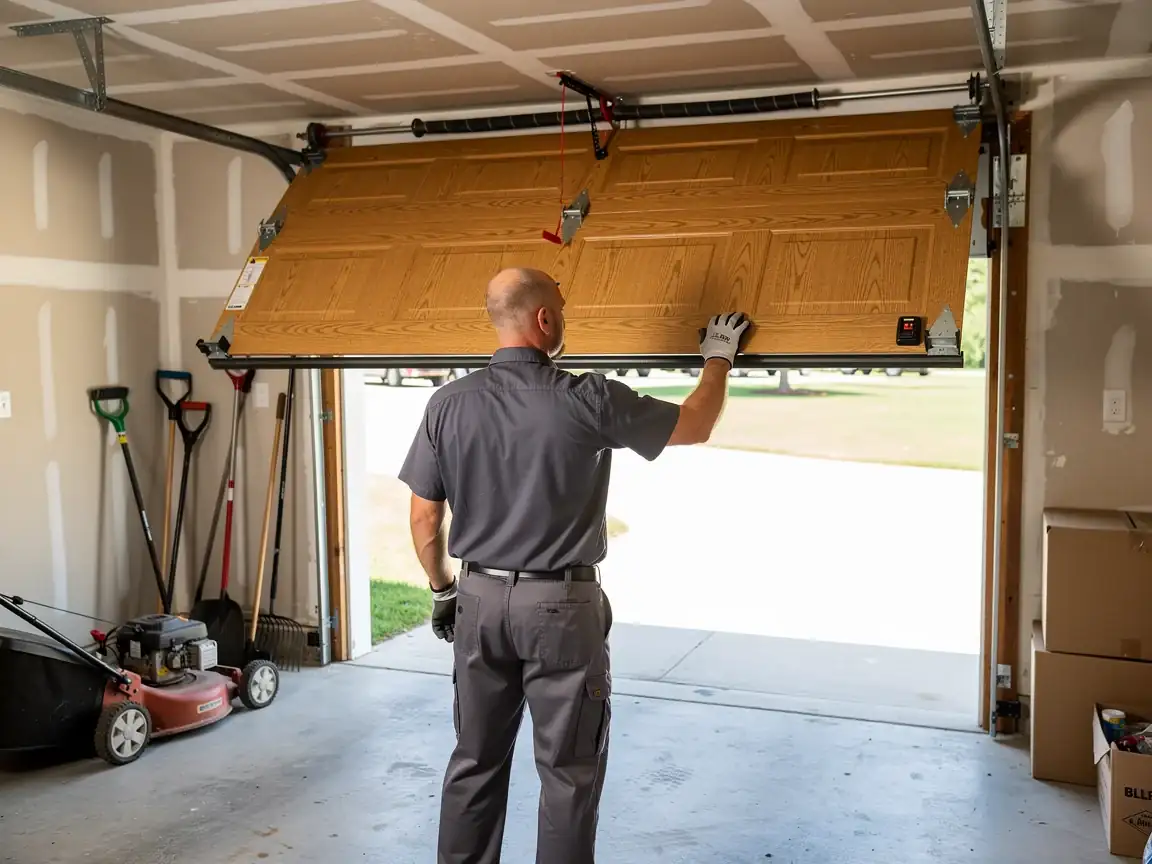
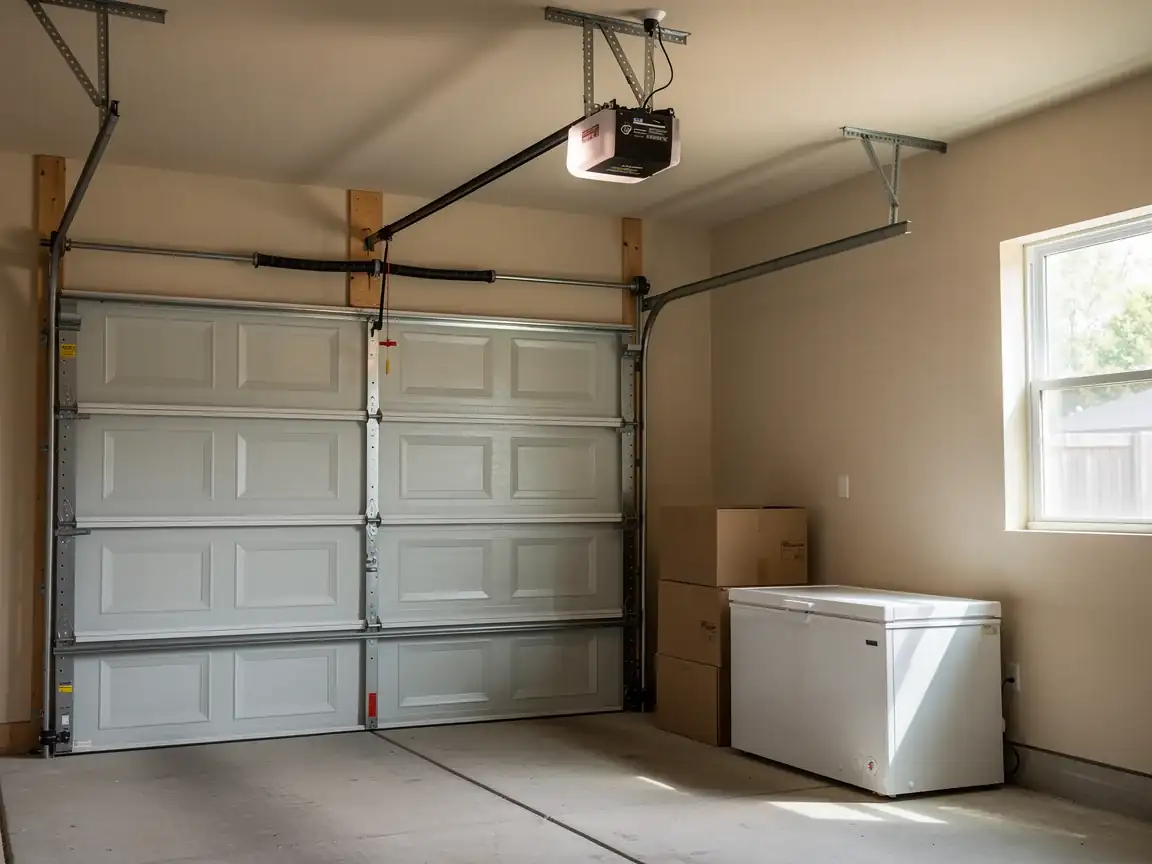
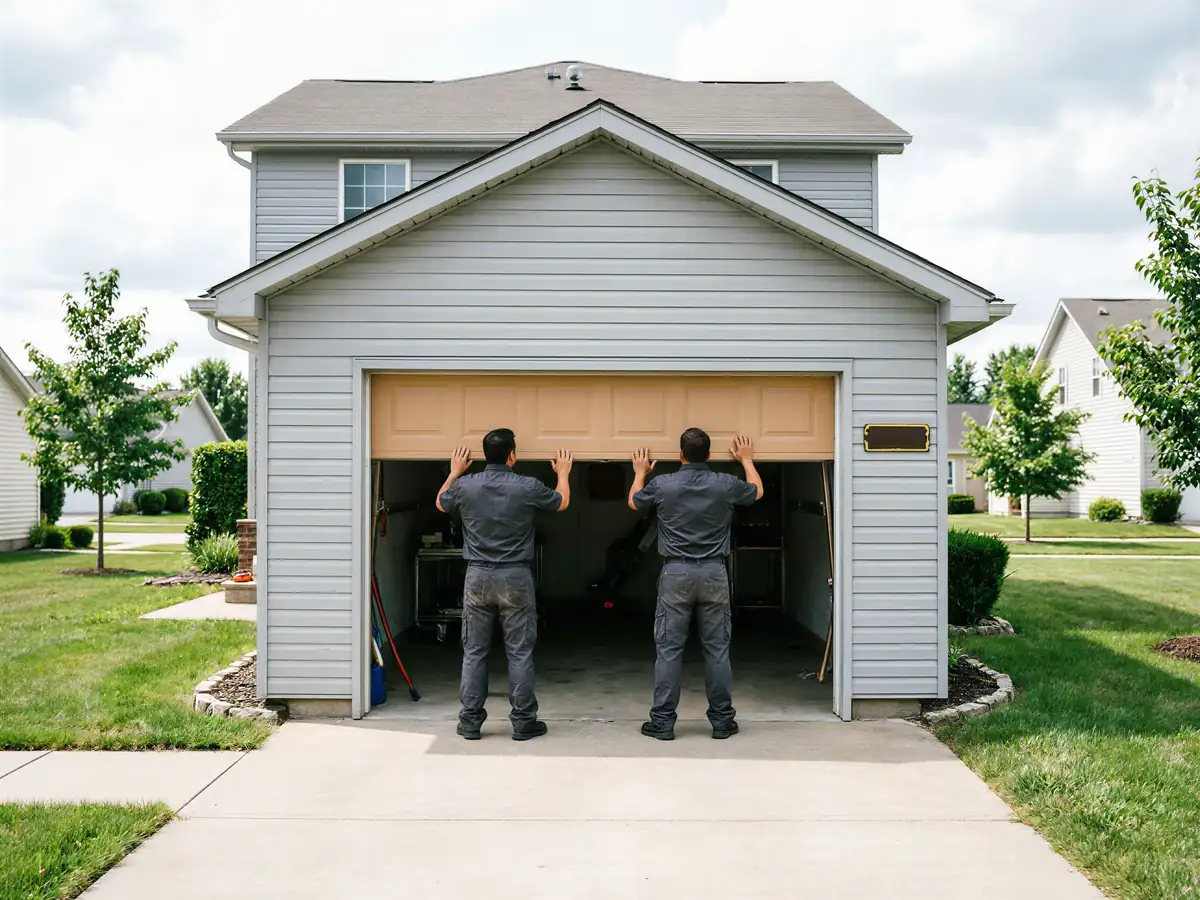
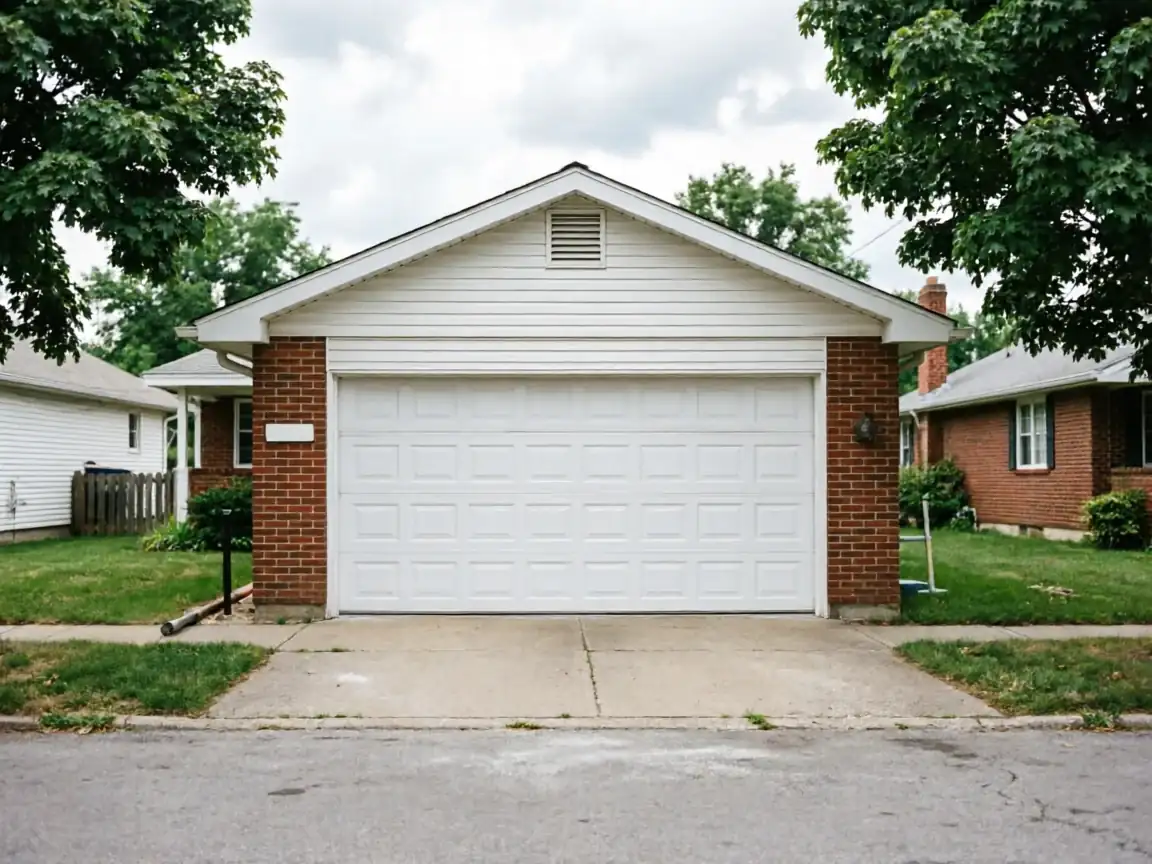
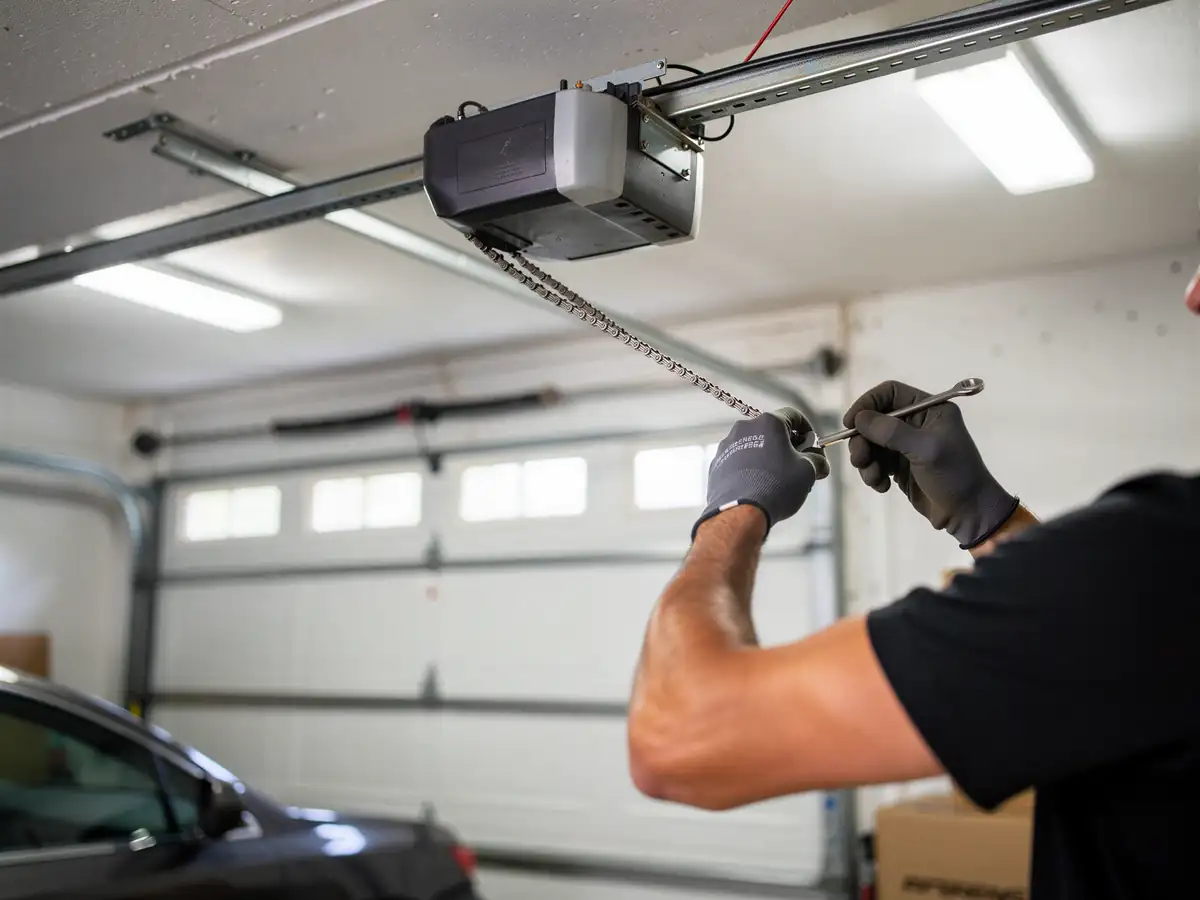
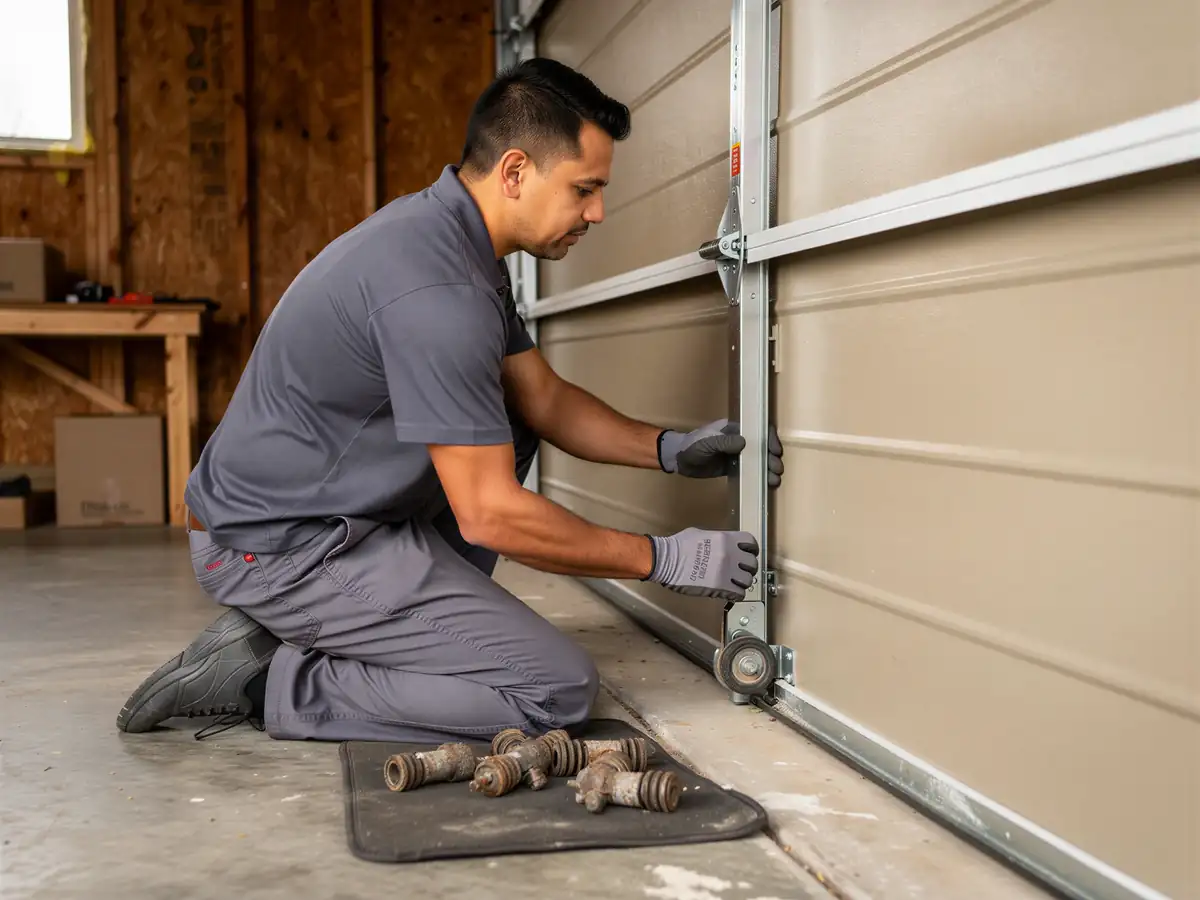
Most garage doors in Pleasant Hill came in with houses built around 2002 - later than a lot of the older Des Moines stock, which skews toward the late '80s and '90s. That build year matters because of what was standard on a door package back then: lighter-gauge steel track sections, nylon rollers instead of sealed-bearing steel, and a single center-mounted torsion spring bolted to one bracket over the opening. When that generation of door comes off track, it doesn't usually bend a whole panel - it pops a roller out of the track lip on one side, and the bottom corner of the door drops and binds against the frame. You'll see the door hang crooked, hear a grinding scrape instead of a smooth roll, or find it stuck half-up because the opener senses resistance and reverses. That's the track, not the opener, and it's worth knowing the difference before you call anyone out.
Why This Fails Locally
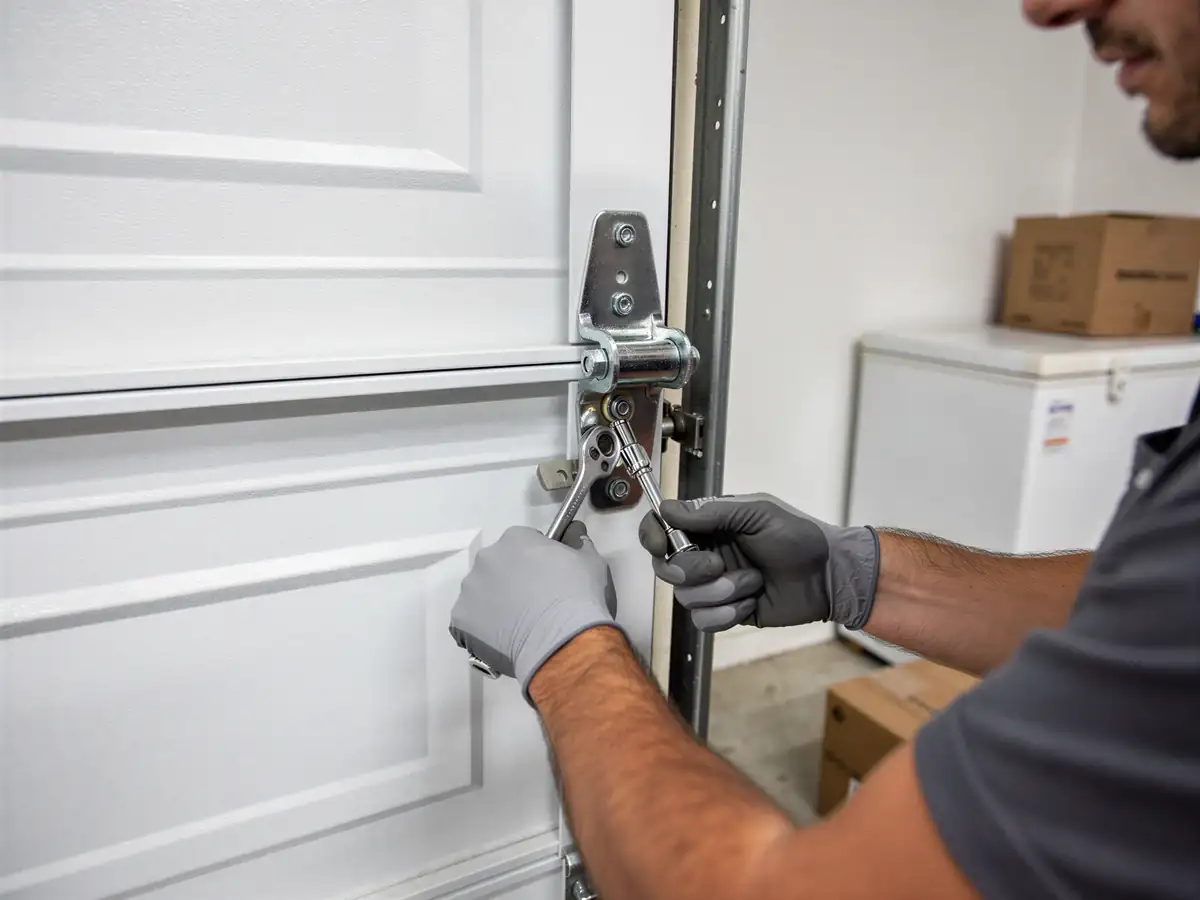
This area's cold climate band is moderate, but moderate still means repeated freeze-thaw cycles every winter, and that cycle is hard on track hardware that's over twenty years old. The lag bolts holding track brackets to the jamb loosen a fraction with every expansion and contraction. On a 2002-era install, those brackets were sized for a lighter door and a newer, straighter frame - fine then, but two decades of seasonal movement work the fasteners loose a little more each year. Add a stretch of cold mornings where the grease in the roller channel stiffens, and a roller that's already a few years past due for replacement is more likely to bind, skip, and ride up out of the track instead of rolling through it smoothly. That's the mechanism, not a mystery: old bolts, stiff cold grease, a roller at the end of its life.
The Complications
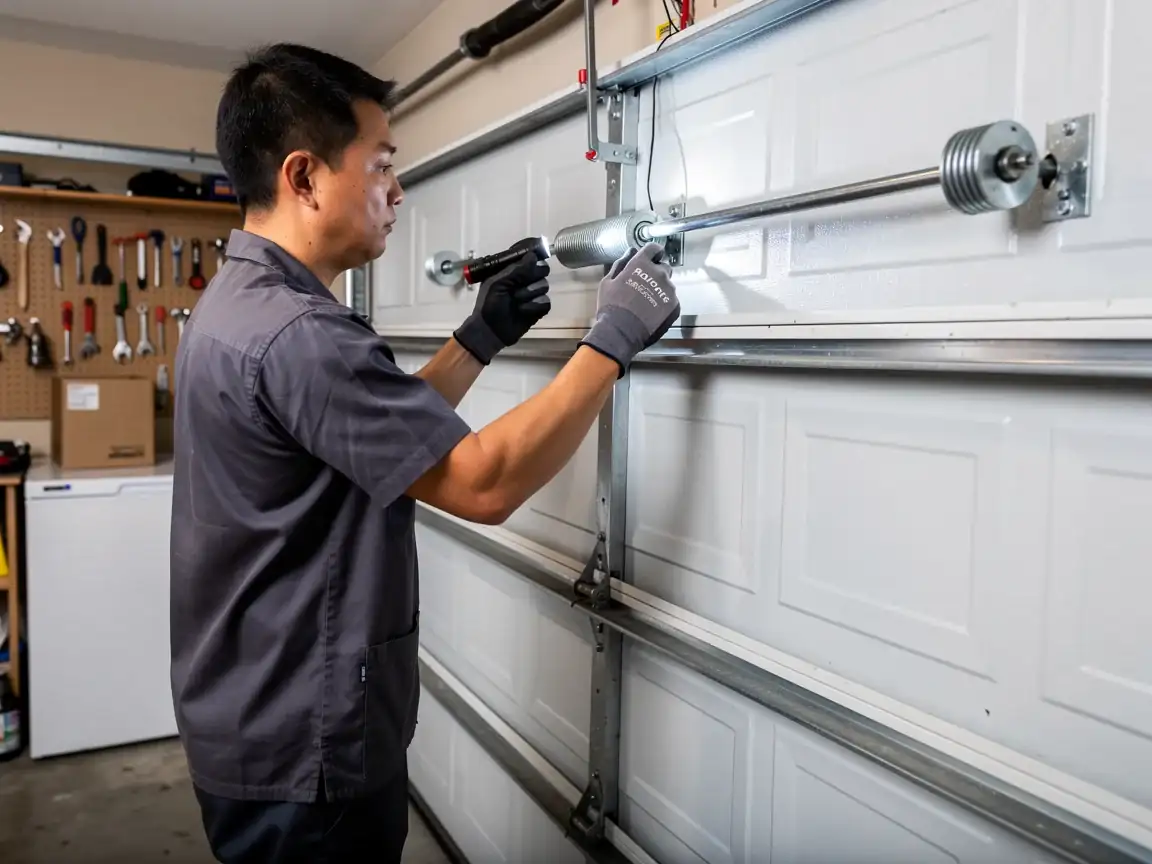
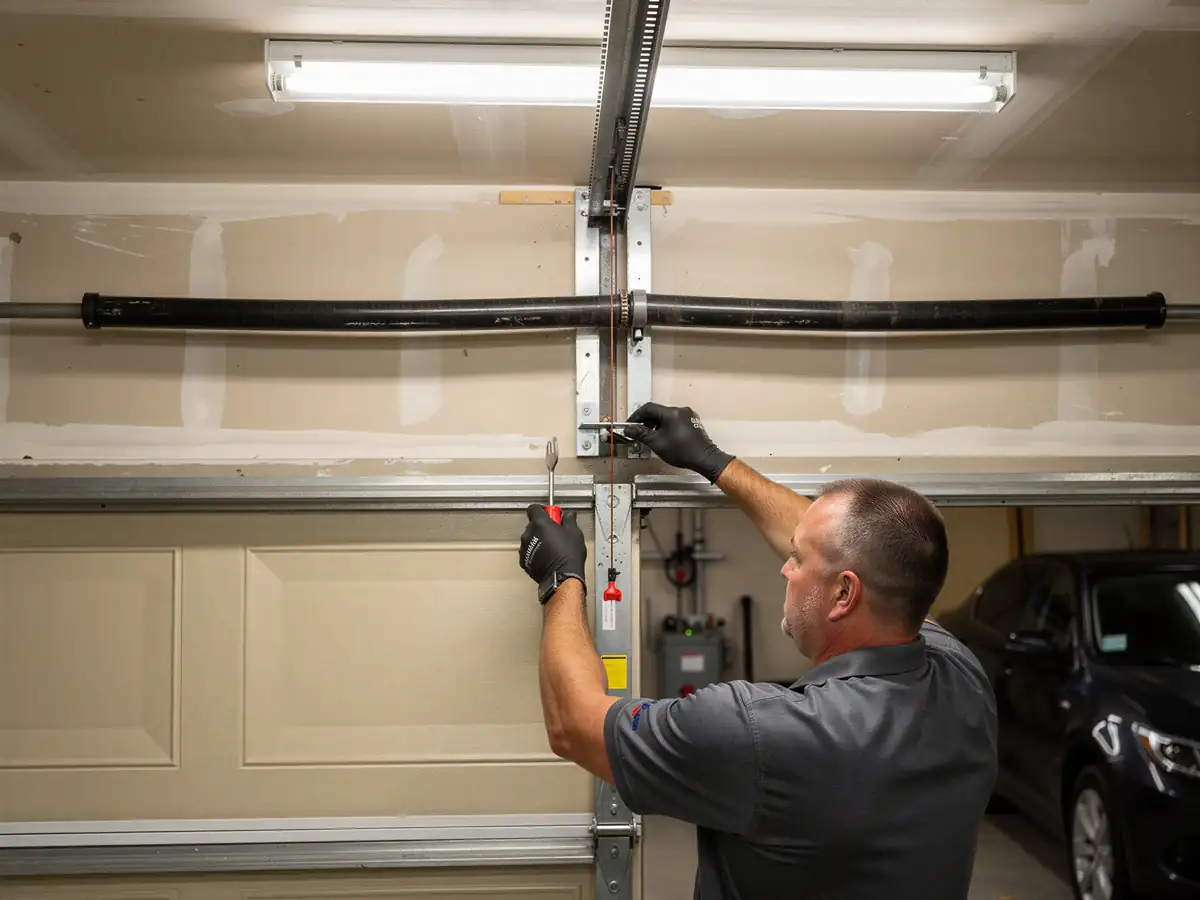
The complication with the 2002-era door package specifically is the single center spring setup. If the door is off track and someone tries to force it back into the rail by hand without releasing tension first, that one spring is under full load and unforgiving. We've also found that homeowners sometimes try to muscle the door back onto the track themselves, which can bend the roller stem or stretch the track opening wider - turning a ten-minute fix into a track replacement. One honest limitation: if the track is visibly bowed out rather than just knocked off its brackets, we won't just hammer it back into shape and call it fixed. A bowed track is a structural compromise, and the right call is usually to replace that section rather than repair it, even though replacement costs more up front.
What Is on the Truck
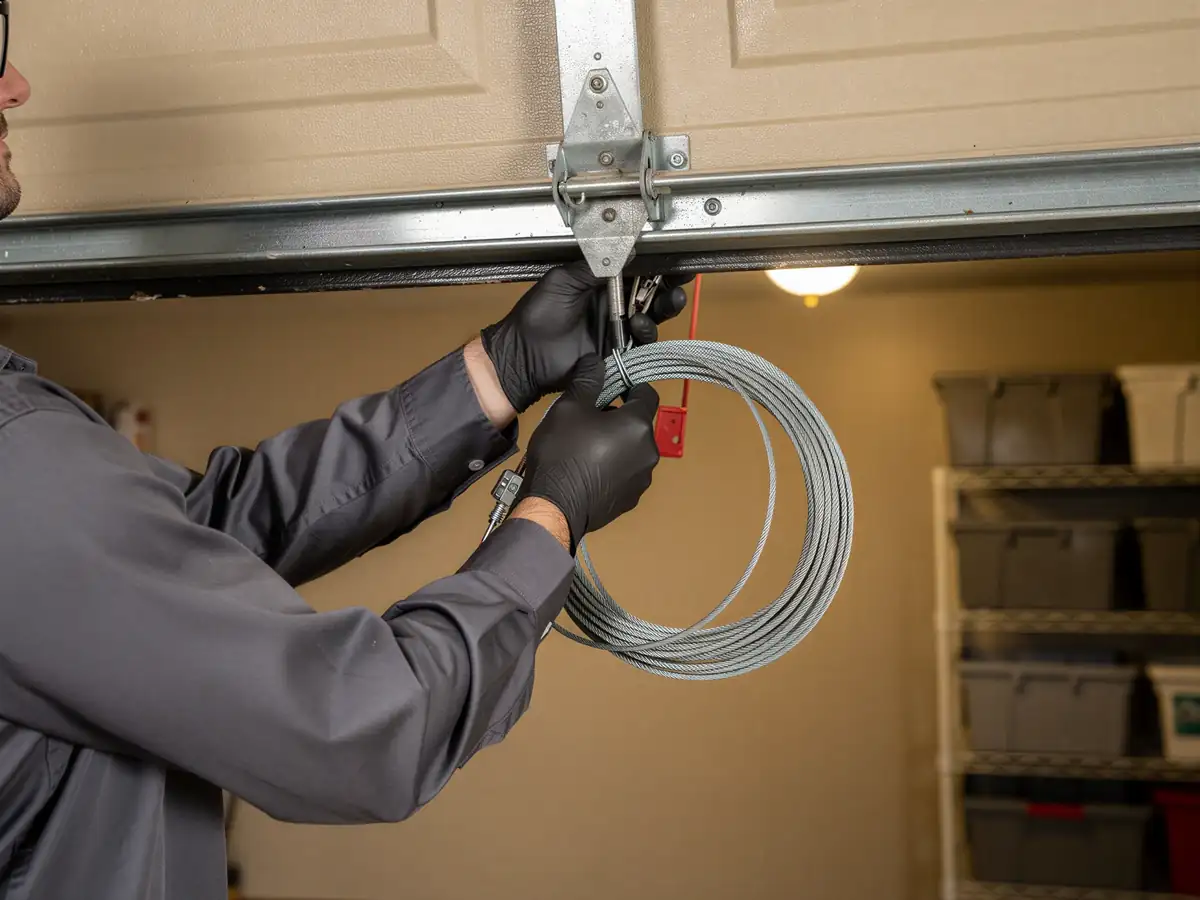
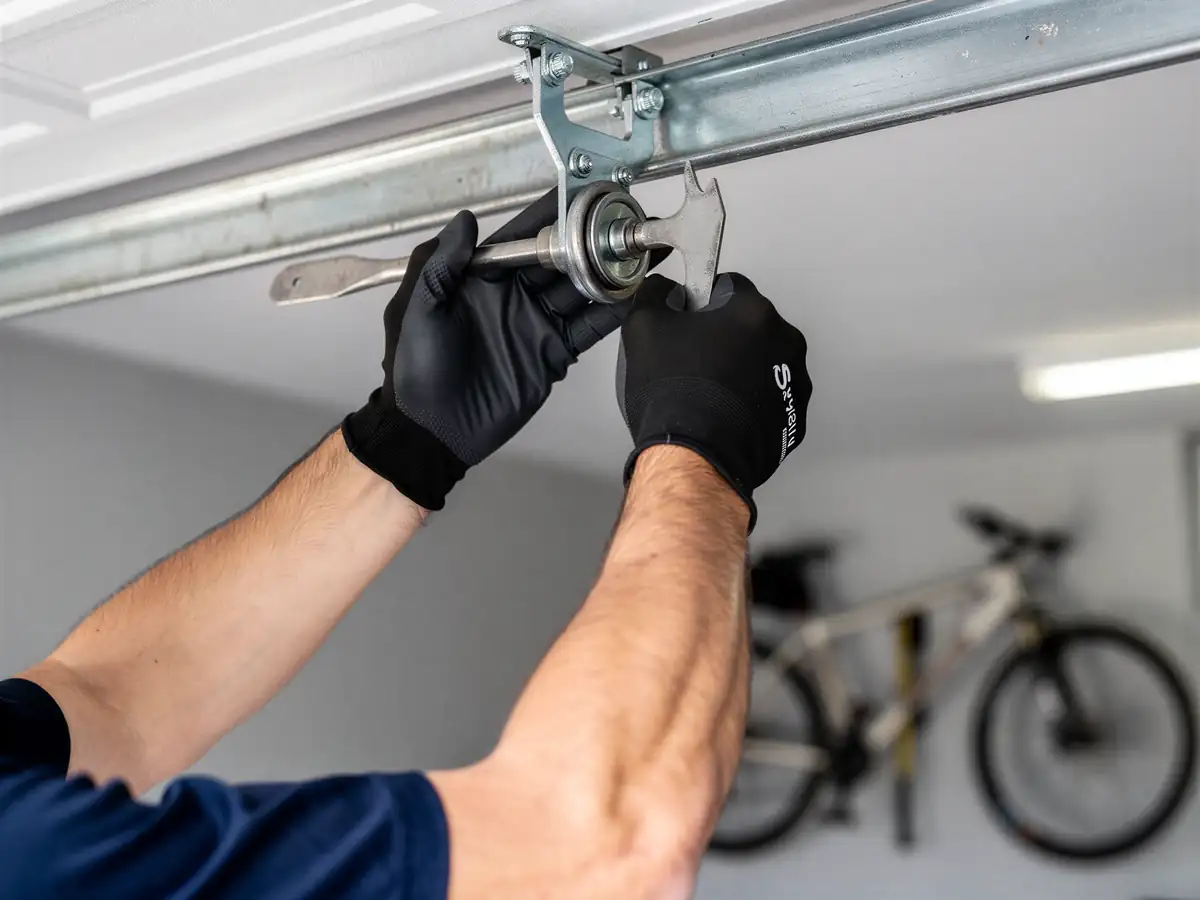
For an off-track call in this area, the truck carries standard track sections sized for residential double and single doors, nylon and steel roller sets, replacement track brackets and lag hardware, and torsion spring parts sized for center-mounted single-spring setups - the configuration most common on doors from this build era. What we don't carry as routine stock is anything custom-width or oversized; if your door was a non-standard order, that part may need to be sourced rather than pulled off the truck that day. We'd rather tell you that up front than promise a same-visit fix we can't back up.