The Symptom
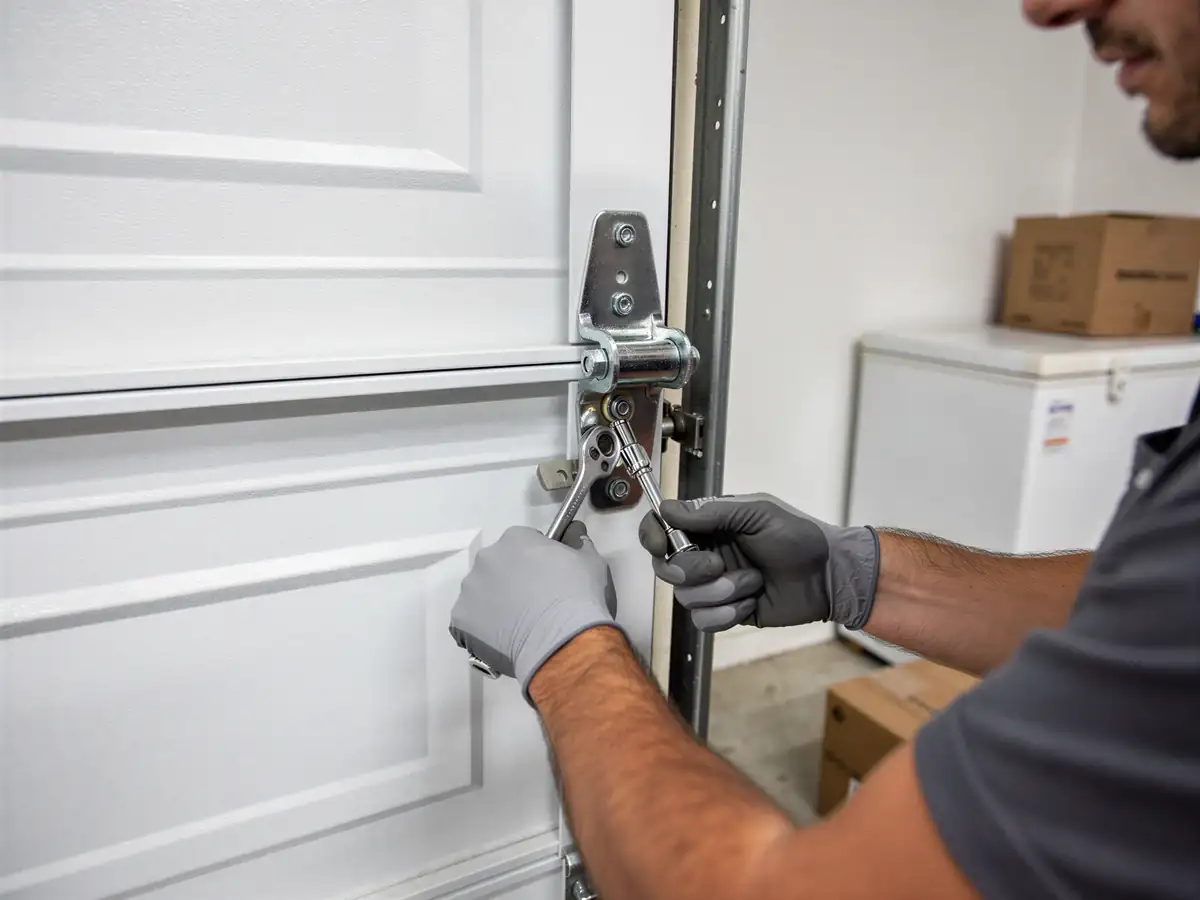
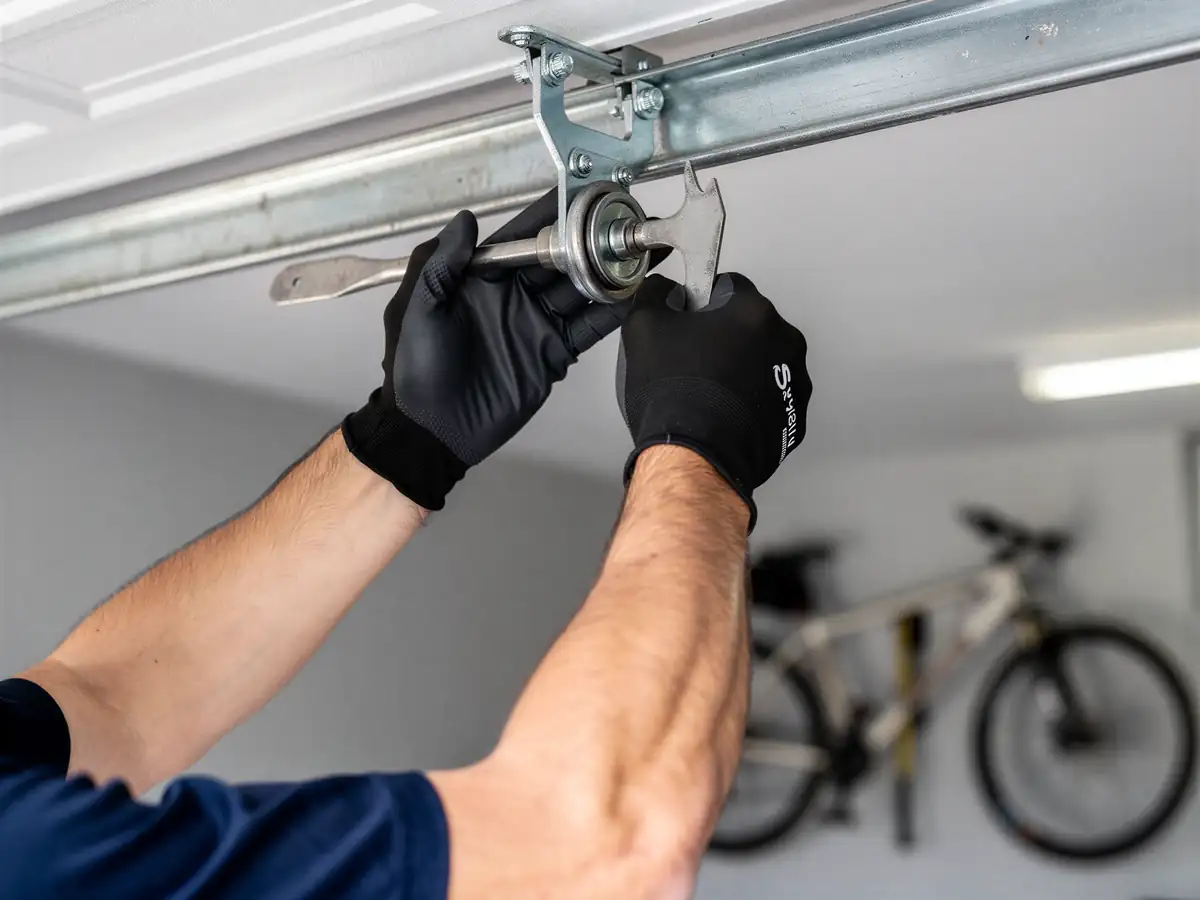
The sound shows up before anything else does. A low growl as the door rolls through the bottom of the track, then a jerk or a hop right where the roller meets the bend into the horizontal rail. On a lot of Pleasant Hill doors that hop is the original steel roller finally giving out - the wheel has worn down enough that it's riding on its edge instead of rolling flat, and the stem is starting to bind in the hinge bracket.
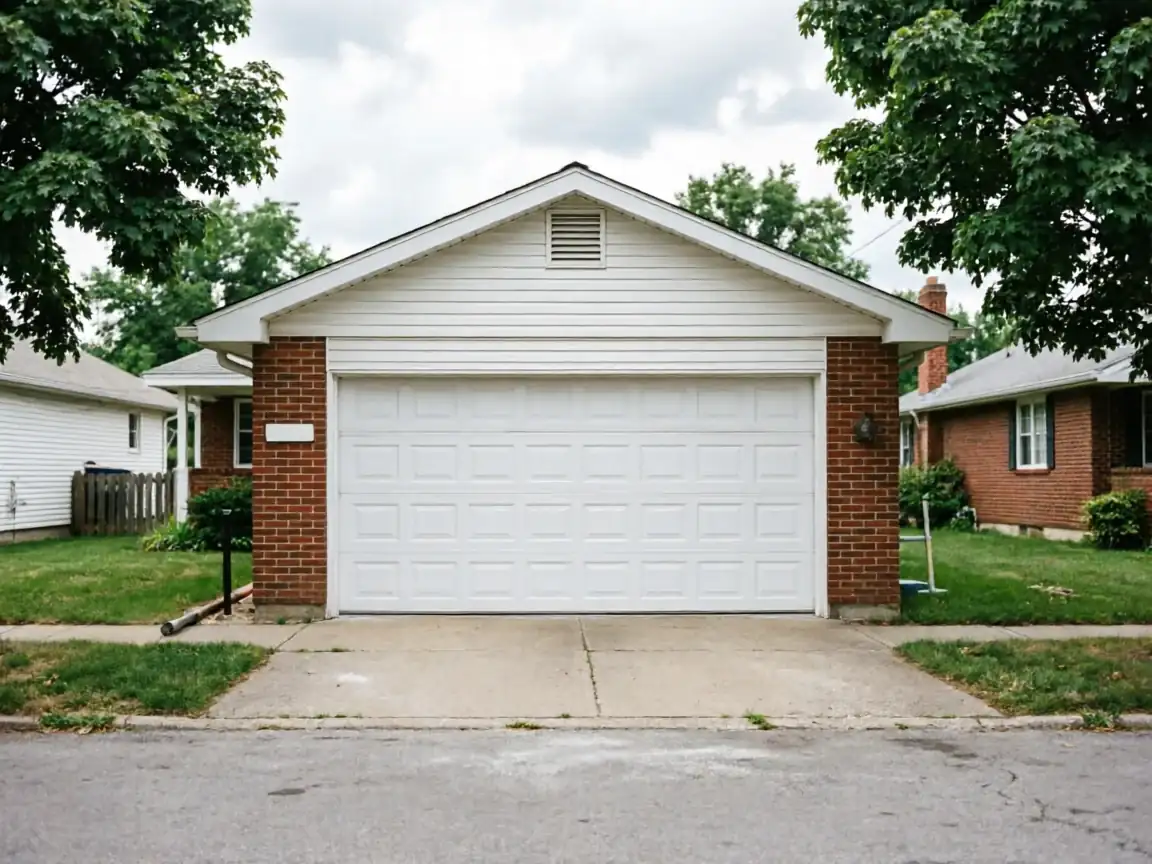
Most of this suburb went up around 2002, which means a lot of these doors are running their first set of rollers, over twenty years old now. Builder-grade steel rollers from that era didn't come with a nylon sleeve. They're bare metal on metal, no cushion, and once the surface pits they start chewing the track instead of sliding through it. You'll hear it loudest on the coldest mornings, when the grease in the bearing has stiffened up and the wheel doesn't want to turn freely until it's warmed through a few cycles.
If only one or two rollers have gone, the door usually still opens - rough, loud, but functional. If several go at once, especially on one side, the door can bind hard enough in the track that the opener strains against it, which is the point where a roller problem turns into a track problem.
How Long You Are Without the Door
A worn roller rarely takes the door out in one shot
It's usually a few weeks of worsening noise, then a day where it won't roll smoothly at all, then - if nobody's called anyone - a day where the door jumps the track on one side and stops moving. That's the point where what was a roller swap becomes a roller swap plus a track realignment, and the job takes longer and costs more.
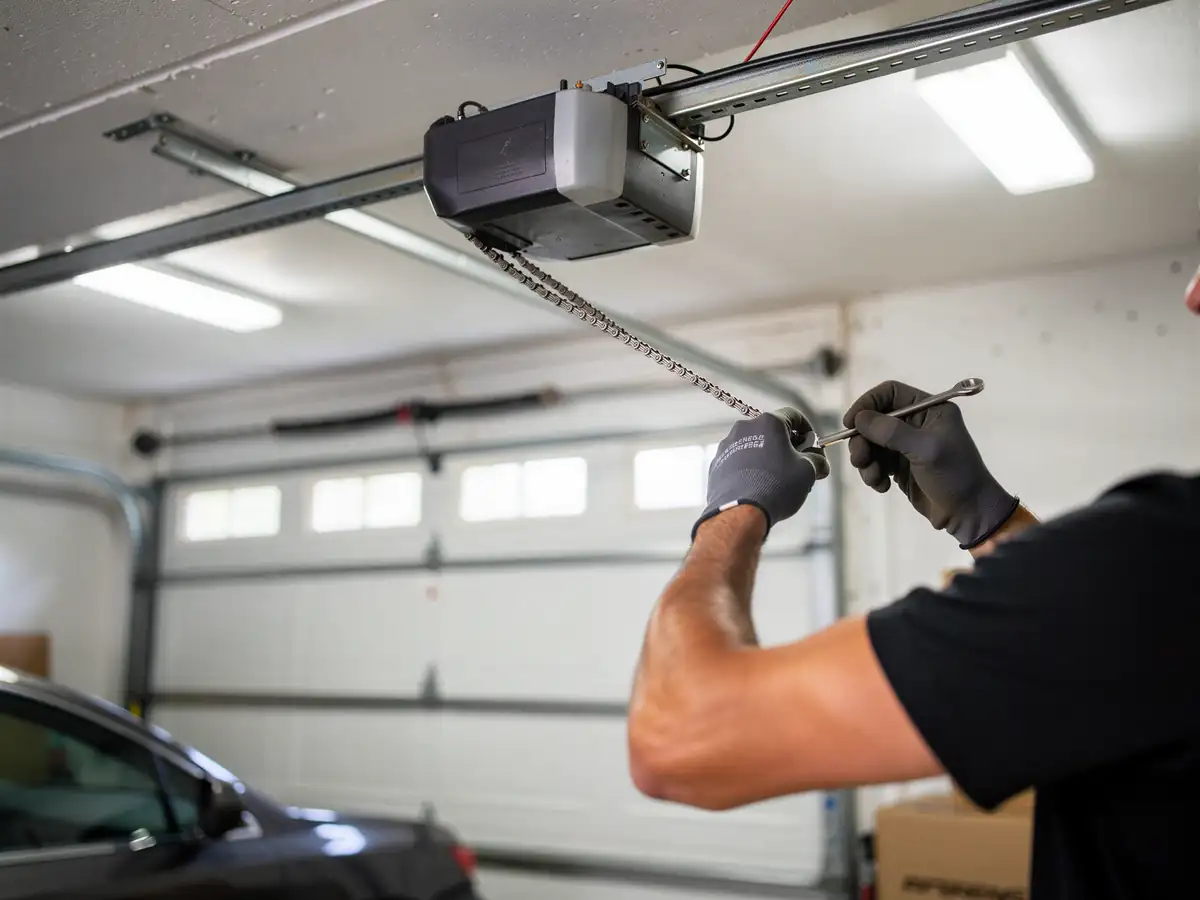
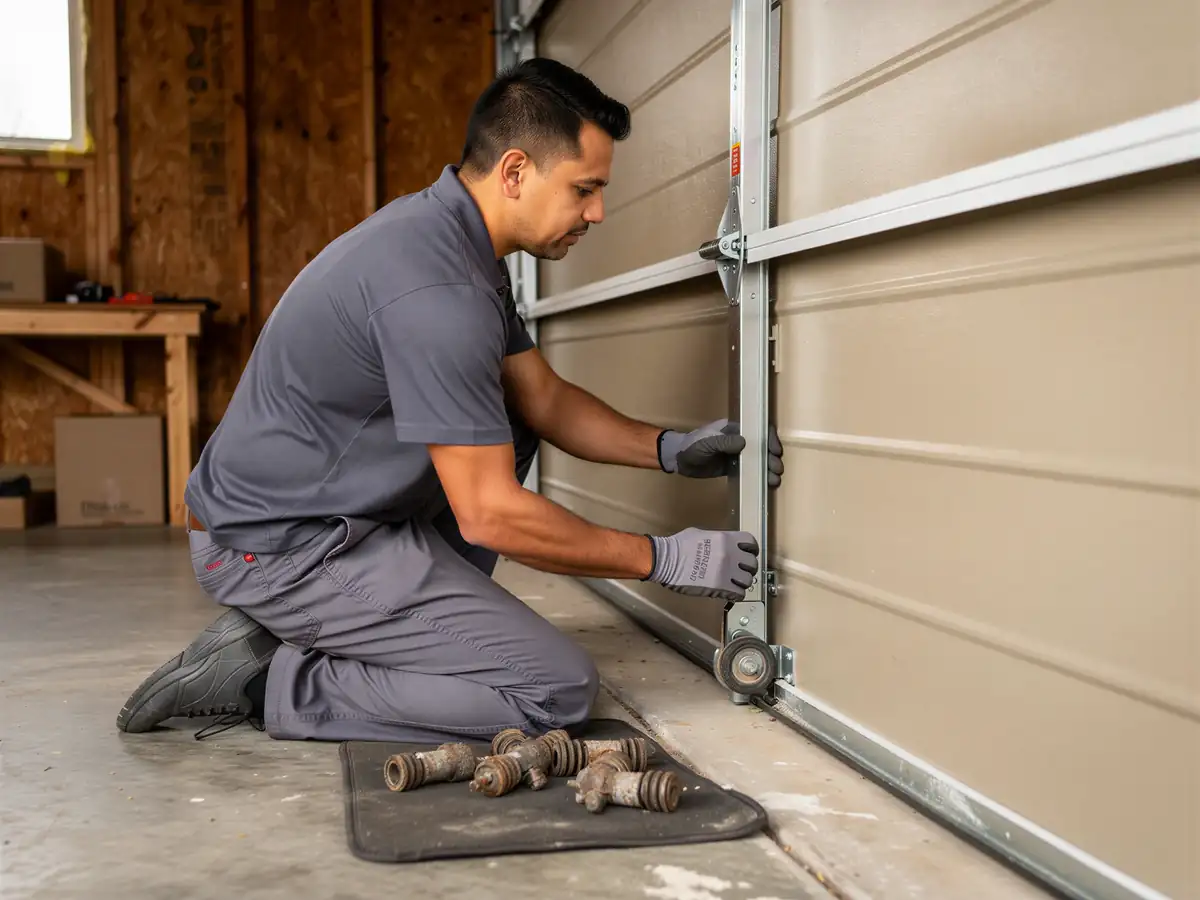
Caught before that last stage, replacing a full set of rollers on a double door is a job measured in under an hour once a tech is on site with the right rollers for your stem length and track width
Des Moines Garage Door Co runs this job out from Des Moines, six miles west, so there's no local branch to wait on here - just the drive.
The honest limitation
If the rollers have already chewed up the track lip or bent a hinge bracket, that's not a straight roller swap anymore. We'll tell you on site if the job has grown past rollers, rather than quote a roller price and surprise you with a track line item after the fact.
Why This Fails Locally
Pleasant Hill's housing stock runs newer than a lot of the wider Des Moines service area - median build year around 2002, versus 1995 across the broader area. That ten-year gap matters for rollers specifically. Doors from this stretch were built to the track spacing and roller hardware standard of that era: 2-inch steel rollers on 7-inch stems, no nylon jacket, no sealed bearing. That hardware runs fine for fifteen, maybe twenty years. Right now, across this suburb, a lot of it is at the far edge of that window.
The climate band here is cold-moderate, which doesn't do steel rollers any favors. Grease thickens below freezing, and a roller that's already lost its coating is more prone to seizing partway through its rotation on a cold start than a roller still running smooth. That's the combination that shows up on service calls here: an original roller nearing twenty years old, asked to turn cold, on a track it's been slowly grinding grooves into for the last several winters.
Newer stock elsewhere in the service area with rollers installed closer to 2010 or later isn't at this point yet - which is part of why this is a Pleasant Hill-specific pattern right now, not a universal one.
The Complications
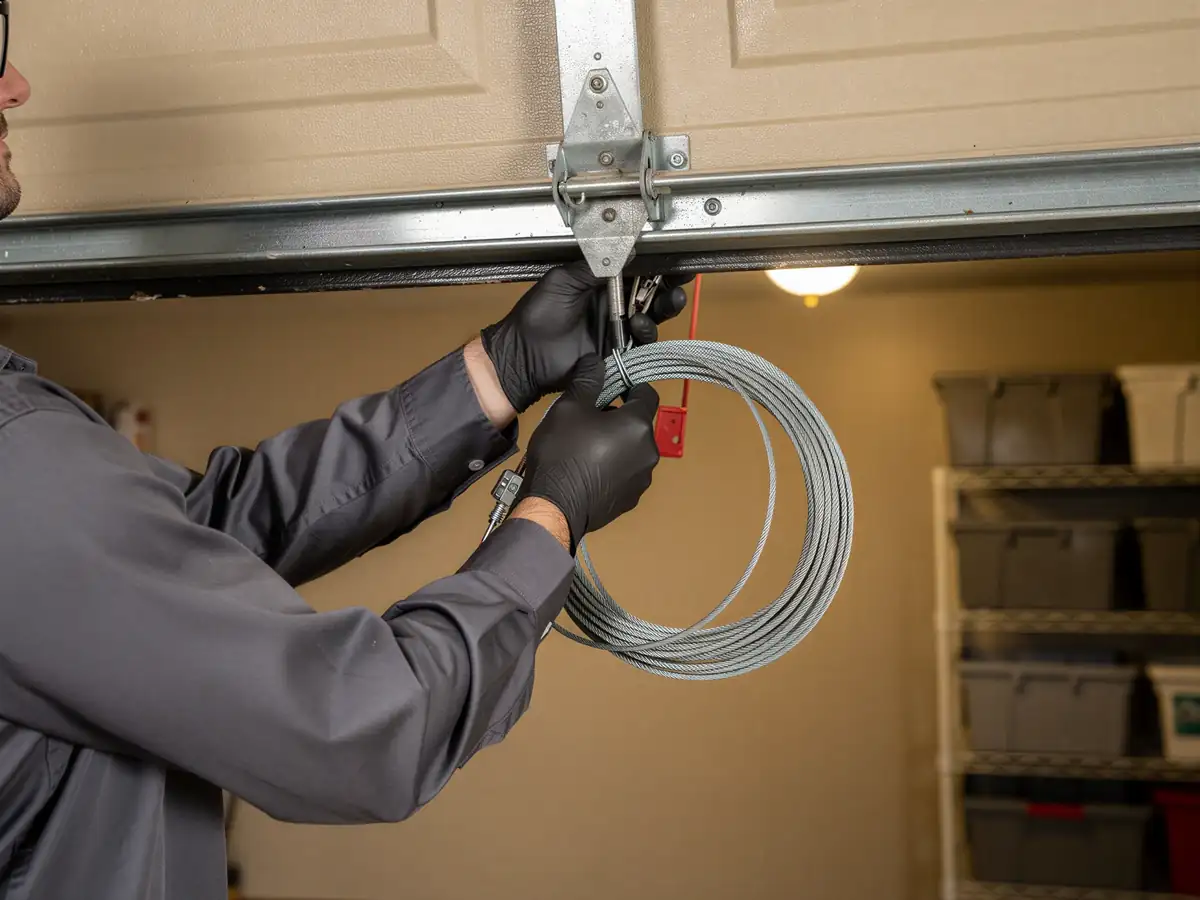
Worn rollers rarely travel alone. By the time a steel roller from a 2002-era door is bad enough to hear from the driveway, the track it's been riding in usually has some wear too - shallow grooves or a widened lip where the roller's edge has been grinding instead of rolling. Swap the roller without checking the track and the new one can still bind.
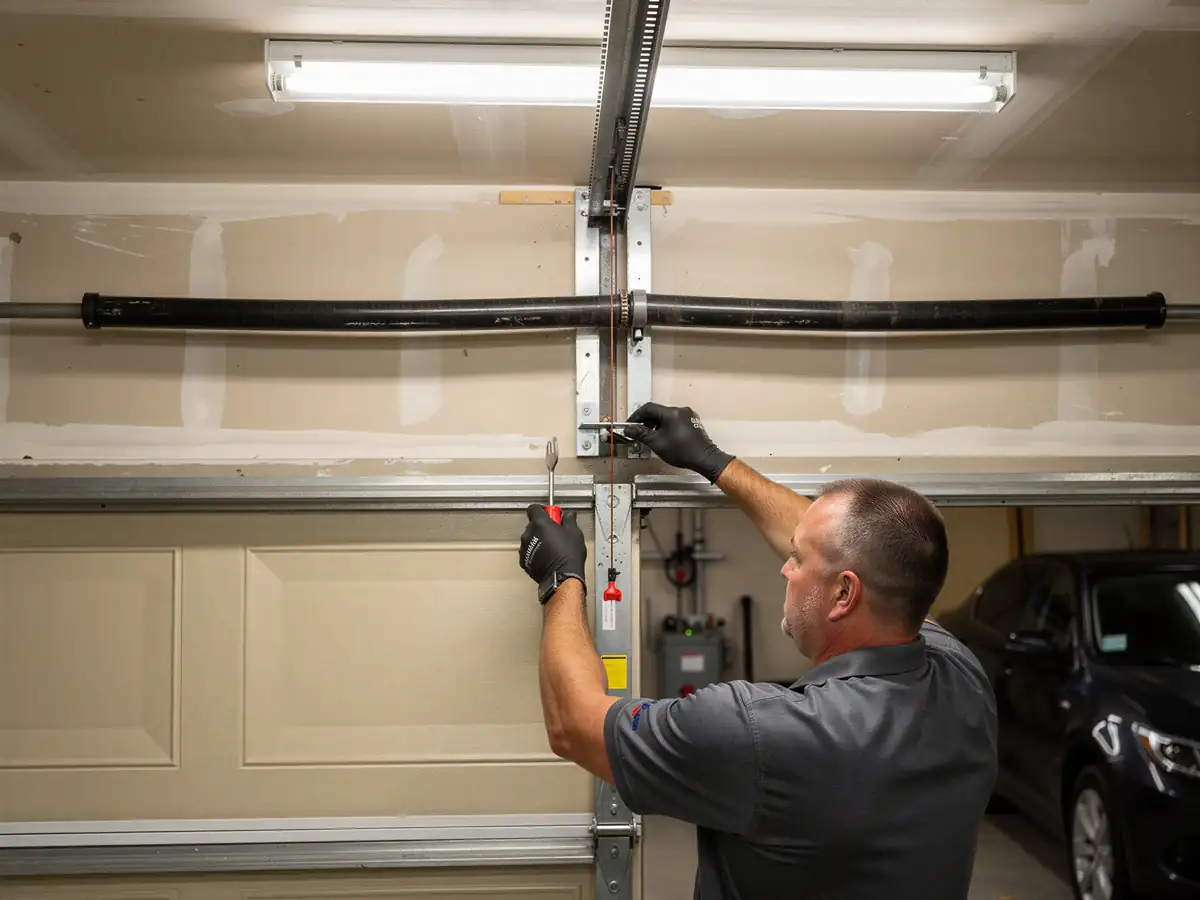
Hinges are the other piece. The roller stem sits in the hinge, and after two decades of a roller riding slightly off-center, the hinge hole itself can elongate. A brand new roller in a worn-out hinge will develop the same wobble inside a year.
Double doors complicate things further - ten roller positions instead of six, and it's common for one side to be noticeably worse than the other if that side gets more sun or sits closer to a slope in the driveway that puts more load on it. We check all ten before quoting a job as