Why This Fails Locally
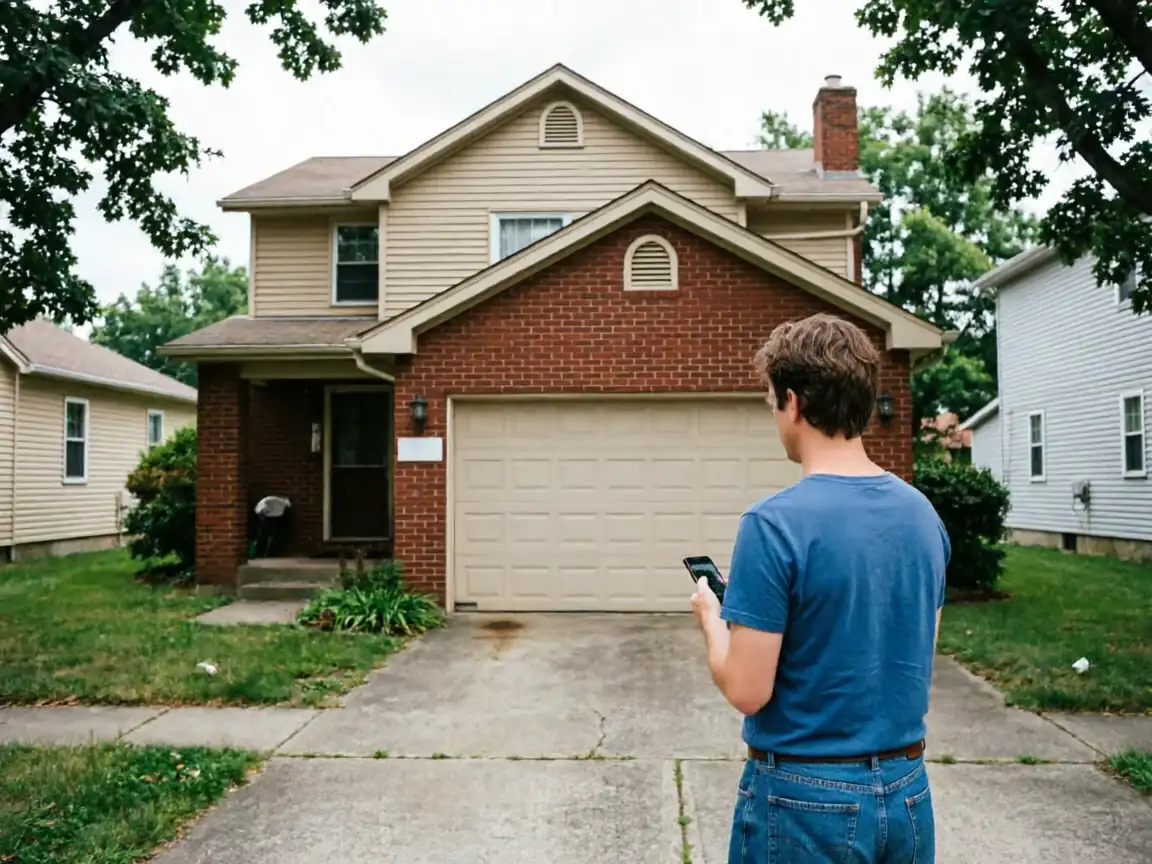
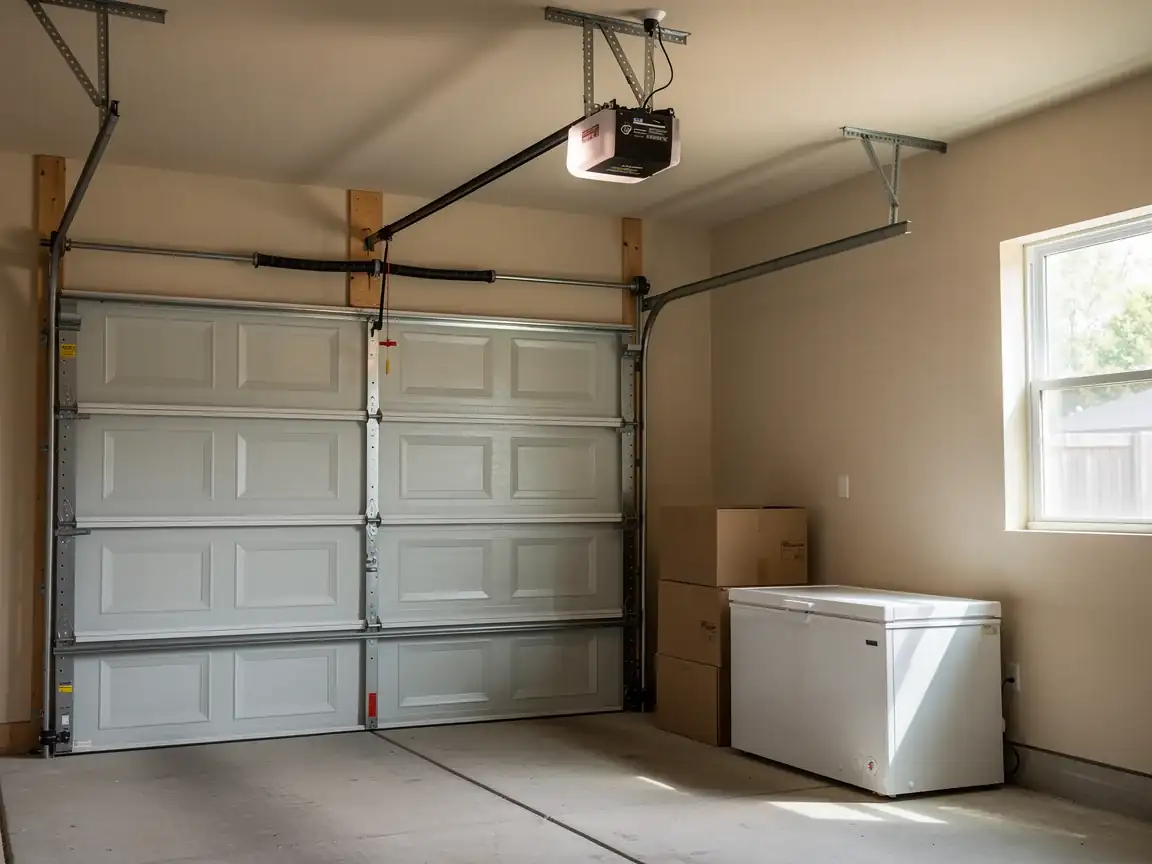
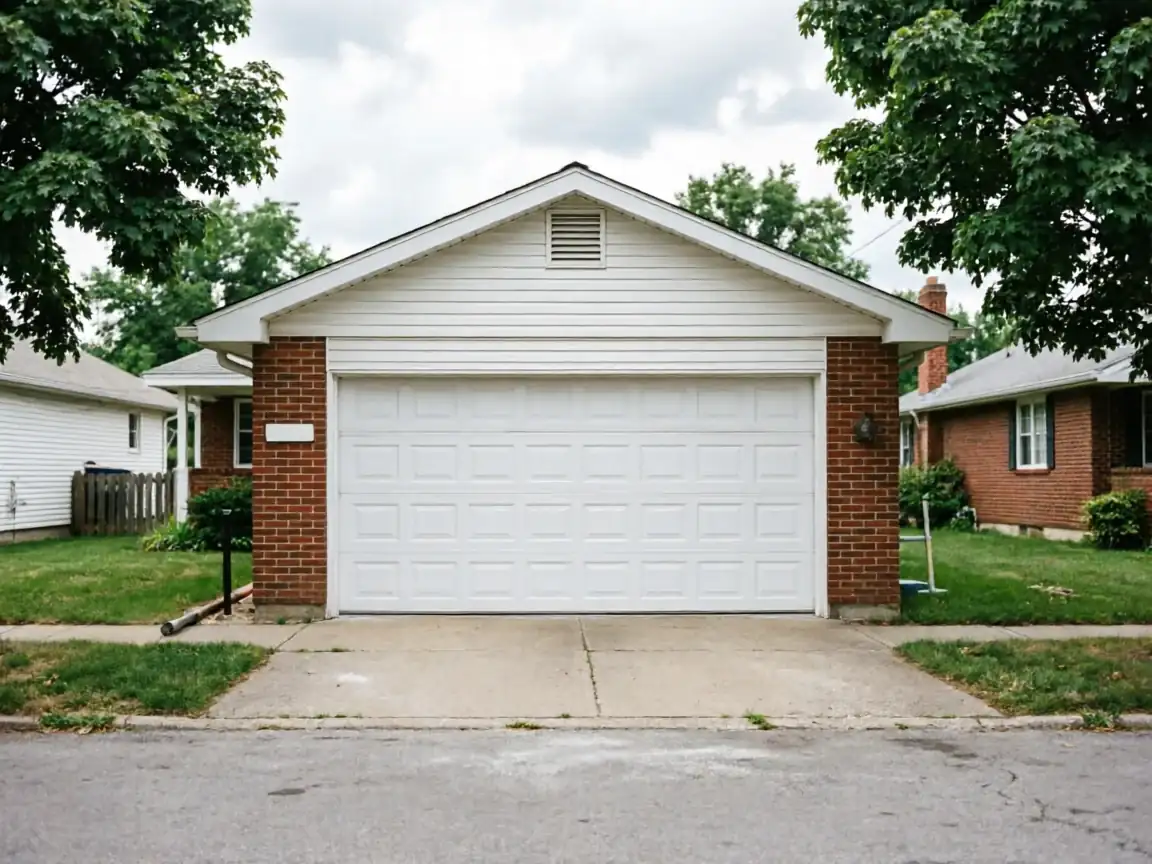
Urbandale's housing stock centers on 1992, which puts it toward the newer end of the broader Des Moines-area range of 1959 to 2009. That one number tells you a lot about what's hanging over your car right now. Doors from the early '90s are steel sectional, almost always on torsion springs rather than the older extension-spring setups, with openers that use a chain or belt drive and a bracket mounted straight to the header. None of that is unusual. What's unusual is how many of those original springs are still in the garage, 30-plus years in, because nobody thought to ask how long a spring lasts. A torsion spring is rated in cycles, not years, and a door that gets used twice a day burns through that rating well before the house needs a new roof. Add Iowa's cold winters - this area sits in a moderate-cold climate band - and the steel gets more brittle, the lubricant stiffens, and a spring that's already near the end has less give left in it. The failure isn't a surprise. It's a door built for 1992 expectations, run for 2025 use, in weather that doesn't do it any favors.
See our broader Urbandale page for the full service list we bring out.
Can You Do This Yourself
Some of this is fine to do yourself
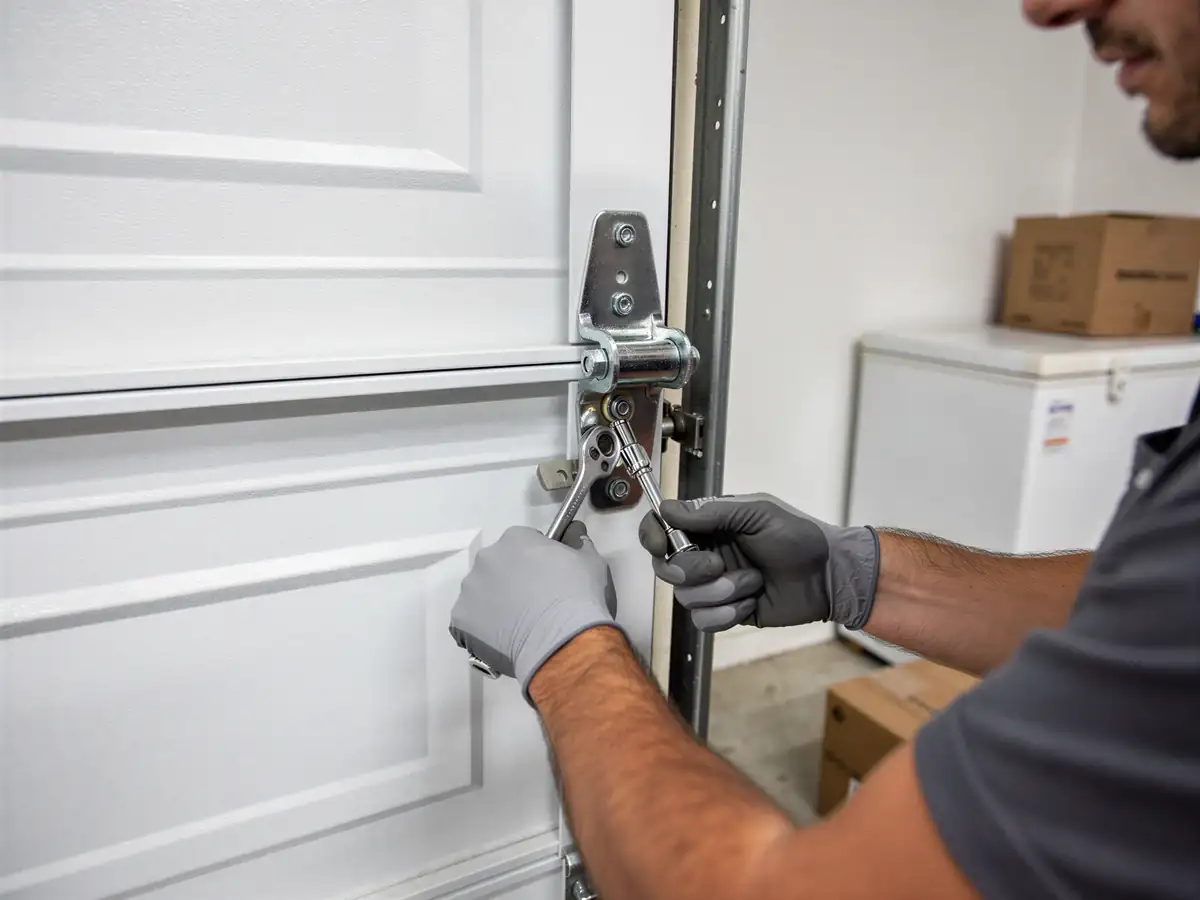
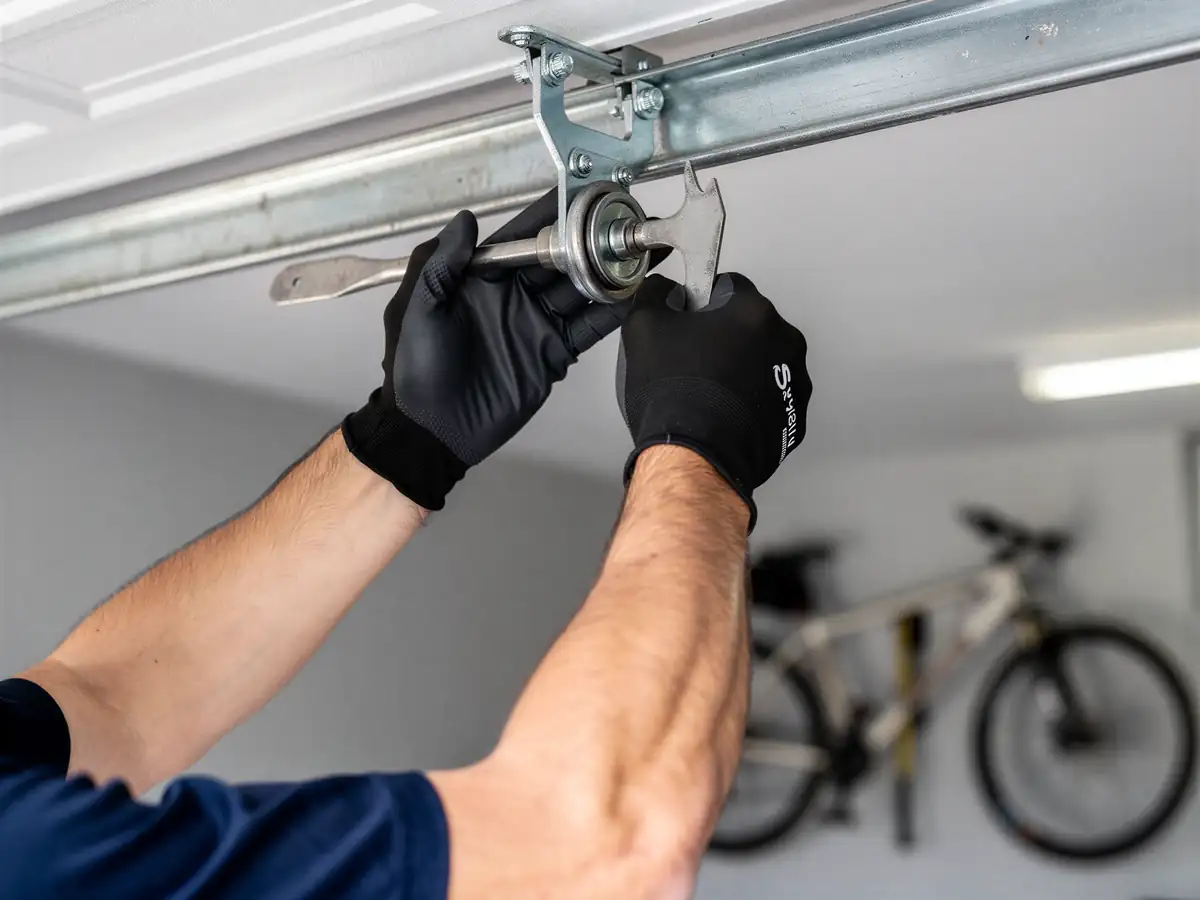
Tightening loose hinge bolts, clearing track debris, lubricating rollers and hinges with the right product, swapping weather seal at the bottom of the door. None of that needs a truck.
Torsion springs are a different matter
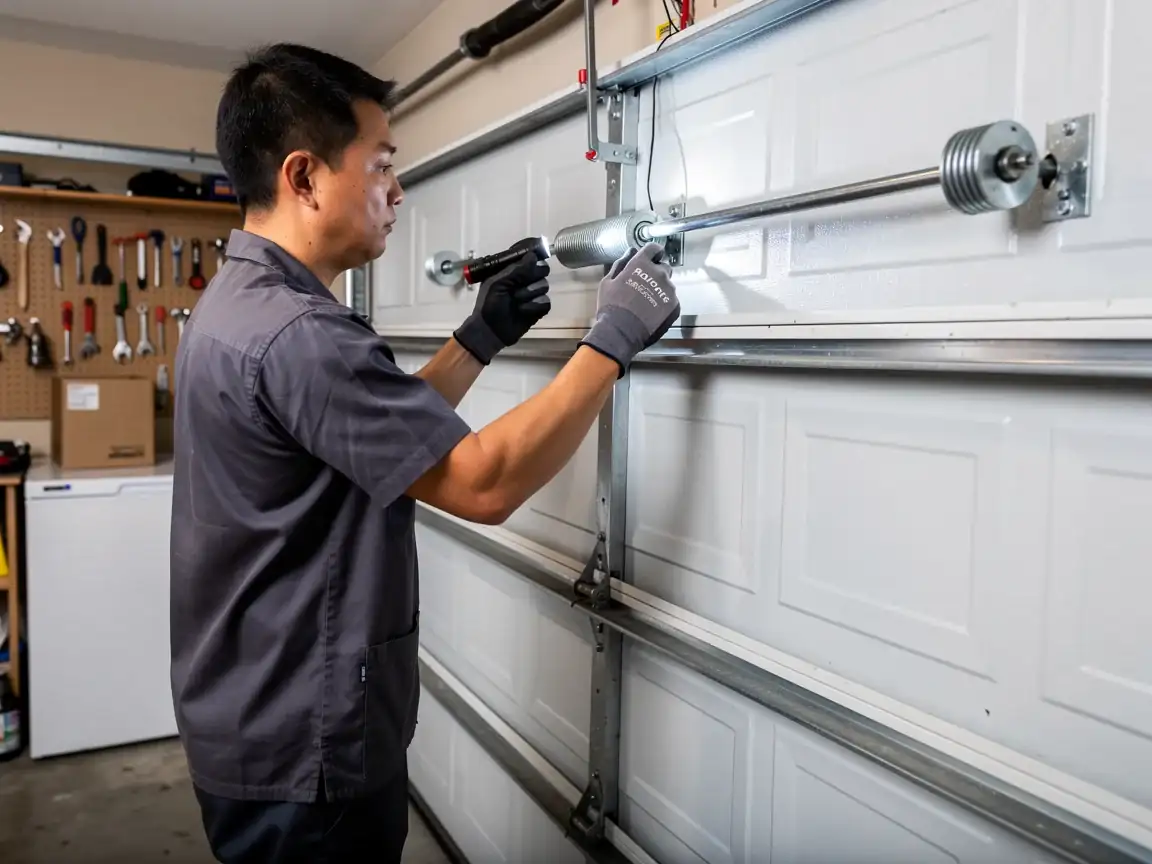
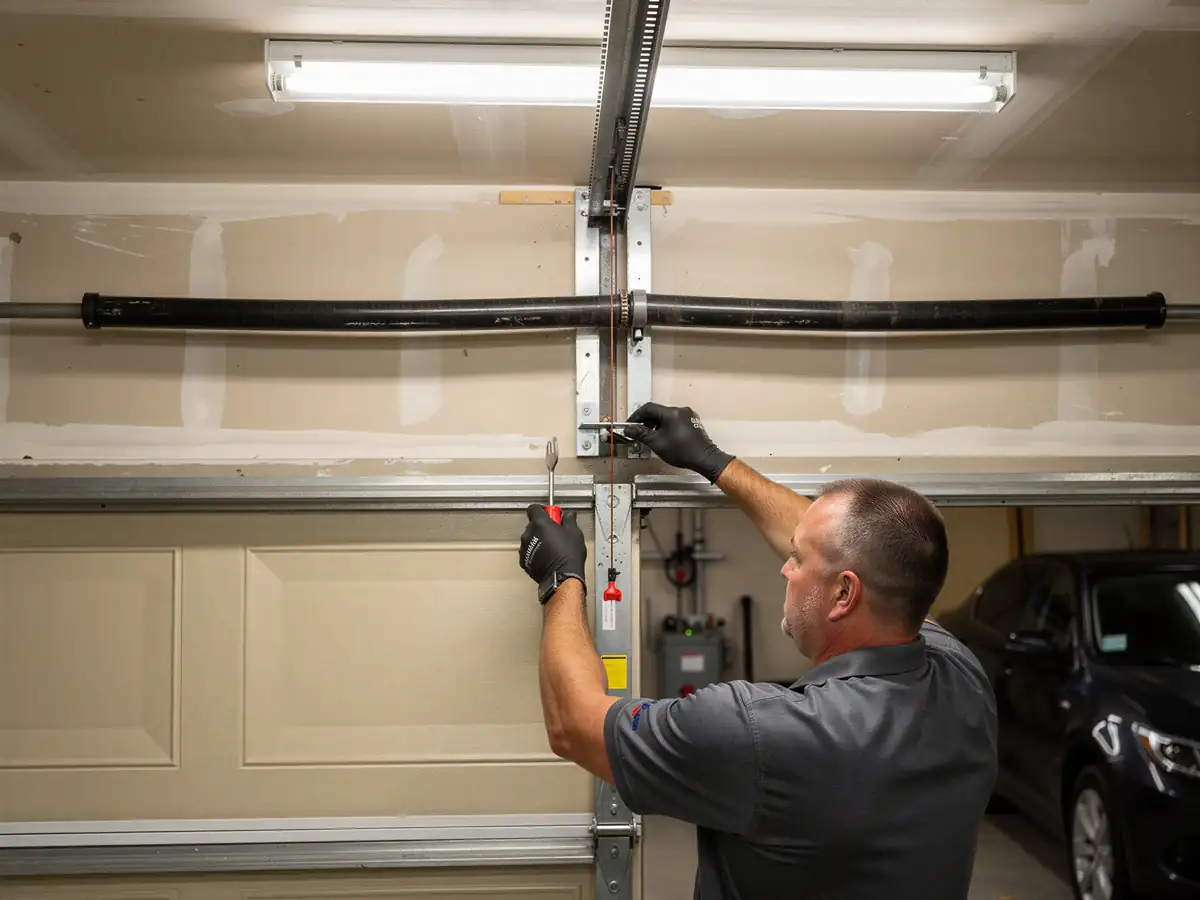
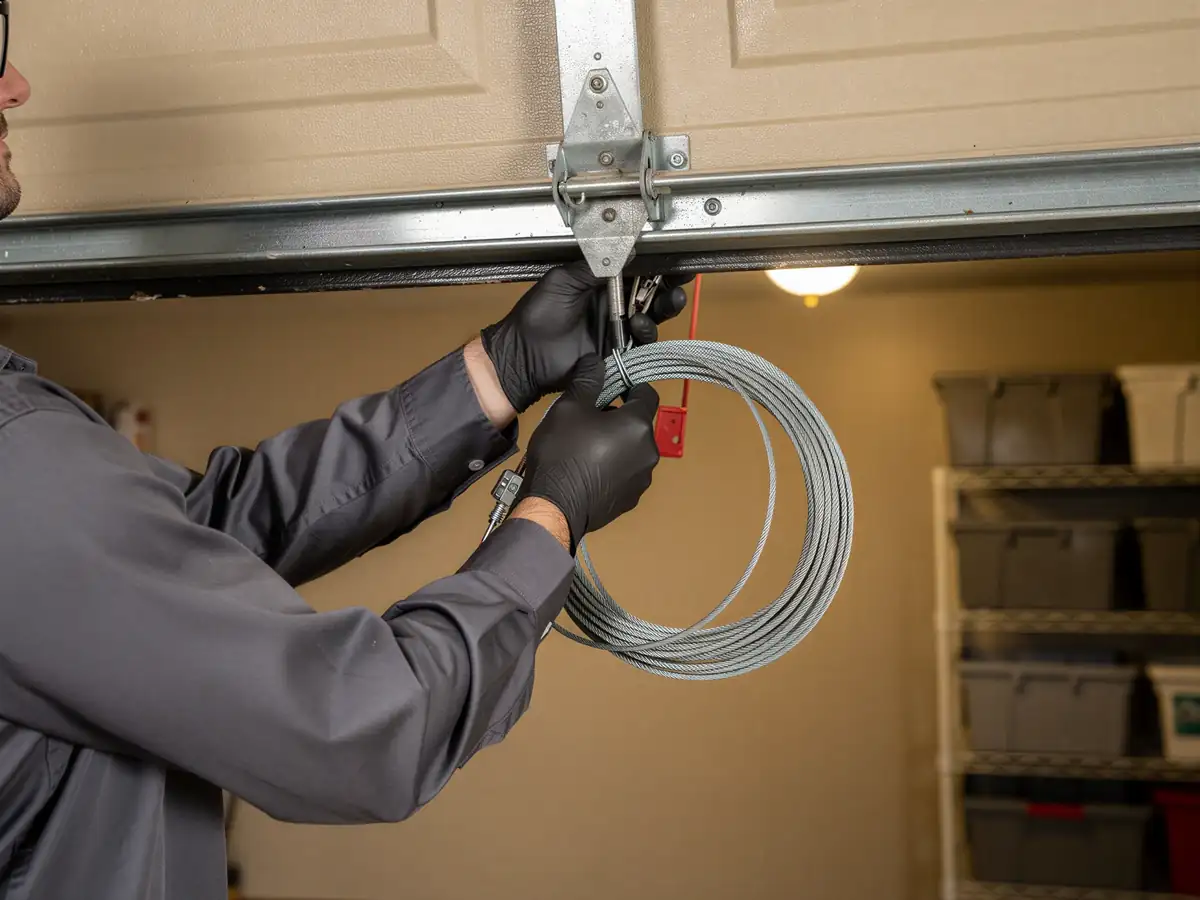
They're wound under enough tension to break bones or take off a finger if the winding bars slip, and a door this age almost always has the original springs or a mismatched replacement pair installed by whoever was cheapest at the time. If your door is heavy to lift by hand with the opener disconnected, or one side drops faster than the other when you pull the release cord, that's spring tension talking, and it's not a weekend project. Cable work carries the same risk - a cable under load that lets go can whip hard enough to cut.
We'll be honest about where the line is
If you're comfortable with a ladder and a wrench, do the easy stuff yourself and save the call for the springs, cables, and anything involving the opener's internal gearing.
The Symptom
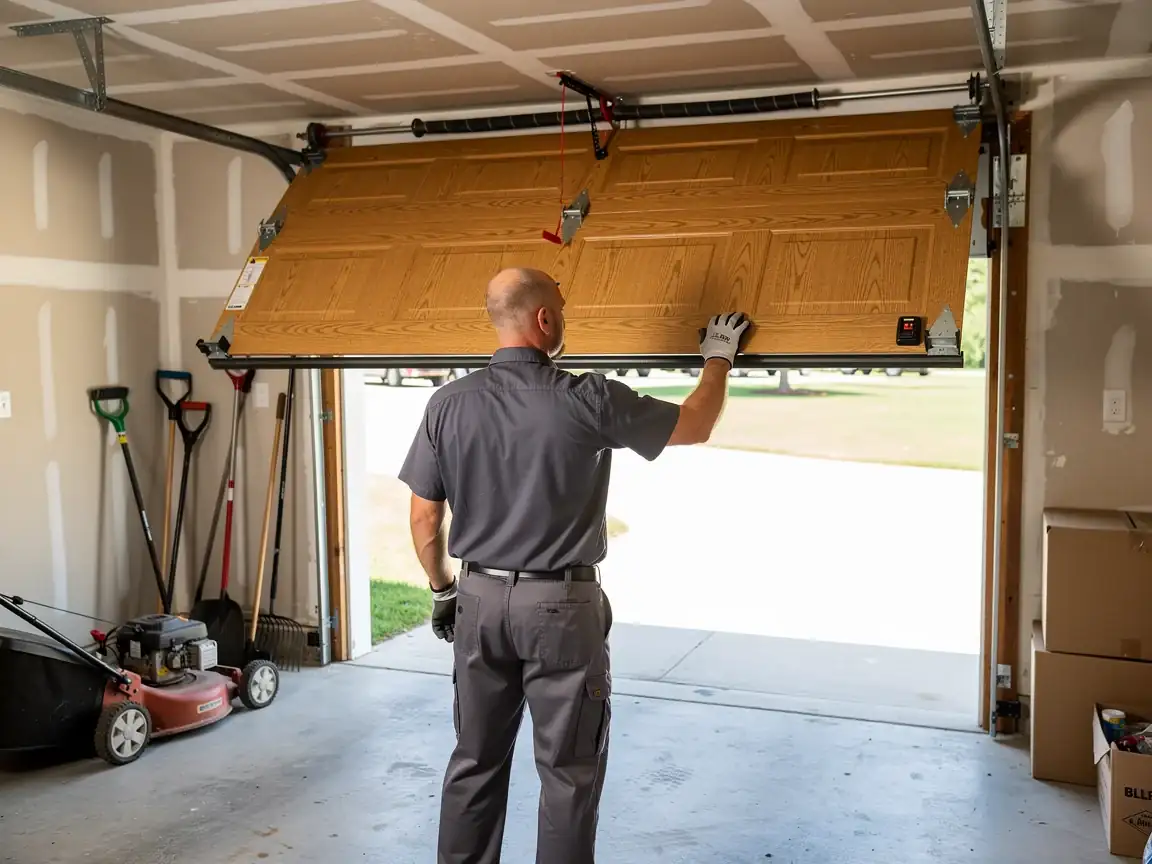
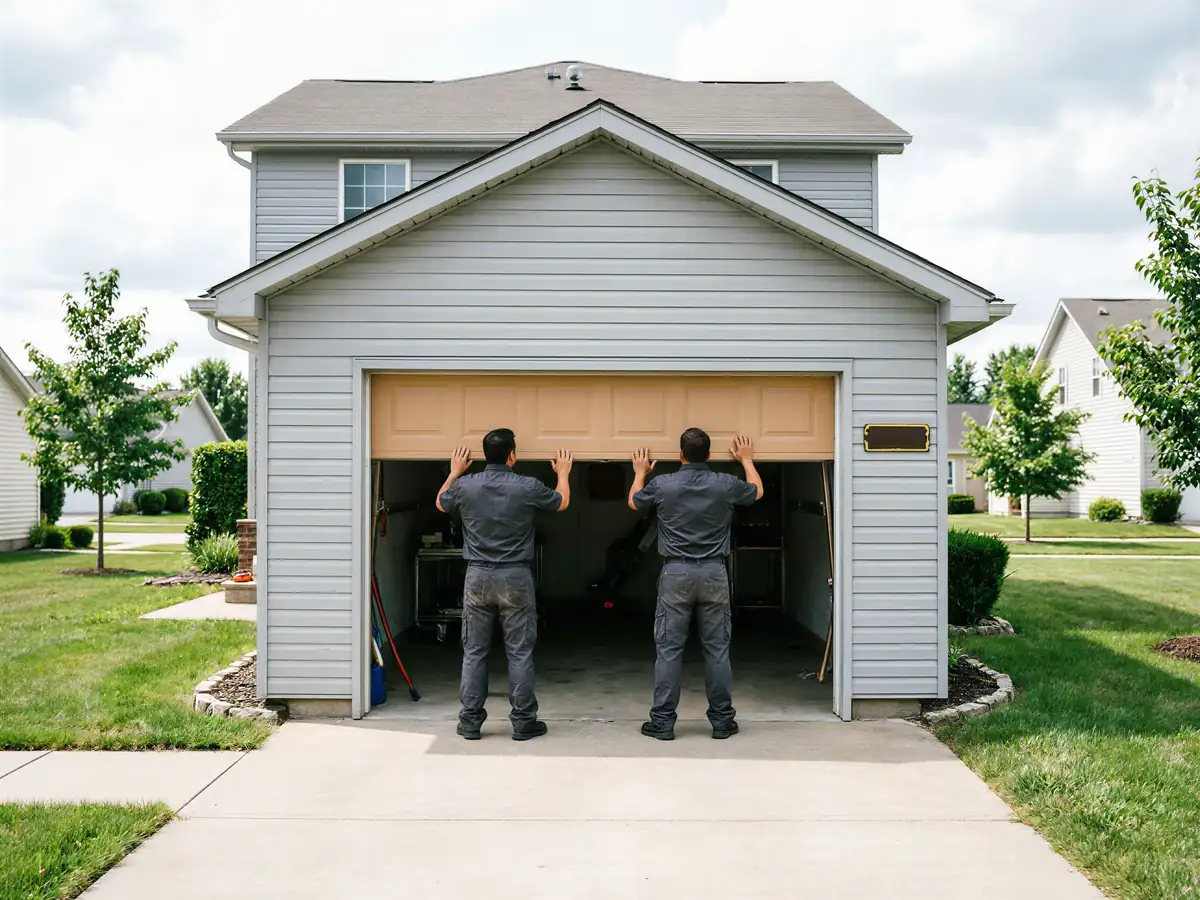
The calls from Urbandale tend to follow a pattern tied to that 1992 median build year. A door that used to lift with one smooth motion starts catching partway up, or the opener strains and reverses before it reaches the top. Sometimes it's a loud bang from the garage - a torsion spring letting go - followed by a door that won't budge without serious effort. Other times it's quieter: a slow sag in one corner, a roller that's worn its groove and started grinding, or an opener that runs but the door barely moves because the spring isn't doing its share of the lift anymore.
With households in this area sitting on a median income of $113,086, we also see more owners catching this early and calling before a full failure, rather than running a bad spring until it snaps. That's the better path if you can manage it, since a controlled spring swap is simpler and cheaper than an emergency one where the door's stuck shut.
What the Fix Involves
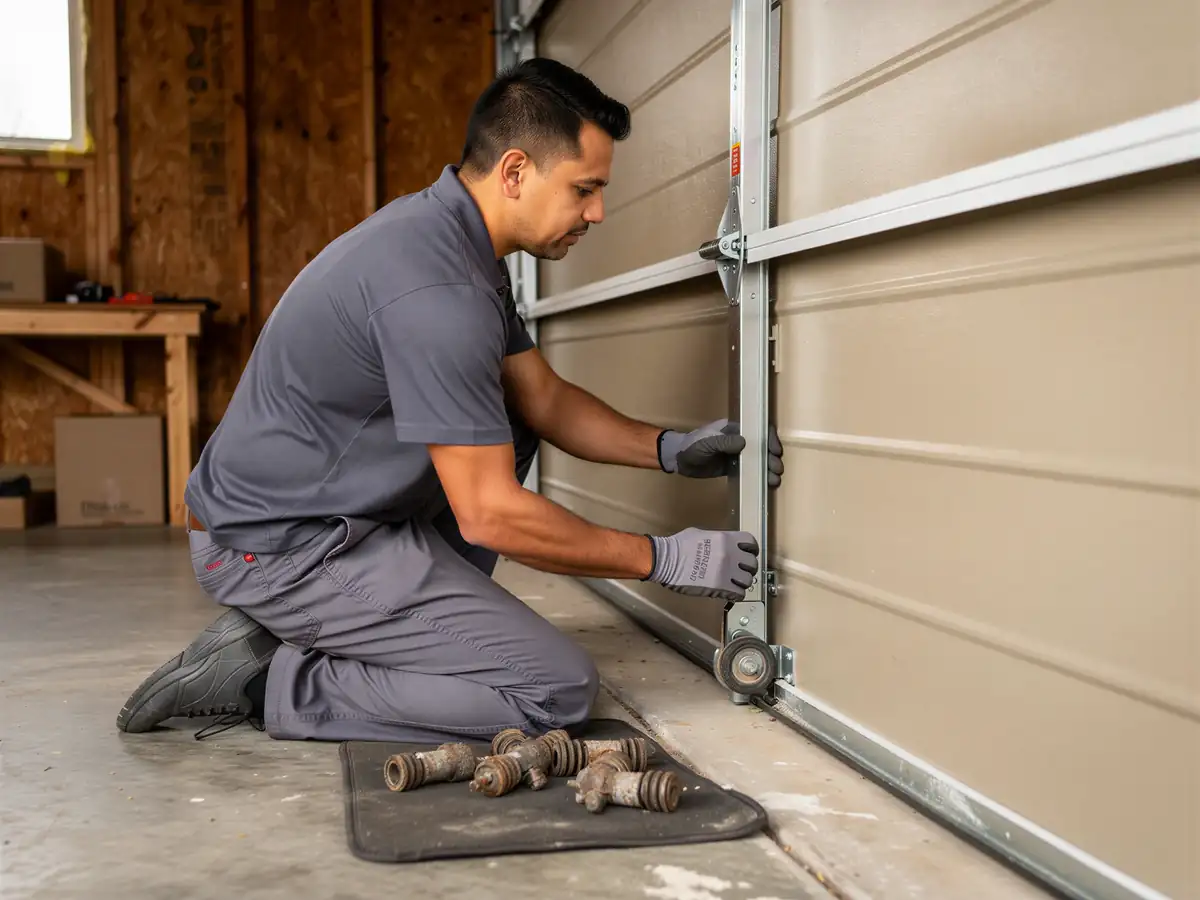
For a spring replacement on a door this age, we match the new torsion spring to your door's actual weight and the drum size already on the shaft, since mismatched springs are common on older doors that have had partial work done before. We check the cables, rollers, and the opener's travel limits while we're in there, because a spring swap on a door with a frayed cable or a worn roller just moves the next failure a few months down the road instead of solving it.
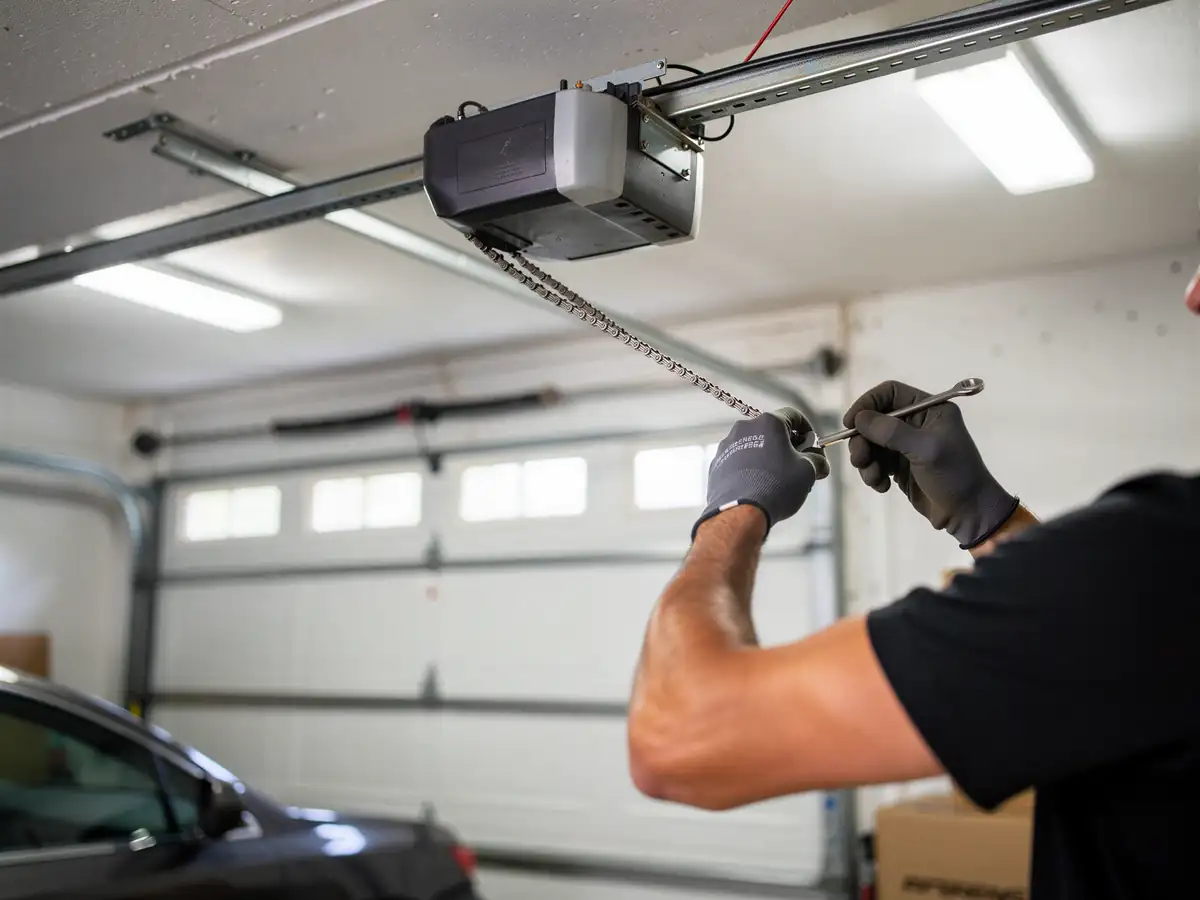
If the opener itself is original to a 1992-era install, we'll tell you straight whether it's worth keeping. Some of those older chain-drive units are simple enough to run fine for years yet with a new spring doing its job properly. Others have worn gearing that makes the whole system work harder than it should. We don't push a new opener on a door that doesn't need one, and we don't patch a unit that's going to fail again in six months either. The call depends on what we find, not on a standard package.
What It Costs
We don't have a fixed price list to quote here
Since the actual cost depends on spring size, whether both springs need replacing, and what we find once the door's apart. What we can say is that a planned spring replacement - called before the spring snaps - is almost always less work, and less cost, than an emergency call after the door's jammed shut with a car trapped inside.
Given the income level in this area, we also see more requests for full opener upgrades done alongside a spring job
Rather than keeping the original unit running as long as possible. That's a reasonable call if the opener's already showing its age, but it's an add-on, not something we assume you want.
The Complications
We drive the roughly 10 miles out from Des Moines to reach Urbandale, so we schedule the trip rather than swing by on short notice - there's no branch office sitting closer that changes that math. That's worth knowing if you're expecting a same-hour drop-in.
On the repair side, the complication we run into most with doors from this era is mismatched hardware from a prior repair - a spring or cable swapped at some point that doesn't match the original rating. When that's the case, we replace what's actually there to code for the door's real weight, not just whatever size happened to be in the garage. Parts for a few of the older opener models from the early '90s can also take longer to source than current units, so if a part isn't on the truck, we'll tell you the lead time honestly instead of guessing. For full detail on everything we handle out of Des Moines, see our main service page.