Why This Fails Locally
The fault we see most in Urbandale isn't a dead remote - it's a motor that runs but a door that doesn't move, or an opener that fires on the third try and not the first. That points to a stripped drive gear or a logic board on its way out, and both are age problems before they're anything else.
Urbandale's housing stock centers on 1992, squarely inside the 1980s-90s build wave that covers most of the named areas this company works. An opener installed with a new house in 1992, or swapped once around the early 2000s, is now thirty-plus years into a part that was never built to run that long. The nylon gear inside a chain-drive unit from that generation wears down to a smooth stub eventually - it's a wear item, not a defect, and it's common on houses of this exact vintage.
Cold winters add strain nobody from a Sun Belt market would recognize: grease stiffens, the motor pulls harder against a heavy steel door, and whatever gear is already thin from wear finishes the job in January instead of July.
Can You Do This Yourself
Some of this is yours to handle
If the opener does nothing at all, check that it's plugged in and the breaker hasn't tripped - openers in garages share circuits more than people expect. If the door reverses before it closes, the photo-eye sensors near the floor are probably dirty or knocked out of alignment; wipe the lenses and make sure both still line up, lights steady and not blinking.
What you shouldn't take apart yourself
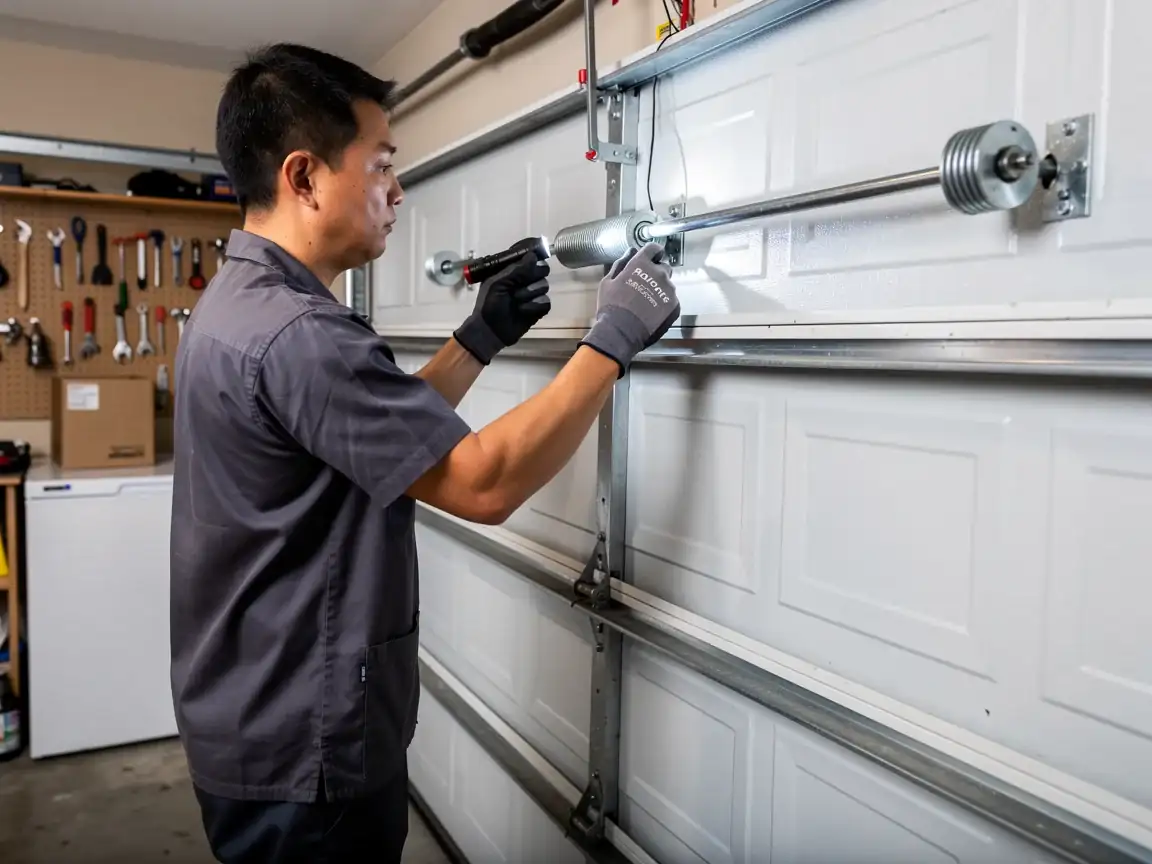
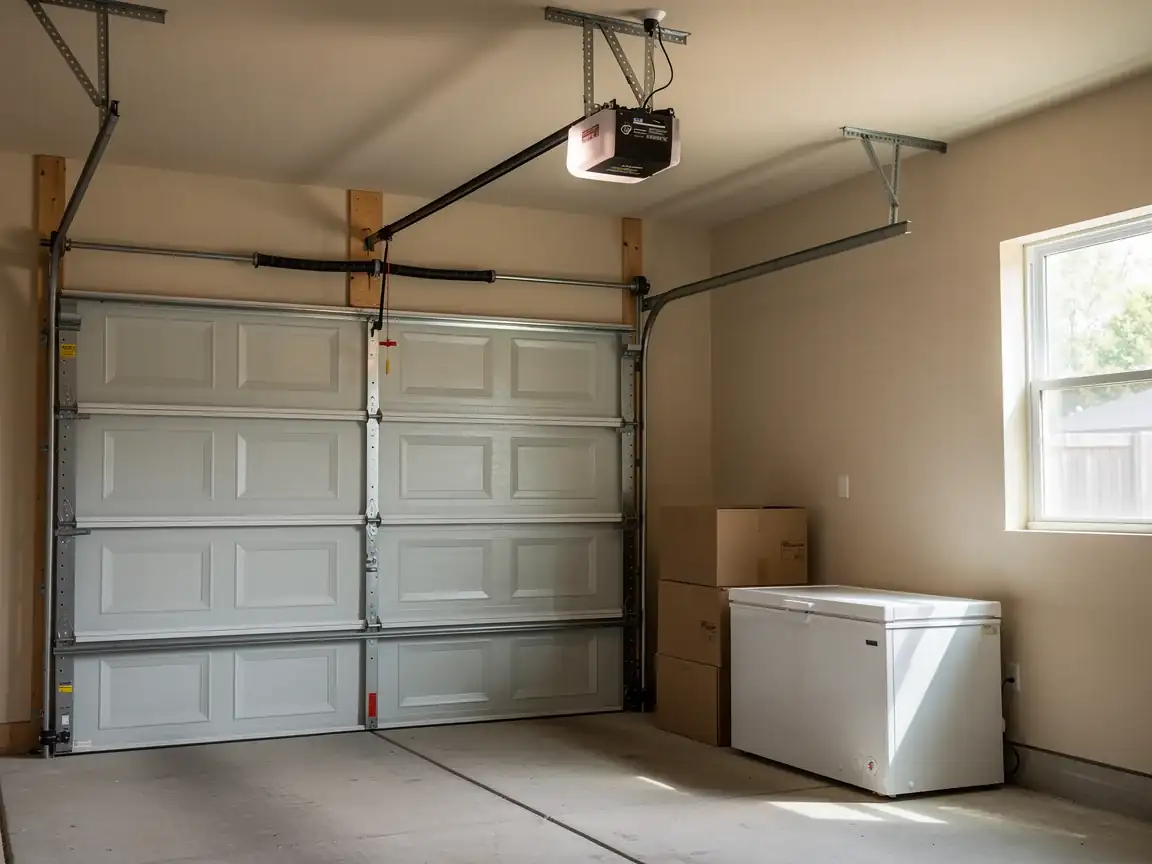
The drive gear and sprocket assembly inside the housing, the logic board, or anything involving the torsion spring overhead. The housing comes apart easily enough, but the gear train is under spring tension from the trolley carriage, and a board swap means matching wiring and travel settings that aren't labeled for a reason. If the opener clicks, hums, or trips the breaker repeatedly, stop pressing the button and get it looked at rather than forcing it.
The Symptom
The pattern on 1990s-era openers tends to run a few ways. Motor runs, door doesn't budge - that's a stripped gear, and you can usually hear the motor laboring without the chain or belt actually pulling. Door opens but won't close, or closes partway and reverses - that's almost always the photo-eye sensors, either dirty, bumped, or wired loose after years of vibration. Remote works from the driveway but not from the street, or stopped working altogether - the receiver board is weakening, which is a logic board symptom more than a battery one.
The quieter failure is the opener that just gets slower and louder over a year or two before it quits. That's bearing wear in the motor itself, and by the time it's audible, replacement of the unit is usually closer than repair of it.
What the Fix Involves
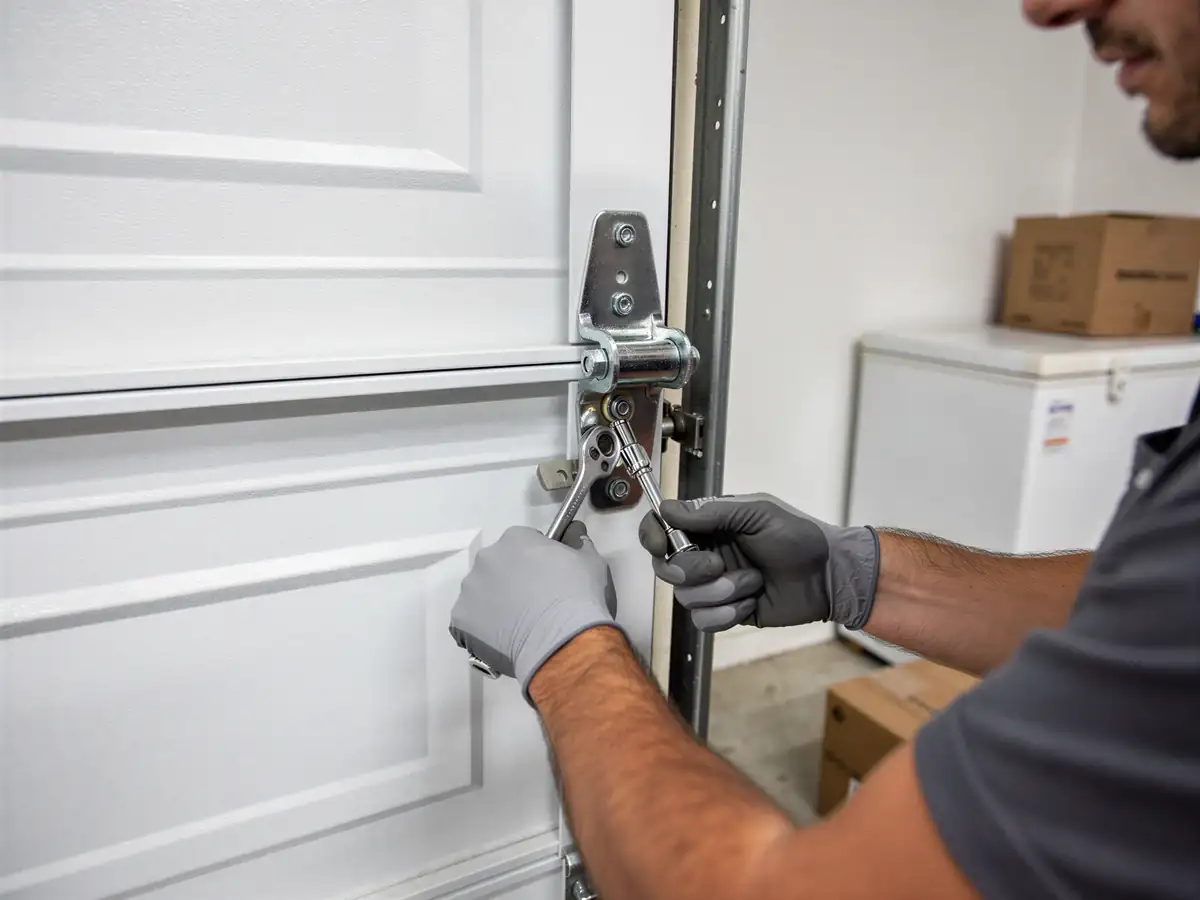
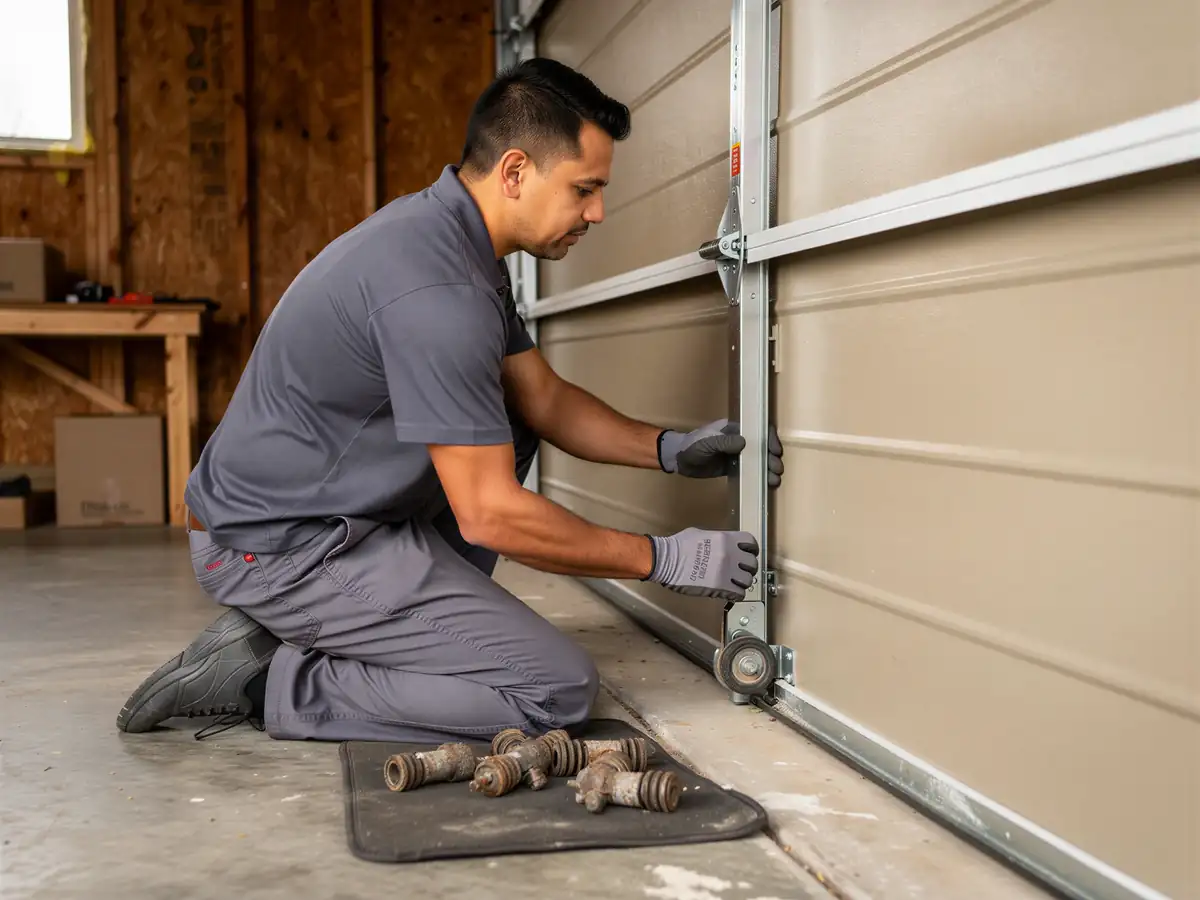
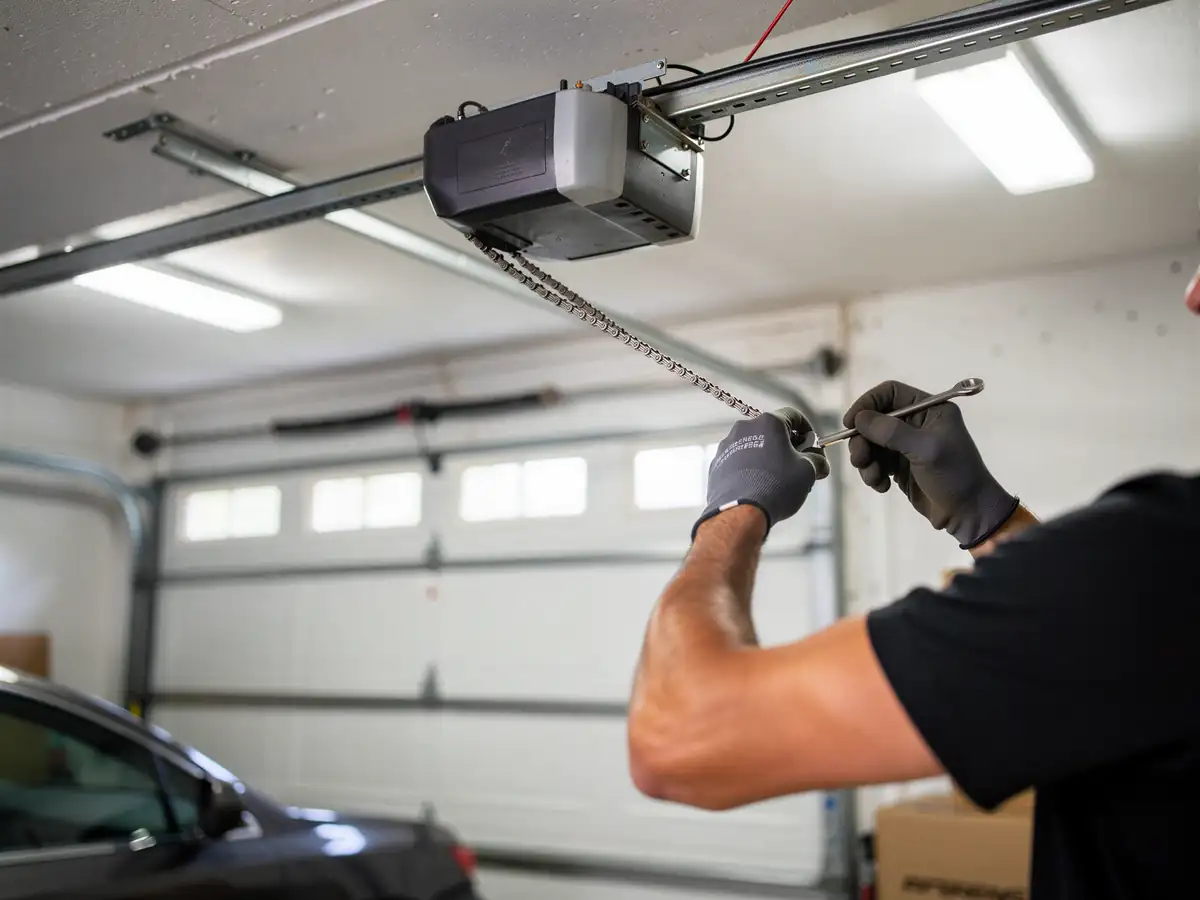
First step is running the opener through a full cycle to see where it fails - gear, board, sensor, or motor - because those are four different repairs with different parts. A stripped gear kit replacement means opening the housing, pulling the worn nylon gear and the drive assembly it rides on, and swapping in new ones; that's usually a same-visit fix.
A failing logic board is a different job. On openers from the 1990s and early 2000s, matching boards aren't always still in production, which means either sourcing a compatible replacement board or, if the unit is far enough gone, replacing the opener outright rather than chasing a part that's getting harder to find every year. Sensor alignment is the quick one - realigning the two eyes so they see each other cleanly, then testing reverse function before leaving.
We travel from Des Moines for this work, about 10 miles into Urbandale, so the diagnosis and the fix happen in the same trip whenever the part's on the truck.
What It Costs
What this runs depends entirely on which of those four failures you've got
A gear and sprocket kit is a different bill than a logic board, and a logic board is a different bill than replacing the whole opener when the board's no longer made. We don't quote a number without seeing which part failed, because guessing on this one wastes your time and ours.
One honest note: if the opener is original to a house built in the early 1990s
Repairing a failing board can cost close to what a new opener runs, once you factor in sourcing an obsolete part. At that age, replacement is often the better call, and we'll say so rather than sell a repair that won't hold.
The Complications
The complication specific to this age of opener is parts availability. A gear kit is standard and we carry common sizes. A logic board for a unit built when Urbandale's housing stock was going up is a different story - some are discontinued, and sourcing one can mean a delay instead of a same-visit fix. We'll tell you up front if that's the situation rather than stringing out a repair on a board that's hard to get.
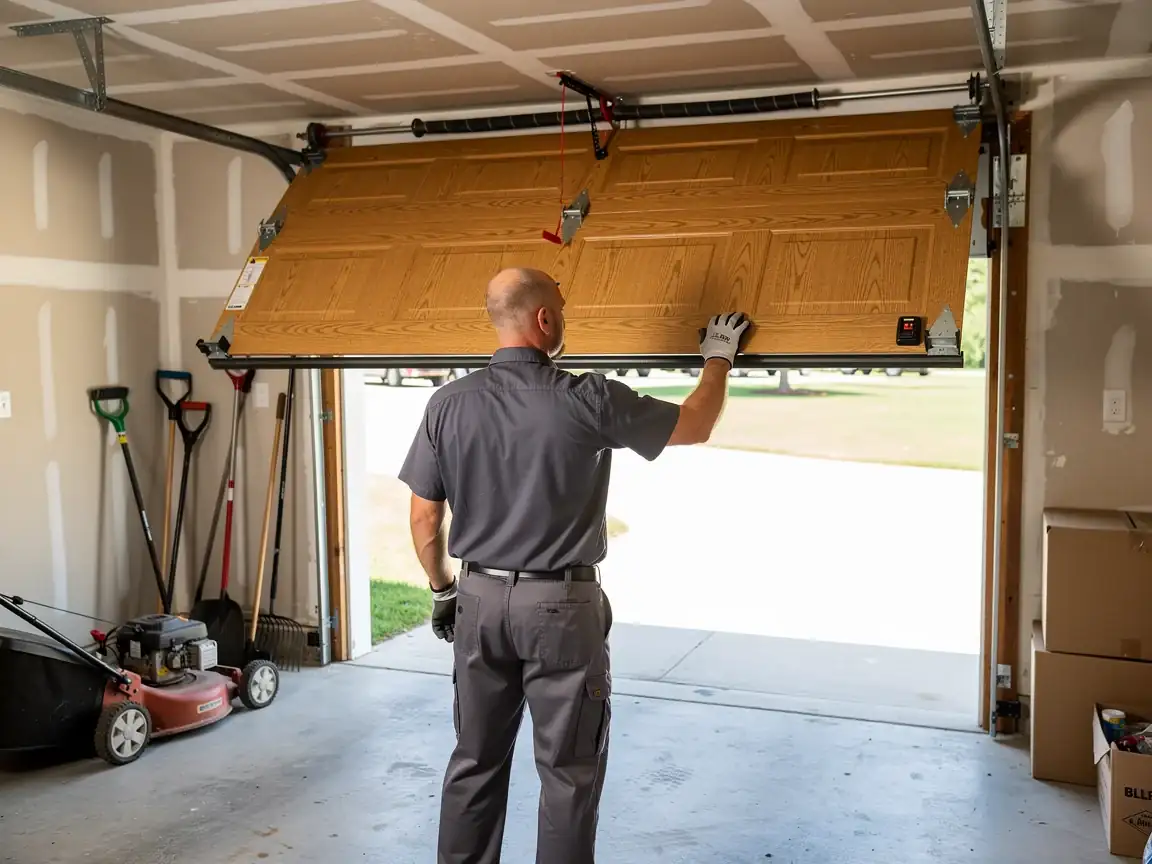
The other factor is what's behind the opener problem. Sometimes a motor straining hard enough to strip its own gear is doing that because the door's spring tension is off or a track is binding - in which case fixing the opener alone just strips the new gear again. We check that before we close up the housing, not after a callback.